













































Researchers at the University of Amsterdam have unveiled a novel self-supervised learning approach called PART, designed to enhance the capabilities of machine learning models in understanding spatial relationships among objects. This development comes amidst growing interest in how representation learning can utilize the intricate compositions of objects and their parts to improve various AI tasks. Traditional methods have largely relied on grid-based structures, which can struggle to accurately capture the fluidity and complexity of real-world scenarios.
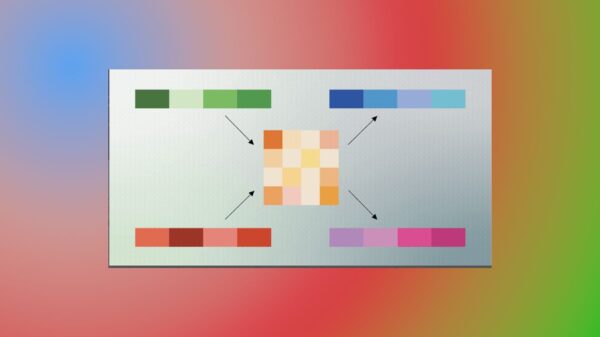
Grid-based approaches typically involve predicting the absolute position indices of image patches within a fixed grid. However, these methods often fail to account for continuous transformations and the dynamic relationships between parts of an image, particularly in cases of partial visibility or stylistic variations. The introduction of PART addresses these shortcomings by leveraging off-grid patches and modeling the relative composition of images in a continuous space. This shift allows for a more nuanced understanding of how parts relate to each other, moving beyond the constraints imposed by grid-based frameworks.
In practical applications, PART has demonstrated superior performance in tasks demanding precise spatial understanding, such as object detection and time series prediction. In comparative tests, it outperformed established grid-based methods like MAE (Masked Autoencoders) and DropPos, while also maintaining competitive results in broader tasks like global classification. The implications of this advancement are significant, as the ability to learn from non-grid structures may open new avenues for universal self-supervised pretraining across various data types, ranging from images to EEG signals.
The flexibility offered by PART is particularly promising for sectors that require high spatial awareness, such as medical imaging, video analysis, and audio processing. By breaking free from the limitations of traditional grid layouts, PART could facilitate more accurate and robust machine learning models, potentially revolutionizing fields that rely on detailed spatial comprehension. As the technology matures, it may lead to improvements in the efficiency and effectiveness of AI systems deployed in real-world applications.
Looking ahead, the integration of continuous relative positioning into self-supervised learning frameworks like PART could redefine the landscape of machine learning. As researchers and developers continue to explore its potential, the insights gained from this approach may not only boost performance in existing applications but also pave the way for innovative solutions across diverse domains. The evolution of AI capabilities, fueled by advancements such as PART, underscores the ongoing quest for more effective ways to understand and interpret the complexities of the world around us.
See also OpenAI’s GPT-5 Launch Sparks User Grief and Protest Over AI Model Changes
 Deep Learning Identifies Tetrahydrocarbazoles as Potent Broad-Spectrum Antitumor Agents
 Retail Study Reveals 85% of Global Retailers Lag in Advanced AI Adoption
 AI Enhances Climate Research, Reducing Emissions by 1.4 Billion Tons by 2035
 New Framework Reveals Mathematical Limits of AI Alignment and Safety Challenges