















































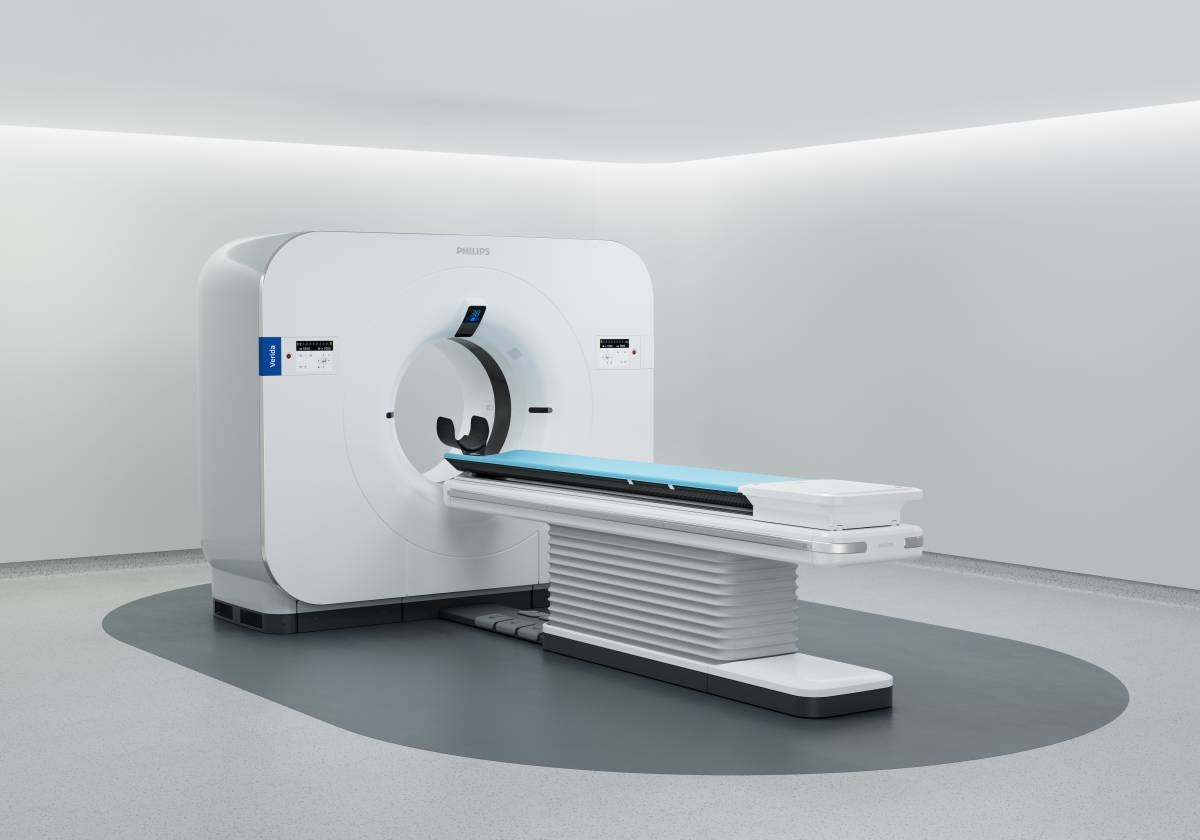
Philips has announced the launch of the Verida, the world’s first detector-based spectral CT system fully powered by AI, at the Radiological Society of North America (RSNA) annual meeting in Chicago on November 30, 2025. This innovative system represents a significant advancement in computed tomography (CT), utilizing artificial intelligence to enhance image quality, reduce system noise, and streamline clinical workflows. With CE marking and a pending 510(k) clearance, the Verida aims to set a new standard in medical imaging.
The new spectral CT system offers exceptional imaging capabilities by measuring how tissues absorb various x-ray energy levels. This allows for differentiation between materials that may appear similar on conventional CT scans. Philips has established itself as a leader in this domain, with over 800 installations globally and more than 800 peer-reviewed publications supporting the effectiveness of its spectral CT technology.
By integrating AI across the imaging chain, the Verida system significantly reduces patient radiation exposure while maintaining high image quality. The system is capable of reconstructing 145 images per second, allowing for rapid exam completion in under 30 seconds—twice as fast as previous systems. This efficiency enables healthcare providers to conduct up to 270 exams daily, addressing the increasing demand for diagnostic imaging services.
“The clinical benefits of Verida will fundamentally change my approach to cardiac imaging,” remarked Prof. Eliseo Vañó Galván, a cardiovascular radiologist and Chairman of the CT & MR Department at Hospital Nuestra Sra. Del Rosario in Madrid, Spain. He highlighted the system’s potential to enhance diagnostic confidence and reduce the necessity for invasive procedures, citing its ease of use and precision as key factors in its adoption.
Philips’ Verida builds on its well-established spectral imaging technology, which features the proprietary Spectral Precise Image deep learning AI reconstruction engine and a third-generation dual-layer detector optimized for noise reduction. This technology facilitates the delivery of rich spectral information from a single scan, further enhancing the capabilities of radiologists in diagnosing a range of conditions.
According to Dan Xu, Business Leader of CT at Philips, “Combining the latest advances in our proven spectral CT technology with AI, our flagship Verida CT system is designed to set a new standard in superior image quality and accelerated scans which are fully embedded in the radiology workflow.” He emphasized the system’s role in improving early disease detection and treatment pathways while reducing variability in diagnoses.
With advancements in healthcare technology accelerating, the Verida is poised to transform how radiologists approach diagnostic imaging. By offering significant dose reductions—up to 80%—and decreasing energy consumption by as much as 45%, the Verida aligns with ongoing efforts to enhance sustainability in healthcare settings.
Philips plans to begin the rollout of the Verida in select markets in 2026, expanding its footprint in the evolving landscape of health technology. The introduction of this system underscores the company’s commitment to innovating in ways that improve both operational efficiency and patient outcomes in radiology departments worldwide.
As healthcare continues to evolve, tools like the Verida are essential in meeting the challenges posed by rising patient volumes and the demand for higher accuracy in diagnostics. Philips’ approach to integrating AI within its imaging systems may pave the way for a future where advanced diagnostic capabilities become the norm, ultimately enhancing patient care across the globe.
See also REF-AI Report Reveals Universities Must Define Generative AI Use for Research Integrity
 New Study Reveals Poetic Prompts Bypass AI Safety Systems in 62% of Tests
 Agentic AI Redefines Enterprise IT with 45% of Firms Achieving Autonomy by 2030
 Professors in ASEAN Call for AI Guidelines as ChatGPT Use Surges in Higher Education
 AI Agents Use GPT-5 and Claude to Simulate $4.6M in DeFi Exploits, Warns Anthropic Study