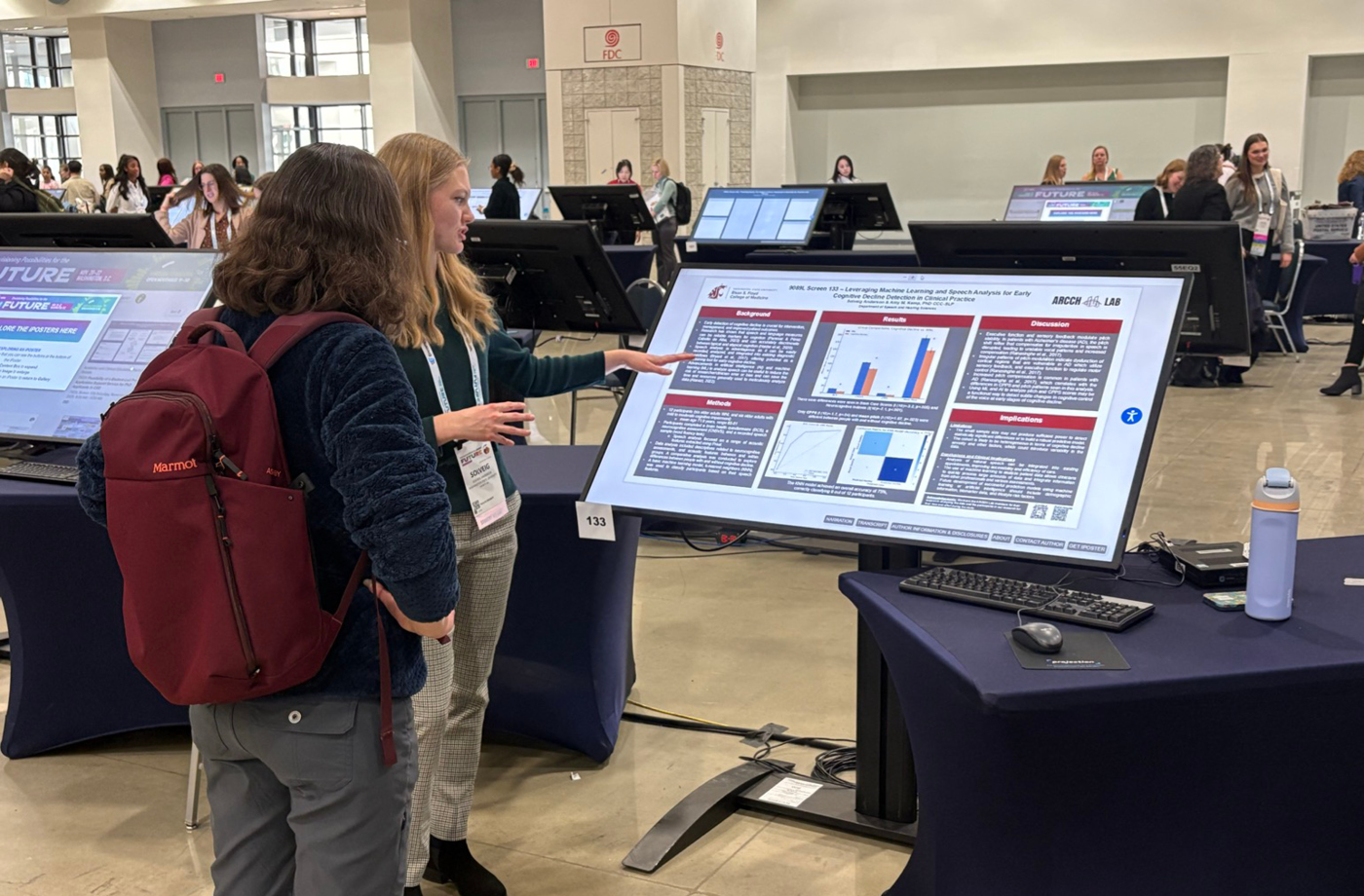
Solvieg Anderson, an undergraduate in the Department of Speech and Hearing Sciences, presented her research at the 2025 American Speech-Language-Hearing Association (ASHA) Convention held last month in Washington, D.C. Her poster, titled “Leveraging Machine Learning and Speech Analysis for Early Cognitive Decline Detection in Clinical Practice,” explored innovative methods for identifying early cognitive decline through non-invasive techniques.
Anderson’s research focuses on the integration of **machine learning** with **speech analysis** to detect potential cognitive issues at an early stage. By analyzing specific features of speech production alongside individual health risk factors, her study aims to identify biomarkers that could serve as indicators of cognitive decline. This approach capitalizes on the understanding that changes in speech patterns may reflect underlying cognitive changes, thus offering a promising avenue for clinical practice.
The significance of Anderson’s work lies in its potential to transform the way cognitive decline is detected in clinical settings. Traditionally, cognitive assessments have relied heavily on subjective evaluations and can often occur only after noticeable changes in a patient’s behavior. By employing machine learning algorithms to analyze speech, the goal is to provide clinicians with a more objective and timely method of recognizing cognitive deterioration.
At the **ASHA Convention**, which gathered professionals and researchers from across the field, Anderson’s presentation attracted considerable attention. Attendees expressed interest in her findings, recognizing the importance of technological advancements in improving patient outcomes. The use of **non-invasive biomarkers** represents a shift towards more integrated healthcare solutions, merging technology with traditional clinical practices.
As the landscape of healthcare continues to evolve, the incorporation of advanced technologies such as artificial intelligence and machine learning into everyday clinical practices is becoming increasingly vital. The ongoing development of tools that assist in early diagnosis is crucial, especially in light of the projected rise in conditions affecting cognitive functions, such as **Alzheimer’s disease** and other forms of dementia. Anderson’s research underscores the potential for these technologies to not only enhance detection but also to improve the overall quality of life for patients.
Congratulations are in order for Anderson, who joins a growing community of researchers leveraging cutting-edge technology to address significant health challenges. Her work exemplifies how academic research can directly influence clinical practices, paving the way for more effective interventions. With continued advancements in machine learning and speech analysis, the future of cognitive health monitoring looks promising, offering hope for earlier interventions and better outcomes for patients.