













































A new study reveals that various AI language models produce strikingly similar responses to open-ended creative tasks, raising concerns about the long-term effects on human creativity.
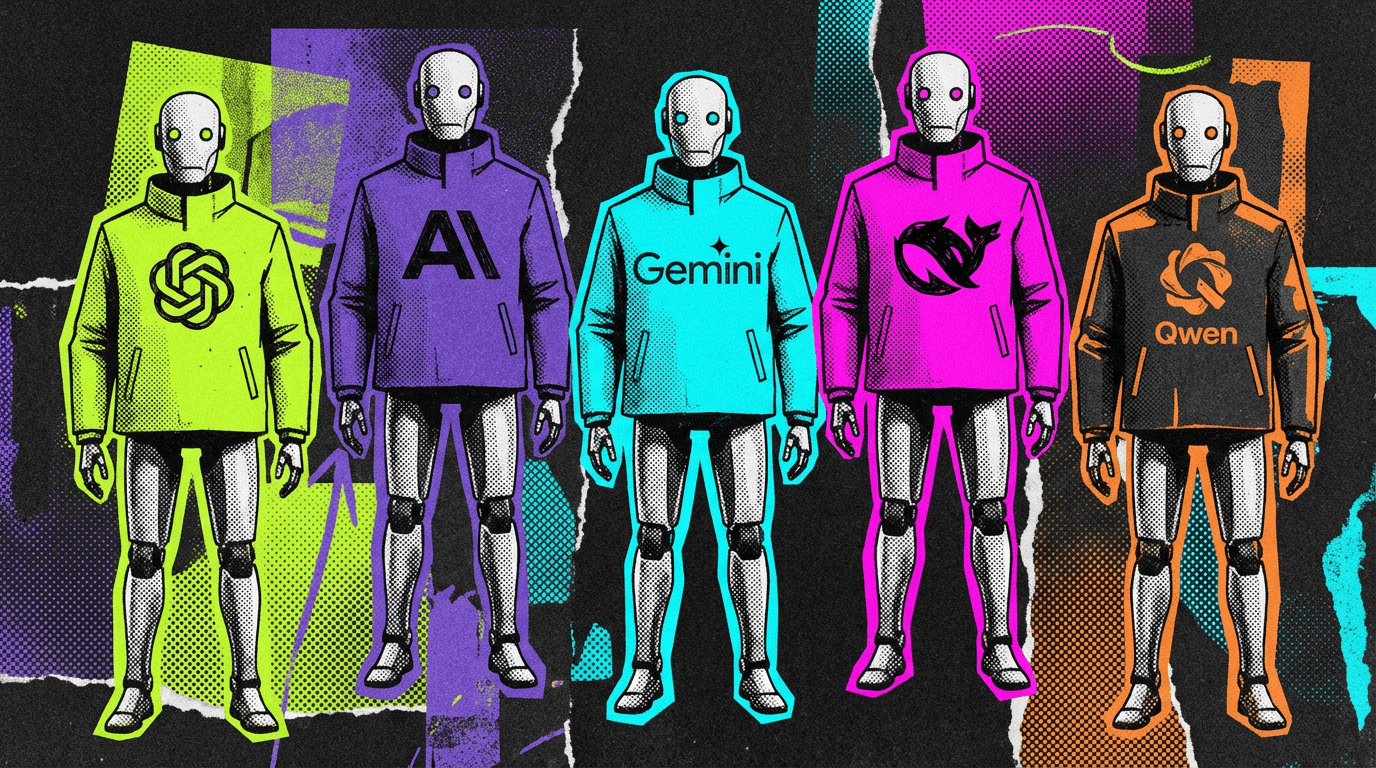
Conducted by researchers at the University of Washington, Carnegie Mellon University, and the Allen Institute for AI, the research indicates that when tasked with the same creative prompts, different AI models often arrive at similar concepts and even identical phrasing. This phenomenon, termed the “Artificial Hivemind,” suggests a worrying convergence in the outputs generated by distinct models.
The study, led by Liwei Jiang, highlights two levels of this convergence: intra-model repetition, where a single model generates similar responses, and inter-model homogeneity, where models from different companies produce remarkably alike outputs. In an experiment where 25 distinct language models were prompted to “write a metaphor about time,” the results clustered around just two dominant metaphors: “time is a river” and “time is a weaver.” While the specific wording varied, the underlying concepts remained strikingly similar.
To quantify the similarity between outputs, the researchers introduced Infinity-Chat, a dataset comprising real user queries. Their findings revealed that in nearly 80% of instances, responses from individual models were almost indistinguishable. Even more concerning was the documented overlap in verbatim phrases among entirely different model families. For example, when generating product descriptions for iPhone cases, both DeepSeek-V3 and OpenAI’s GPT-4o utilized identical phrases, including “Elevate your iPhone with our” and “sleek, without compromising.” The average similarity between these two models was an alarming 81%, despite their development by different companies on separate continents.
The reasons behind this convergence remain unclear. Researchers speculate that shared data pipelines, contamination from synthetic data, or overlapping alignment practices could contribute to the phenomenon, but they emphasize that more causal analysis is necessary to understand the mechanics at play.
The implications of these findings extend beyond technical concerns. The authors express apprehension about potential societal impacts, warning that a homogenization of human thought may occur as billions of users increasingly depend on AI models for creative and decision-making tasks. They note that model-level convergence could seep into human expression, citing evidence of measurable shifts in writing styles and creative thinking since the widespread adoption of tools like ChatGPT.
Researchers caution that if language models continue to converge on dominant cultural expressions, such as Western-centric metaphors, alternative perspectives and traditions may be marginalized. This sentiment echoes previous warnings from AI researcher Andrew J. Peterson, who in 2024 cautioned against a potential knowledge collapse fueled by the proliferation of AI technologies.
The findings also carry significant implications for synthetic data generation. Multi-model approaches and model ensembles that aim to promote diversity may struggle to achieve their objectives if the models they rely on are already homogeneous. As the AI landscape continues to evolve, the need for diverse and representative outputs becomes increasingly critical.
The study serves as a clarion call for developers and researchers in the field to reassess the design and training processes involved in creating language models. As AI technologies become integral to various aspects of life, understanding their influence on creativity and cultural expression will be vital for preserving the rich tapestry of human thought.
See also SciSciGPT Launches as AI Research Assistant, Boosting Efficiency and Quality by 10x
 Morocco Launches JAZARI ROOT Institute to Centralize National AI Research Efforts
 Soumith Chintala Joins Thinking Machine Labs as CTO to Drive AI Innovation
 Emotionally Intelligent Workers Show No Increased AI Adoption, Study Reveals Insights
 Anthropic Launches Claude Cowork for $20, Streamlining Agentic AI Workflows