






















































Artificial intelligence leaders, including Sam Altman of OpenAI and Elon Musk of xAI, are voicing a common refrain: they need more compute power. This demand for increased processing capability is driven by the growing complexity of AI systems, and a critical component in this equation is Random Access Memory (RAM), which is currently in short supply. The implications are significant, with expectations that prices for computers and smartphones will rise as RAM becomes increasingly scarce.
In recent months, the prices of RAM have surged dramatically. The heightened demand, coupled with AI companies’ willingness to pay premium prices, has led Micron, one of the industry’s largest players, to announce it will cease direct sales of RAM to consumers. Instead, it will focus exclusively on supplying companies, particularly those in the AI sector.
“The AI-driven growth in the data center has led to a surge in demand for memory and storage,” explained Sumit Sadana, Micron’s business chief. “Micron has made the difficult decision to exit the Crucial consumer business in order to improve supply and support for our larger, strategic customers.”
Micron’s strategy reflects a broader industry trend, as competitors Samsung and SK Hynix are also prioritizing AI companies with substantial financial resources willing to pay top dollar for needed components. Recently, rumors surfaced—later denied by Samsung—that its RAM division had refused to supply its phone division, which could affect the upcoming Galaxy S26 model.
While consumers typically engage with AI through platforms like ChatGPT or Google Gemini without considering the underlying infrastructure, the reality is that a vast network of powerful servers and components supports these applications. Each interaction with an AI service requires substantial computational resources, including graphics processors and RAM. As AI technology advances, the need for robust hardware becomes more pronounced, limiting the feasibility of running sophisticated models on personal devices.
The shift in demand has not only impacted RAM but has also transformed the landscape for graphics processors. Nvidia, once primarily a gaming company, has repositioned itself as a key provider of AI infrastructure, with its gaming division now accounting for a minor share of its business. AMD is also adapting to this new reality, and semiconductor manufacturing giants like TSMC are increasingly focused on producing AI processors for companies such as Google and OpenAI, eclipsing the production of chips intended for consumer electronics.
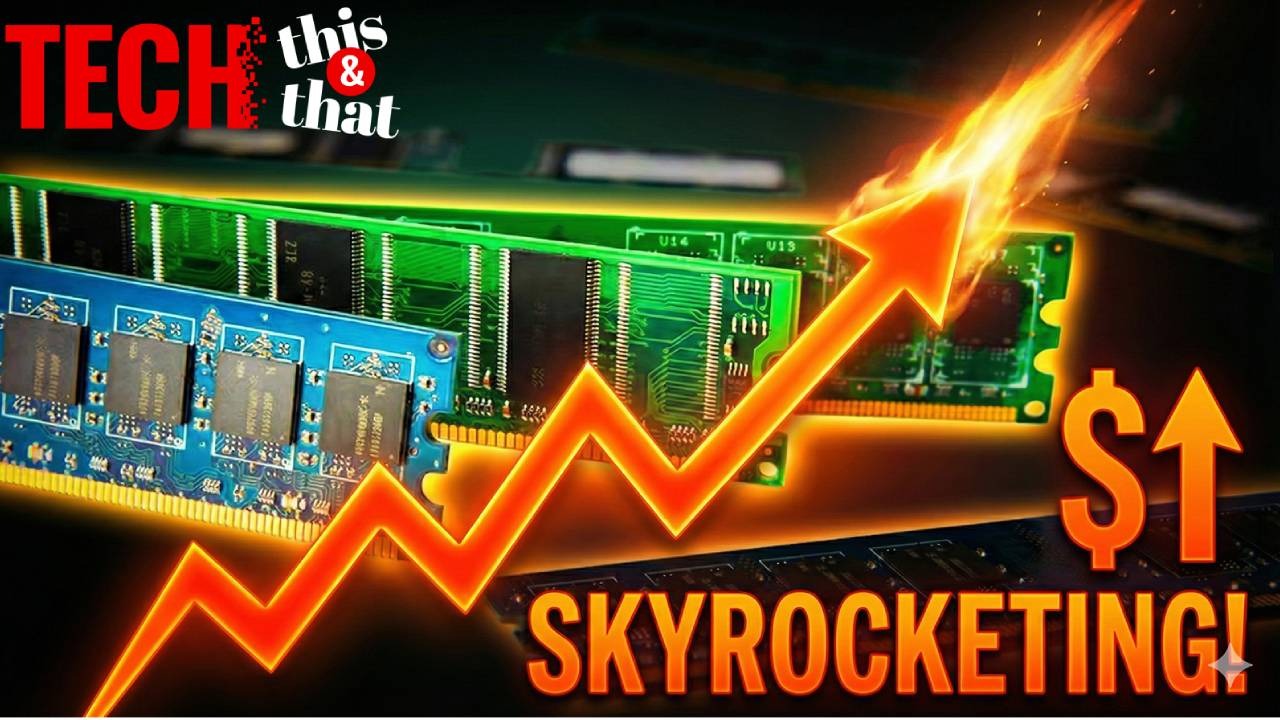
The escalating demand for RAM, a critical element in AI systems, has resulted in significant price increases. Estimates suggest that RAM prices have jumped by a factor of three to six this year compared to early 2025 levels. For instance, the cost of RAM in the Galaxy S25 was approximately $35 at the beginning of 2025, but that same amount is now expected to be around $70.
Market research indicates that this upward price trend is likely to continue into 2026, exacerbating the challenges faced by manufacturers and consumers alike. The effects are already visible in markets like Nehru Place, where prices for decent 16GB RAM kits have soared past Rs 10,000. This increase in component costs is beginning to ripple through to the prices of laptops and smartphones.
High-end smartphones launched in India recently are now often priced above Rs 70,000, a noticeable increase from last year’s range of Rs 50,000 to Rs 60,000. With supply deals typically locked in advance, the full extent of the RAM price surge will likely become evident in 2026, when laptop and smartphone manufacturers may be forced to either scale back on RAM specifications or raise prices significantly.
RAM remains a fundamental component of any computing device, serving as the temporary storage space for active data processing. The quality of RAM affects not only general computing but also plays a crucial role in specialized chips, such as Qualcomm’s Snapdragon or MediaTek’s Dimensity processors. Graphics processing units (GPUs) also rely on dedicated RAM to function effectively.
The ongoing RAM price increase and supply crunch are poised to have far-reaching implications across the tech industry. Given the current dynamics between demand and supply, relief does not appear imminent. The appetite for RAM among AI companies is insatiable, leading them to seek as much as suppliers can produce, while other sectors may have to adjust to a tighter supply and higher costs.
See also Rivian Reveals Third-Generation Autonomy Processor Built on Arm’s Advanced Architecture
 Accenture Launches Anthropic Business Group with 30,000 Trained Engineers to Scale AI Adoption
 Elon Musk Warns AI War Ignites with Nvidia’s Blackwell Chip Transition by 2026
 Tiiny AI Launches Pocket-Sized Supercomputer, Verified as World’s Smallest by Guinness
 Google Invests $1M in AI Research to Combat Dementia with Tohoku University Partnership