



































Hyundai Motor Group unveiled its next-generation electric Atlas prototype and development model during a press conference at Mandalay Bay, Las Vegas, on January 5, 2026, a day before the world’s largest consumer electronics and information technology exhibition, CES 2026. This development comes amid a backdrop of accelerating artificial intelligence (AI) advancements, which are reshaping industries and labor markets globally.
The pace of AI development is formidable, with experts noting that AI performance is doubling every seven months, significantly outpacing Moore’s law, which states that semiconductor integration doubles every two years. Particularly impressive is the speed of AI coding capabilities, which are doubling every 70 days. Such rapid advancements are prompting concerns about productivity, with warnings that a momentary lapse in engagement could lead to diminished output compared to AI-enhanced peers.
Jeffrey Hinton, an honorary professor at the University of Toronto and renowned as the “Godfather of AI,” remarked, “If the Industrial Revolution made human power meaningless, now AI will make human intelligence meaningless.” This sentiment highlights the transformative potential of AI across various sectors.
The U.S. has formally entered what some are calling the “AI exhibition situation.” In late November 2022, President Donald Trump signed an executive order known as the Genesis Mission, which has been likened to the historical Manhattan Project aimed at atomic bomb development. The initiative seeks to leverage federal scientific data to foster a competitive edge in 21st-century technologies, effectively mobilizing state resources toward this goal.
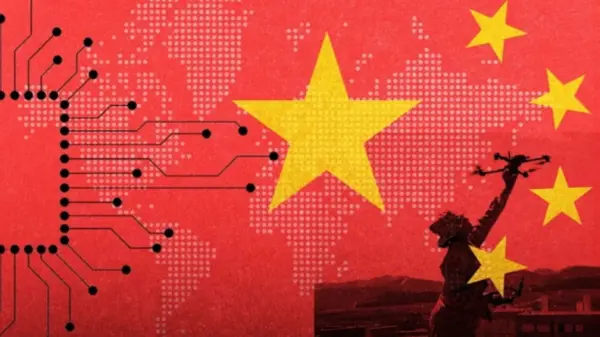
In response, China initiated its own ‘super-powerful AI system’ within a month, integrating over 30 national supercomputer networks. Despite potential exaggerations, reports suggest that tasks which previously required extensive time have been reduced to mere hours, hinting at the massive efficiency gains possible through advanced AI integration.
As these technologies evolve, South Korea aims to position itself among the top three global AI powerhouses. However, experts caution that significant obstacles remain. In recent discussions with representatives from more than 20 major companies, a common theme emerged: companies are focusing on cost reductions and improving internal efficiency rather than innovating consumer-facing AI services. This shift represents a significant change in how organizations are adapting to AI.
Conversely, government officials appear more focused on public AI services, demonstrating a disconnect with the private sector’s priorities. There is growing debate over the necessity of maintaining the current number of civil servants, especially as AI systems take on basic tasks. Advocates argue that it is time for public sector policies to adapt, allowing for a reallocation of labor rather than clinging to traditional employment structures.
Employment and energy policies also present formidable challenges. As AI continues to disrupt various job sectors, including professional fields like accounting, the rigidity of the labor market could hinder growth. High employment protection measures may lead companies to adopt conservative hiring practices, potentially delaying the integration of new talent and innovation.
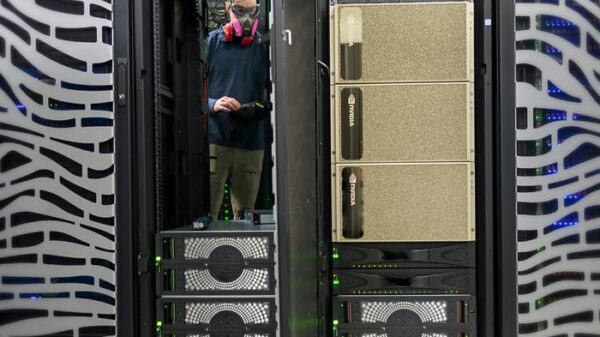
Energy policy is equally critical to AI’s expansion. The U.S. has identified energy dominance as a core goal of the Genesis project, emphasizing the need for a stable and affordable energy supply. Meanwhile, South Korea’s fluctuating energy policies have raised concerns about its capacity to support the high energy demands of AI technologies. Notably, Nvidia has committed to supplying 260,000 GPUs needed for AI development in Korea, but questions remain regarding the country’s energy sufficiency.
The ongoing AI revolution presents a crucial opportunity for Korea to redefine its technological landscape. However, outdated policies and bureaucratic inertia threaten to undermine these ambitions. As public officials cling to outdated economic models, the potential for innovative change in the AI era may be stymied by resistance to necessary reform.
See also Pentagon Integrates Musk’s Grok AI Chatbot Amid Global Controversy Over Deepfake Issues
 Nongshim Expands AI Quality Control to US and China, Enhancing Ramen Production Efficiency
 Mapúa University Launches First Bachelor’s in AI Engineering, Exceeding Enrollment Targets
 Meta Announces Gigawatt-Scale AI Infrastructure Initiative, Aims for $600 Billion Investment
 Nvidia Confirms No Upfront Payment Required for H200 AI Chips Amid Trade Concerns