


















































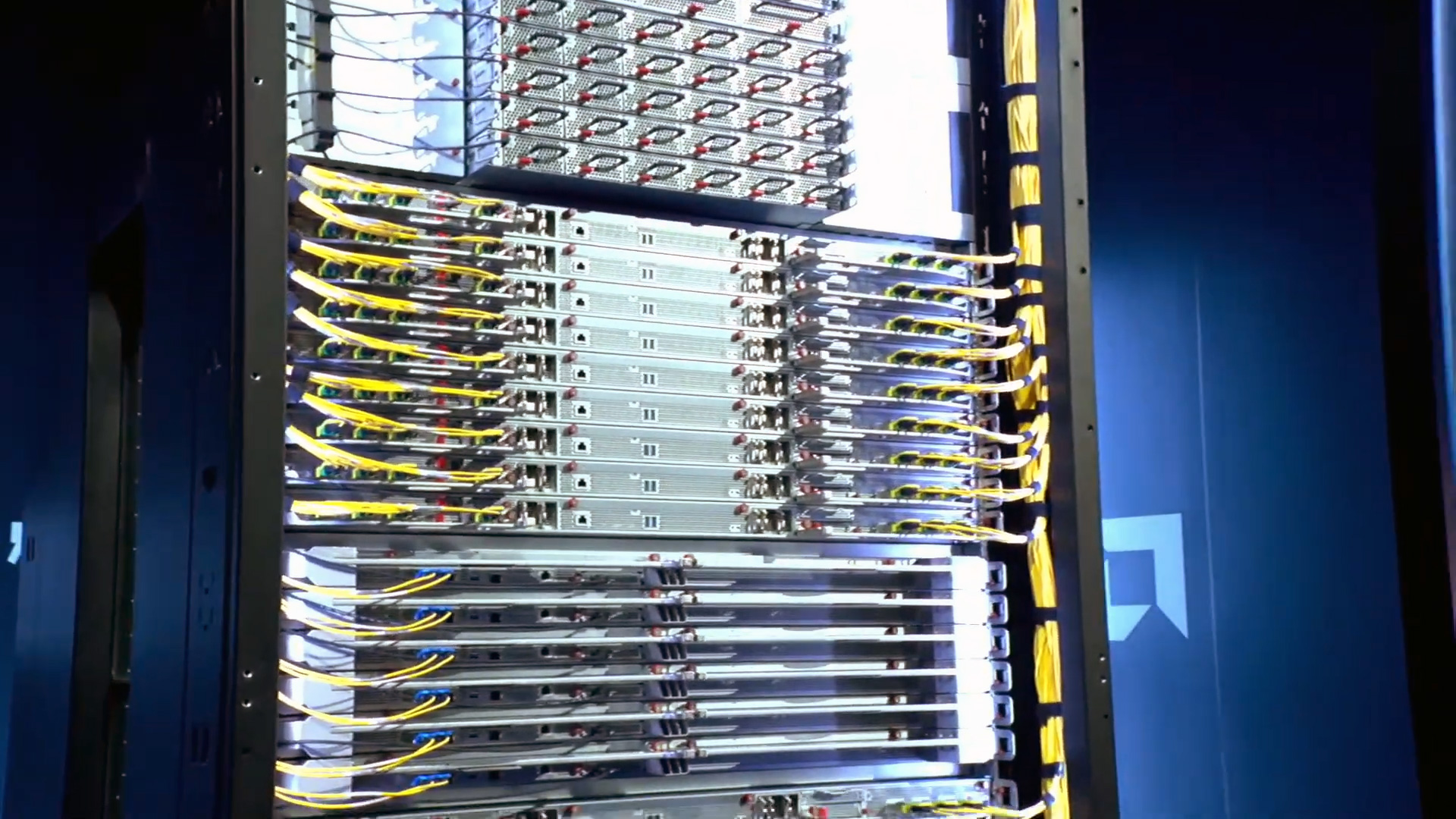
AMD’s next-generation Instinct MI400 series, particularly the MI455X model, is under scrutiny following reports suggesting that its rollout is facing significant delays. However, AMD’s Corporate VP of Software Development, Anush Elangovan, has refuted these claims, asserting that the company remains on track for deployment.
As the competition for hyperscaler hardware intensifies, NVIDIA has dominated the market for several generations, with the gap widening during its Blackwell generation. AMD, however, is optimistic that its MI455X will provide customers compelling reasons to switch from NVIDIA, citing substantial architectural advancements. Despite this optimism, a report from SemiAnalysis indicates that large-scale customer deployments of the MI455X could face nearly a year-long delay, primarily due to challenges in integrating the new N2 chip technology.
According to Dylan Patel of SemiAnalysis, AMD is grappling with the complexities of transitioning from traditional FinFET technology to Gate-All-Around (GAA) structures with N2. This shift is expected to introduce microscopic manufacturing defects, hampering initial production volumes. Furthermore, managing the scale-out interconnect known as UALink poses additional challenges, with line resistance and capacitance becoming critical issues as AMD navigates these new technological architectures.
While AMD claims to be on schedule for customer deployment of the MI455X in the near future, Patel remains skeptical, predicting that actual production will not commence until the second quarter of 2027. Compounding the situation for AMD, NVIDIA’s Vera Rubin is positioned for hyperscaler integration by the second half of 2026. If the delays for the MI455X are confirmed, NVIDIA will maintain its lead in delivering the next generation of infrastructure technology, further intensifying competition in the market.
AMD has consistently struggled to penetrate the infrastructure segment, trailing behind NVIDIA in customer adoption. This is partly attributed to various challenges, including volume issues, disparities in the ROCm software platform, and NVIDIA’s aggressive approach in securing customer commitments. The Instinct MI455X presents a robust offering on paper, but the timeline from engineering samples to widespread deployment will be crucial in determining its impact on the market.
As the industry evolves, the stakes for both AMD and NVIDIA continue to rise, with technological advancements dictating the pace of competition. AMD’s ability to overcome the hurdles associated with the MI455X will be pivotal in capturing market share from its rival as the demand for advanced infrastructure solutions grows.
See also Meta Partners with NVIDIA to Deploy Millions of AI Chips and Build Hyperscale Data Centers
 Meta Partners with NVIDIA to Deploy Millions of AI-Optimized CPUs and GPUs in Data Centers
 Google and Nvidia Announce Major AI Investments at New Delhi Summit, Targeting $200B in Deals
 Anterior Secures $40M Funding to Boost AI Adoption in Health Plans, Totaling $64M
 Scout AI Unveils Lethal AI Agents for Military Drone Strikes in California Demo