

















































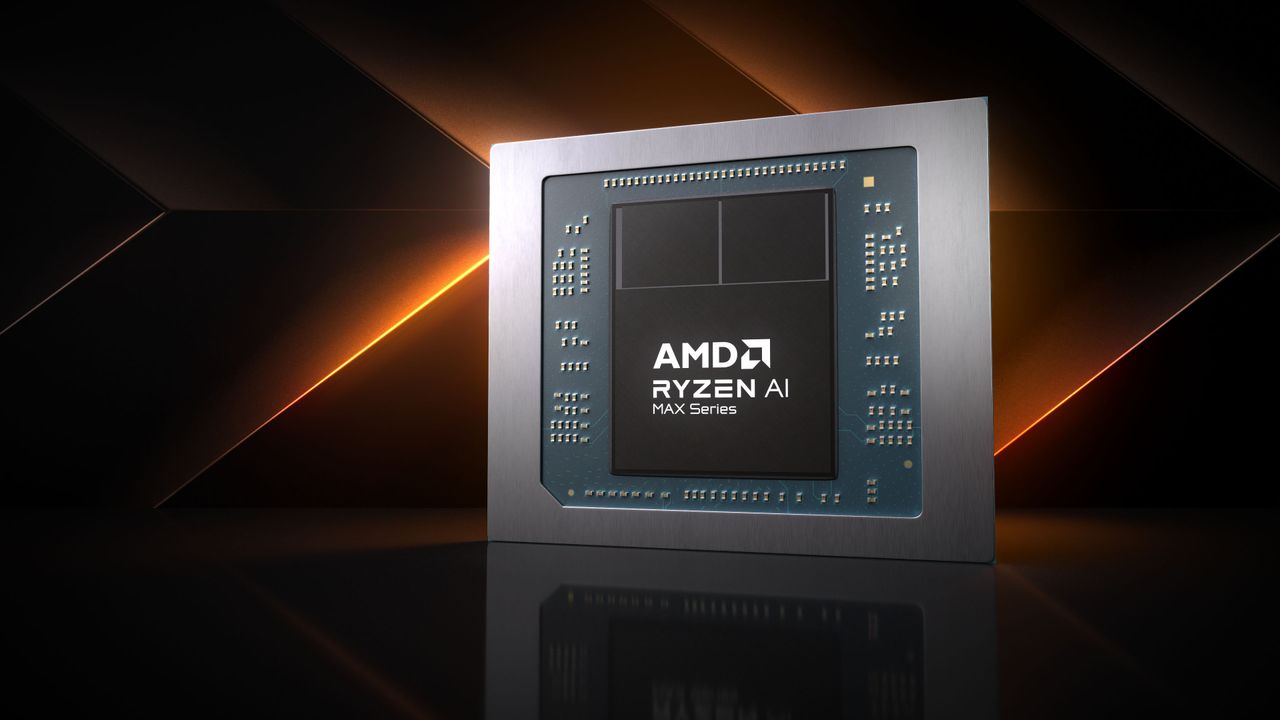
A new leak has provided insights into the performance of AMD’s forthcoming Ryzen AI Max+ 392 mobile processor, which recently appeared in the Geekbench database. The chip recorded a notable score of 2,917 points in the single-core test and 18,071 points in the multi-core test, indicating it could rival high-end desktop CPUs. This performance suggests that future gaming and creator notebooks could offer desktop-class capabilities in a more portable design.
The benchmark results are linked to the Asus TUF Gaming A14 laptop, a system showcased at CES 2026. This means the processor is not merely an engineering sample; it represents real hardware within a gaming-focused line known for delivering high performance at competitive prices.
For gamers and creators, these scores carry significant implications. The single-core performance is crucial for many gaming titles and everyday computing tasks. The score around 2,900 on Geekbench implies responsive performance in areas such as game logic, user interface rendering, and general use of the Windows operating system. This could translate into enhanced minimum frame rates and smoother gameplay in applications that rely predominantly on a single core.
The multi-core performance exceeding 18,000 points indicates robust parallel processing capabilities, essential for demanding workloads. This includes modern game engines that utilize multiple cores, streaming while gaming, video editing and encoding, 3D rendering, and multitasking with several resource-intensive applications open simultaneously.
While specific details such as core count, clock speeds, and power limits remain undisclosed, the raw performance figures indicate that the Ryzen AI Max+ 392 can compete with high-tier desktop processors from recent generations. This typically implies that consumers can anticipate high frame rates when paired with a capable graphics processing unit, provided that the system’s cooling and power delivery mechanisms are adequately engineered.
The designation of this chip as part of the Ryzen AI family also implies the inclusion of dedicated neural processing hardware. Although the Geekbench listing emphasizes CPU performance, the dedicated AI acceleration may enhance features like background noise removal and AI-assisted upscaling, which are increasingly relevant in creative workflows that utilize local machine learning models.
Positioned as a balance between performance and cost, the Asus TUF Gaming lineup typically avoids the extreme high-end market. The presence of the powerful Ryzen AI Max+ 392 within the TUF Gaming A14 suggests that such elevated levels of CPU performance could soon be more accessible to a broader audience rather than being confined to ultra-premium laptops.
For gamers, this combination forecasts high frame rates in titles that depend heavily on CPU performance, improved consistency in open-world and simulation games that require extensive calculations, and sufficient capacity to stream or record gameplay without severe slowdowns. Furthermore, it holds the potential to effectively drive high refresh rate displays at 1080p or 1440p when coupled with a competent discrete GPU.
For content creators and power users, a laptop featuring this processor promises efficient handling of demanding software such as Adobe Premiere, Blender, Photoshop, and various code compilation tasks. It represents a compelling all-in-one solution for students and professionals who wish to engage in gaming during their downtime.
Though early synthetic benchmarks provide a preliminary look, final performance will hinge on factors including thermal design, power limits, memory configurations, and firmware optimizations. Nevertheless, these Geekbench results from the Asus TUF Gaming A14 strongly suggest that the upcoming generation of mobile CPUs, led by the Ryzen AI Max+ 392, will significantly enhance the capabilities of thin and light gaming laptops compared to previous models.
See also AMD Launches Ryzen AI Embedded Processors with Up to 50 TOPS for Edge Applications
 Aveva Launches Four AI Tools for Unified Engineering, Enhancing Design Efficiency and Collaboration
 Global AI Computing Power Surges; Intelligent Power Expected to Exceed 90% by 2030
 AVEVA Launches AI Tools for Unified Engineering, Enhancing Design and Project Efficiency
 SpacemiT Secures $86M for Next-Gen RISC-V AI Chips to Boost Edge Computing