

























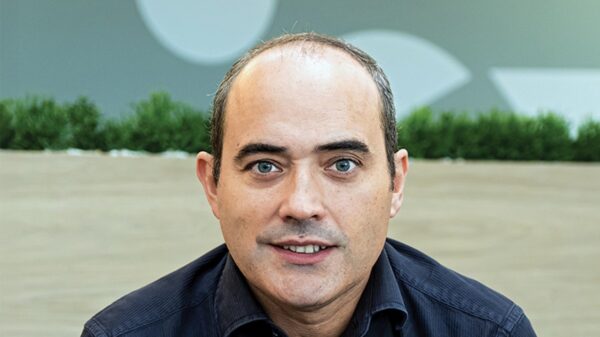





Recent advancements in artificial intelligence are driving significant innovations in software development, particularly in the realm of automated coding and design. Prithvi Rajasekaran, a member of the Labs team, has been exploring the capabilities of Claude, an AI model, to autonomously produce high-quality frontend designs and complete applications without human oversight. This initiative builds upon previous successes in improving Claude’s performance through refined prompt engineering and harness design, although these earlier efforts eventually reached their limits.
To overcome these barriers, Rajasekaran adopted a novel engineering approach inspired by Generative Adversarial Networks (GANs). He established a multi-agent system consisting of a generator and an evaluator, aiming to translate subjective design assessments into objective, gradable criteria. This innovative architecture facilitates Claude’s ability to create cohesive designs by addressing the typical failures seen in naive implementations of AI coding agents.
One persistent issue identified was the tendency of AI models to lose coherence in lengthy tasks, often succumbing to “context anxiety,” where they prematurely conclude their work. To combat this, Rajasekaran introduced context resets and structured handoffs that allowed the next agent to build upon the previous session’s state. By isolating the coding agent from the evaluation process, the overall quality of output improved significantly. The evaluator’s critical feedback creates a concrete benchmark for the generator, allowing for iterative enhancements.
Rajasekaran’s work in frontend design particularly underscores the need for objective grading criteria. He formulated four key metrics: design quality, originality, craft, and functionality. This framework shifted Claude from producing safe, generic layouts toward more aesthetically daring outputs. Notably, after multiple iterations, Claude displayed a remarkable capacity for creativity, transforming a straightforward museum website design into a 3D spatial experience, an unexpected leap in design thinking.
Scaling to Full-Stack Coding
Building on these findings, Rajasekaran adapted the GAN-inspired model for full-stack development. The architecture features three agents: a planner, generator, and evaluator, each designed to address specific challenges encountered in prior experiments. The planner automates the task of converting user prompts into comprehensive product specifications, while the generator implements features in a methodical, sprint-based manner. The evaluator, equipped with advanced testing capabilities, ensures that each build meets stringent quality standards.
In a recent test, Rajasekaran employed Claude Opus 4.5 to generate a retro video game maker. This experiment demonstrated the stark differences in output quality between a solo run and the full harness approach, which required a significantly longer execution time and incurred a higher cost. The full harness yielded an application that was not only visually cohesive but also functionally robust, highlighting the advantages of a multi-agent framework in software development.
As development continues, the next version of the harness utilized Claude Opus 4.6, which promises to enhance the AI’s ability to manage complex tasks without extensive scaffolding. This updated model demonstrated its capability to build a Digital Audio Workstation (DAW) efficiently, reflecting the improvements in agentic tasks and long-context retrieval. Although the application still requires refinement, particularly in its functionality, the success of the project shows the promising future of AI in software engineering.
Rajasekaran’s insights emphasize that as AI models evolve, the surrounding scaffold will need to adapt. This ongoing process of experimentation and iteration ensures that developers can leverage AI’s growing capabilities to tackle increasingly complex tasks. The journey of refining these AI systems illustrates not only the potential for enhanced productivity in software development but also raises questions about the future of human and machine collaboration in creative fields.
See also Tesseract Launches Site Manager and PRISM Vision Badge for Job Site Clarity
 Affordable Android Smartwatches That Offer Great Value and Features
 Russia”s AIDOL Robot Stumbles During Debut in Moscow
 AI Technology Revolutionizes Meat Processing at Cargill Slaughterhouse
 Seagate Unveils Exos 4U100: 3.2PB AI-Ready Storage with Advanced HAMR Tech