













































CAMBRIDGE, UK and NEW YORK — Shares of ARM Holdings (NASDAQ: ARM) surged 16.38% on March 26, 2026, marking the stock’s largest single-day gain since its initial public offering. The rally, which added billions to the company’s market capitalization, was sparked by a combination of record fiscal year-end guidance and the formal launch of its highly anticipated AGI CPU, ARM’s first foray into high-performance silicon tailored for autonomous “agentic” artificial intelligence.
The market’s enthusiastic reaction signals a significant evolution in the AI sector, shifting from the “training era,” characterized by extensive GPU deployments, to the “inference era,” where efficiency and architectural integration are paramount. As data centers confront rising energy demands, ARM’s v9 architecture has emerged as a global benchmark for next-generation AI workloads, positioning the British chip designer as a vital player in the $120 billion AI hardware market.
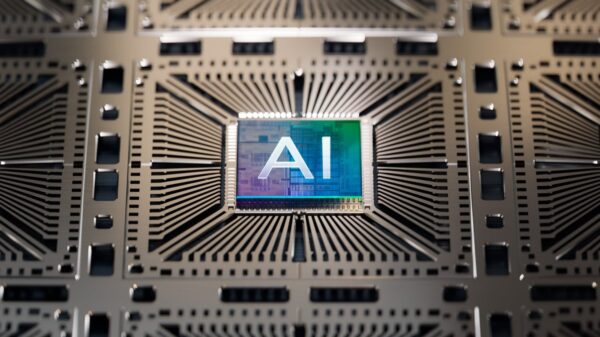
The 16.38% spike followed ARM’s announcement that its AGI CPU, manufactured using TSMC’s (NYSE: TSM) advanced 3nm process, has exceeded expectations in real-world benchmarks for “agentic AI.” Distinct from traditional processors, the AGI CPU incorporates 136 Neoverse V3 cores specifically engineered for the intricate reasoning tasks demanded by autonomous AI agents—software capable of executing multi-step operations independently. This launch represents the culmination of a two-year strategic transition from a pure intellectual property (IP) licensor to a formidable competitor in the high-end merchant silicon market.
The trajectory leading up to this rally began in late 2024 when ARM’s v9 architecture accounted for 25% of the company’s royalty revenue. Throughout 2025, major cloud hyperscalers, including Amazon (NASDAQ: AMZN), Google (NASDAQ: GOOGL), and Microsoft (NASDAQ: MSFT), accelerated their adoption of ARM-based custom chips, such as Graviton5 and Azure Cobalt 200, to reduce dependency on traditional x86 architectures. By early 2026, ARM-based CPUs captured nearly 50% of the data center market, paving the way for the major earnings beat reported this morning.
Key stakeholders, including lead partner Meta Platforms (NASDAQ: META), have expressed intentions to integrate ARM’s new silicon into their hardware stacks. Industry analysts were particularly surprised by ARM’s revised royalty guidance, which now anticipates that v9-based designs will account for over 60% of total revenue by year-end, effectively doubling the profit margin per chip compared to the previous v8 generation.
The immediate beneficiaries of ARM’s rise are specialized semiconductor firms and cloud providers that have transitioned their infrastructure to the ARM ecosystem. NVIDIA (NASDAQ: NVDA) remains a vital ally; its Grace Blackwell Superchips rely heavily on ARM Neoverse cores, and today’s rally for ARM also lifted NVIDIA’s stock as investors bet on continued collaboration between the two companies. Apple (NASDAQ: AAPL) stands to gain significantly as its “Apple Intelligence” platform is built entirely on the v9.2 architecture found in the latest iPhone and Mac models, ensuring its edge-AI capabilities remain cutting-edge.
Conversely, traditional chipmakers like Intel (NASDAQ: INTC) and AMD (NASDAQ: AMD) face growing challenges. Intel, in particular, has struggled to match ARM’s performance-per-watt in the data center—a critical metric for utility firms and green-energy advocates. While AMD has diversified into GPUs, its legacy x86 server business is rapidly losing market share as hyperscalers find ARM-based custom silicon to be 40-50% more cost-effective for AI inference.
Cloud giants such as Amazon and Microsoft find themselves in a complex position; while they benefit from ARM IP to lower operating costs, the introduction of the AGI CPU positions ARM as a direct competitor to their in-house chip initiatives. Market observers are now closely monitoring whether these hyperscalers will continue to develop their own chips or pivot to ARM’s superior “off-the-shelf” high-performance solutions.
This event marks a pivotal moment in the wider trend toward “sustainable AI.” The early years of the AI boom (2023–2024) were characterized by a “growth at all costs” mentality, with energy consumption often sidelined. However, by 2026, the global power grid has become the chief limitation for AI expansion. ARM’s v9 architecture offers the most efficient path forward, delivering substantial performance gains without the significant thermal footprint of its rivals.
The historical context for this shift can be observed in the mobile revolution of the late 2000s, where ARM’s efficiency enabled it to displace x86 in smartphones. A similar scenario is now unfolding in the data center. Moreover, ARM’s move into direct silicon sales mirrors NVIDIA’s transition from a component supplier to a full-system integrator. By controlling both the architecture (v9) and the physical chip (AGI CPU), ARM is establishing a vertically integrated position that competitors may find increasingly difficult to penetrate.
Regulatory scrutiny looms as ARM’s market share in the data center approaches a monopoly-like status, prompting authorities in the UK and EU to question the company’s neutrality. Nonetheless, the pressing demand for more efficient AI compute currently outweighs such regulatory concerns.
Looking ahead, ARM’s prospects are exceptionally bright. The “inference super-cycle”—a phase where AI transitions from mere construction to widespread implementation—is expected to expand at a 37% CAGR through 2033. ARM is strategically positioned to capture this growth, as inference tasks are often better suited for its high-efficiency CPUs than for power-hungry GPUs. In the next 12 to 24 months, ARM plans to extend its AGI CPU lineup into automotive and industrial sectors, where low-power, high-reasoning capabilities are essential for autonomous vehicles and smart factories.
Strategic pivots may involve further acquisitions in the AI software layer to ensure that ARM silicon is the “native” home for the most popular large language models. If ARM can effectively integrate its hardware with the software frameworks used by developers, it could establish its dominance for the next decade, reminiscent of Intel’s influence during the PC era.
Today’s 16.38% rally is more than a response to a strong earnings report; it signifies a market-wide acknowledgment that ARM Holdings has successfully positioned itself as a key player in the AI era. By transitioning from a low-margin licensing model to a high-value hardware powerhouse, ARM has fundamentally transformed its profit profile and strategic relevance within the global economy. Investors should anticipate the initial reviews of the AGI CPU and any alterations in licensing agreements with major cloud providers. Should the AGI CPU achieve gold-standard status for agentic AI, ARM’s goal of reaching $25 billion in annual revenue by 2031 may prove to be conservative. The AI hardware boom is no longer solely about producing the most powerful chip but rather about creating the most efficient one—and as of March 2026, that title firmly rests with ARM.
See also Tesseract Launches Site Manager and PRISM Vision Badge for Job Site Clarity
 Affordable Android Smartwatches That Offer Great Value and Features
 Russia”s AIDOL Robot Stumbles During Debut in Moscow
 AI Technology Revolutionizes Meat Processing at Cargill Slaughterhouse
 Seagate Unveils Exos 4U100: 3.2PB AI-Ready Storage with Advanced HAMR Tech