






















































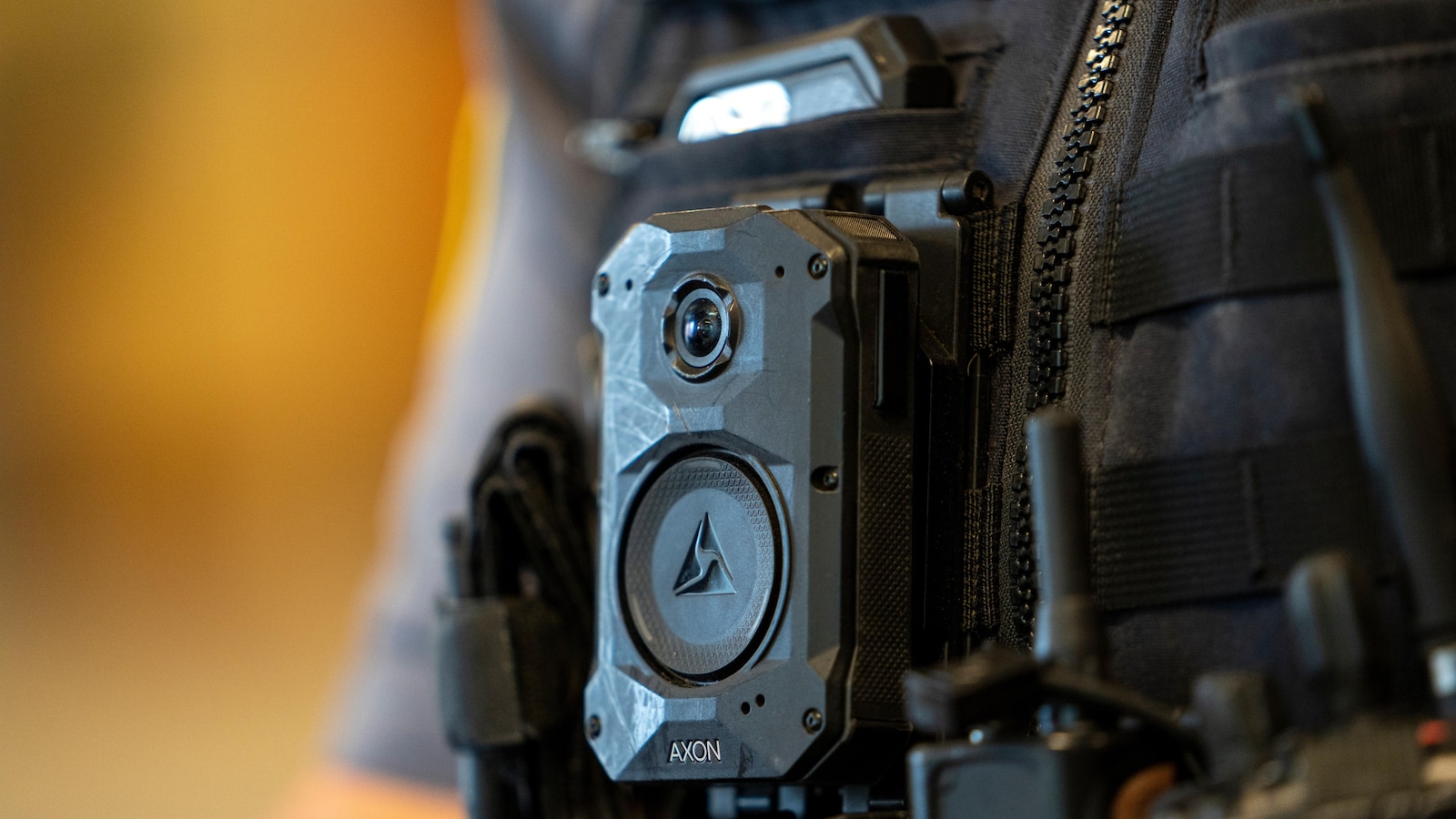
Police body cameras equipped with artificial intelligence are currently being tested in Edmonton, Canada, to identify the faces of approximately 7,000 individuals on a “high risk” watch list. This pilot project, initiated last week, marks a significant trial for facial recognition technology, which has faced scrutiny over its ethical implications in policing across North America.
Six years after Axon Enterprise, Inc., a leading body camera manufacturer, raised alarms regarding the ethical concerns surrounding facial recognition, critics are voicing apprehensions as the Edmonton pilot unfolds. Barry Friedman, a former chair of Axon’s AI ethics board, expressed his worries about the lack of public discourse and expert evaluation on the societal and privacy implications of such technology. “It’s essential not to use these technologies, which have very real costs and risks, unless there’s some clear indication of the benefits,” Friedman stated. He now serves as a law professor at New York University.
In defense of the pilot, Axon founder and CEO Rick Smith emphasized that the initiative is intended as “early-stage field research” rather than a product launch. He believes the initiative can furnish valuable insights and strengthen oversight frameworks that could inform future evaluations in the U.S. “By testing in real-world conditions outside the U.S., we can gather independent insights,” Smith elaborated in a blog post.
The pilot aims to enhance the safety of patrol officers by enabling body-worn cameras to detect individuals flagged for serious offenses such as violence, armed danger, or high-risk behavior. Kurt Martin, acting superintendent of the Edmonton Police Service, indicated that the current watch list consists of 6,341 individuals, in addition to 724 people with serious criminal warrants.
“We really want to make sure that it’s targeted so that these are folks with serious offenses,” said Ann-Li Cooke, Axon’s director of responsible AI. If the pilot proves effective, it could have widespread implications for policing globally. Axon, the dominant supplier of body cameras in the U.S., recently won a contract to supply the Royal Canadian Mounted Police.
Motorola Solutions, a competitor, confirmed it has the capability to integrate facial recognition into its body cameras but has refrained from deploying this feature for proactive identification based on ethical principles. However, it did not rule out future use. In 2023, the Alberta government mandated body cameras for all police agencies, including in Edmonton, aiming to improve transparency, evidence collection, and the resolution of investigations.
Despite the potential benefits, the concept of real-time facial recognition in public spaces has encountered resistance from civil liberties advocates across the political spectrum. Concerns about the technology’s accuracy, particularly regarding bias against race, gender, and age, have led to heightened scrutiny. Studies have shown that facial recognition is less reliable in real-time scenarios compared to controlled environments, prompting laws in several U.S. states and cities to limit its use.
In contrast, the European Union has outlawed real-time facial recognition technology for policing across its member states, with exceptions for serious crimes. Meanwhile, the UK has been experimenting with the technology since its departure from the EU, recently reporting 1,300 arrests facilitated by facial recognition.
Details surrounding the Edmonton pilot remain largely confidential, including the third-party vendor responsible for the facial recognition technology. The pilot will run through December and will only operate in daylight. Martin noted that environmental factors, such as lighting and cold temperatures, will be considered in evaluating the pilot’s success.
Approximately 50 officers involved in the pilot will not learn if the facial recognition software identifies a match in real-time; instead, the outputs will be analyzed later. In future scenarios, this technology could assist officers in identifying potential threats while responding to calls, but only after the officers have initiated an investigation.
“We really want to respect individuals’ rights and their privacy interests,” Martin emphasized. The Alberta Information and Privacy Commissioner, Diane McLeod, confirmed that her office is conducting a review of the privacy impact assessment submitted by the Edmonton Police Service.
Temitope Oriola, a criminology professor at the University of Alberta, remarked that Edmonton’s trial of live facial recognition technology aligns with its growing presence in various sectors, including airport security. “Edmonton is a laboratory for this tool,” he said, adding that it is unclear whether this initiative will improve public safety or community relations.
Axon has previously faced criticism over its technology implementations, notably in 2022 when Friedman and several other board members resigned over concerns regarding a Taser-equipped drone. Smith has since asserted that the company has conducted ongoing, controlled research into facial recognition technology, claiming it has become “significantly more accurate.” However, Axon also acknowledged that factors like distance and lighting can disproportionately affect accuracy for individuals with darker skin tones.
Friedman called for greater transparency in the evaluation processes, expressing a desire to see more evidence of improvements in facial recognition since Axon last deemed it unreliable for police use. He cautioned against police agencies making unilateral decisions on the technology’s deployment without thorough oversight and scientific testing, stating, “A pilot is a great idea. But there’s supposed to be transparency, accountability. … None of that’s here.”
See also AI Enhances Spacecraft Propulsion Efficiency, Paving Way for Nuclear-Powered Rockets
 Fluidstack Seeks $700M Funding at $7B Valuation Amid AI Data Center Surge
 Generative AI Models Transform Quality Engineering Test Strategies for Enhanced Efficiency
 AI Funders Influence Media Coverage Amid Growing Debate Over Safety and Regulation
 China Aims for AI Leadership with $53.8B Investment in Cloud and Infrastructure