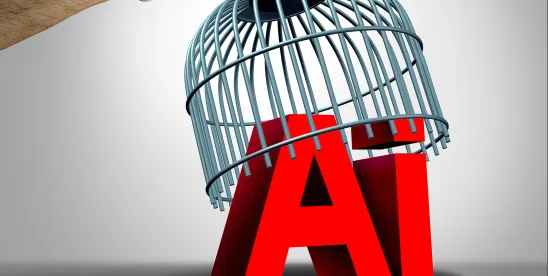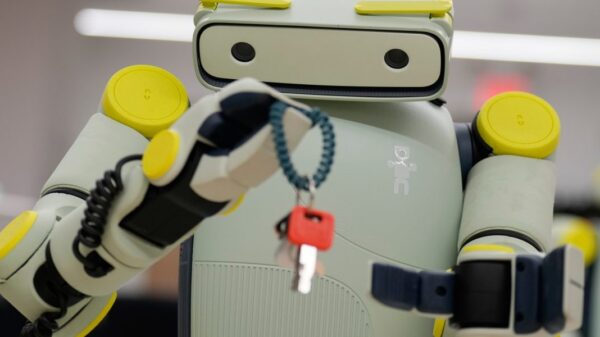
U.S. Senator Bernie Sanders has intensified his critique of artificial intelligence, tying the technology’s rapid advancement to economic instability for millions of Americans. In an appearance on CNN’s State of the Union on Sunday, Sanders described AI as “the most consequential technology in the history of humanity,” urging lawmakers to consider its profound implications for the workforce and society at large.
Sanders, who identifies as an independent but aligns with the Democratic Party, expressed concern over the potential for widespread job loss due to automation, questioning how individuals will support their families without employment. “If there are no jobs and humans won’t be needed for most things, how do people get an income to feed their families, to get healthcare or to pay the rent?” he asked. He lamented the lack of discussion in Congress about the societal impacts of AI.
As he prepares to assist in swearing in New York mayor-elect Zohran Mamdani, Sanders pointed to the financial motives of tech industry leaders like Elon Musk, Mark Zuckerberg, Jeff Bezos, and Peter Thiel. He cast doubt on their commitment to addressing the concerns of everyday workers, stating, “You think they’re staying up nights worrying about working people and how this technology will impact those people? They are not. They are doing it to get richer and even more powerful.”
Sanders also raised alarms about the growing reliance on AI chatbots for emotional support, questioning the long-term implications of such developments on human interaction. “If this trend continues, what does it mean over the years when people are not getting their support, their interaction from other human beings, but from a machine?” he pondered. “What does that mean to humanity?”
The conversation on AI governance gained traction during the same broadcast, as Republican Senator Katie Britt of Alabama discussed her proposed legislation aimed at protecting minors from AI interactions. The Guardianship Over Artificial Intelligence Relationships (Guard) Act seeks to prohibit AI companions for minors, requiring that such systems disclose their artificial nature and lack of professional credentials. The bill aims to impose criminal liability on companies offering AI companions that could expose minors to harmful content.
Britt recounted troubling anecdotes from parents whose children became isolated due to interactions with chatbots, some of which allegedly exacerbated mental health issues. “If these AI companies can make the most brilliant machines in the world, they could do us all a service by putting up proper guardrails,” she asserted. “That did not allow for minors to utilize these things, that also told the user consistently that they are not a physician, they are not a psychiatrist, ‘I am a machine.’”
The overlapping concerns expressed by Sanders and Britt highlight a rare bipartisan understanding of the need for regulatory frameworks addressing AI technology. Sanders called for Congress to conduct a comprehensive study on AI’s effects on mental health, echoing Britt’s sentiments about the necessity for protective measures. “I worry very much about kids spending their entire days getting emotional support,” he said, emphasizing the urgency of legislative action.
Sanders also suggested that lawmakers should consider imposing a moratorium on new AI datacenters, arguing that the tech industry’s rapid expansion warrants a pause. “Frankly, I think you have got to slow this process down,” he urged, questioning the assurances offered by tech leaders. “What are they going to do when people have no jobs? What are they going to do, make housing free?”
In an era where AI’s influence continues to grow, the dialogue initiated by Sanders and Britt underscores the increasing demand for a balanced approach to technological development that safeguards public interests while addressing innovation. As lawmakers grapple with these complex issues, the stakes for economic stability and mental health remain high.
See also Broadcom Hits $352.13 as AI Demand Soars, Yet Margins Face Pressure Ahead of Q1
 PowerBank Launches DeStarlink Genesis-1, Pioneering Orbital Cloud Infrastructure
 Middle East Tech Market Set for $174.9B Growth as AI and Cybersecurity Shape 2026 Strategies
 Shanghai Jiao Tong University and Huawei Launch Zhiyuan-1 with 633 PFLOPS for AI Research
 AZIO AI Achieves $480M Valuation Amid Rapid Revenue Growth and Strategic Mergers