














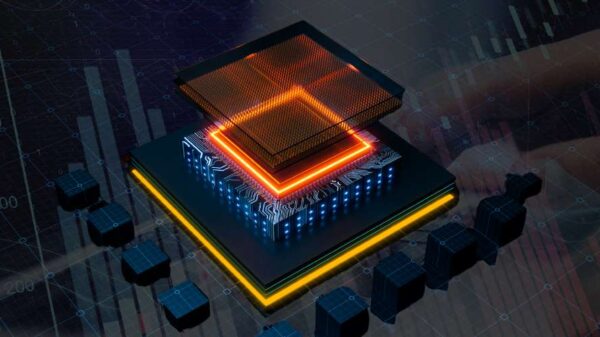









































ByteDance, the parent company of TikTok and Douyin, is poised to make a historic leap in artificial intelligence hardware investment, planning to allocate approximately 100 billion yuan, or nearly $14 billion, for Nvidia AI chips by 2026. This ambitious undertaking underscores the Chinese tech giant’s determination to advance its AI capabilities despite ongoing geopolitical tensions and trade constraints, as reported by Reuters and Yahoo Finance.
This investment initiative is not merely about acquiring chips; it signals a significant shift in the strategy of global technology firms gearing up for the next phase of AI competition. ByteDance aims to solidify its status as a long-term leader in AI by enhancing its suite of offerings, which ranges from generative AI tools to sophisticated recommendation systems and cloud services.
ByteDance’s projected spending is considered one of the largest single-year AI hardware investments by a private entity. The funds are intended to bolster the company’s computing infrastructure to support advanced machine learning models, content algorithms, and next-generation AI services. Operating platforms such as TikTok, Douyin, CapCut, and various enterprise AI products, ByteDance’s needs are vast, relying heavily on real-time recommendations and generative content tools.
The scale of AI models necessitates substantial computing power, and Nvidia’s advanced GPUs are recognized as the industry standard for training large language models and executing inference workloads at scale. Reports indicate that ByteDance’s planned purchase includes Nvidia chips optimized for extensive AI training and data center operations, even amid U.S. export controls that restrict certain advanced chip sales to China.
ByteDance is expected to deploy these Nvidia chips across various business lines, enhancing content personalization, video creation tools, enterprise AI services, and research into general-purpose AI systems. The company has already made significant investments in AI research labs both domestically and internationally, and this new chip acquisition aims to fortify its computing backbone for the foreseeable future.
Key areas of deployment are likely to include large language models for content moderation and recommendations, video generation and AI-assisted editing tools, advertising optimization driven by AI, and cloud-based AI services for enterprise clients. This significant investment will also help reduce ByteDance’s reliance on third-party cloud providers.
Even with rising competition from local Chinese chip manufacturers, Nvidia continues to be ByteDance’s top choice for advanced AI workloads, thanks to its high efficiency and robust software support. The dominating CUDA ecosystem further complicates matters for potential alternatives, solidifying Nvidia’s position in the market even as China accelerates local semiconductor development.
U.S. export regulations pose a challenge, yet companies like Nvidia have adapted their product lines to comply while still meeting customer needs. ByteDance’s reported purchases are believed to consist of Nvidia chips that align with U.S. export rules, facilitating the company’s AI operations without breaching trade regulations. This situation illustrates the intricate balance between geopolitical factors and technological demand.
The announcement of ByteDance’s planned purchase has reverberated throughout global markets, with analysts perceiving it as a positive indicator for Nvidia’s long-term revenue prospects, particularly in Asia. This development reinforces the notion that demand for AI infrastructure remains robust, even in the face of economic uncertainties.
Market implications include the strengthening of Nvidia’s global AI hardware position, heightened competition among Chinese tech firms to secure AI resources, increased pressure on chip supply chains, and ongoing investments in data centers and cloud infrastructure. Such strategic investments underscore the vital importance of AI computing for both national interests and corporate competitiveness.
Industry experts suggest that ByteDance is preparing for an era where AI influences nearly every facet of digital engagement. As companies that invest in AI infrastructure early are likely to dominate digital ecosystems in the coming decade, ByteDance’s spending reflects confidence in long-term AI monetization, regardless of regulatory and economic pressures.
For consumers, ByteDance’s investment could translate into enhanced recommendations, more sophisticated content creation tools, and immersive digital interactions. Content creators may also benefit from improved editing tools and AI-driven audience targeting, while businesses utilizing ByteDance platforms could enjoy more precise analytics and advertising strategies.
This planned expenditure indicates ByteDance’s long-term commitment to AI as a fundamental driver of business growth. As AI technology becomes increasingly intertwined with daily life, companies with robust computing infrastructures will likely secure a significant competitive advantage. The impending investment not only marks a pivotal moment for ByteDance but also reflects broader trends in the global tech landscape, emphasizing the importance of artificial intelligence in shaping future digital interactions.
As the technology sector continues to evolve, the implications of ByteDance’s massive investment will be closely monitored, heralding a new chapter in the competitive landscape of AI innovation.
See also AI Workshop Reveals Effective Strategies for Implementing AI in AEC Projects
 US Army Launches AI Officer Corps to Transform Military into Data-Centric Force
 AI Chip Demand Surges to $400 Billion in 2025, Projected to Reach $800 Billion by 2026
 NTT Data Adopts Generative AI Platform to Transform IT Development by 2026
 Meta Shares Dip 0.9% Amid Scam Ad Scrutiny; $2B Manus AI Acquisition Sparks Focus