





















































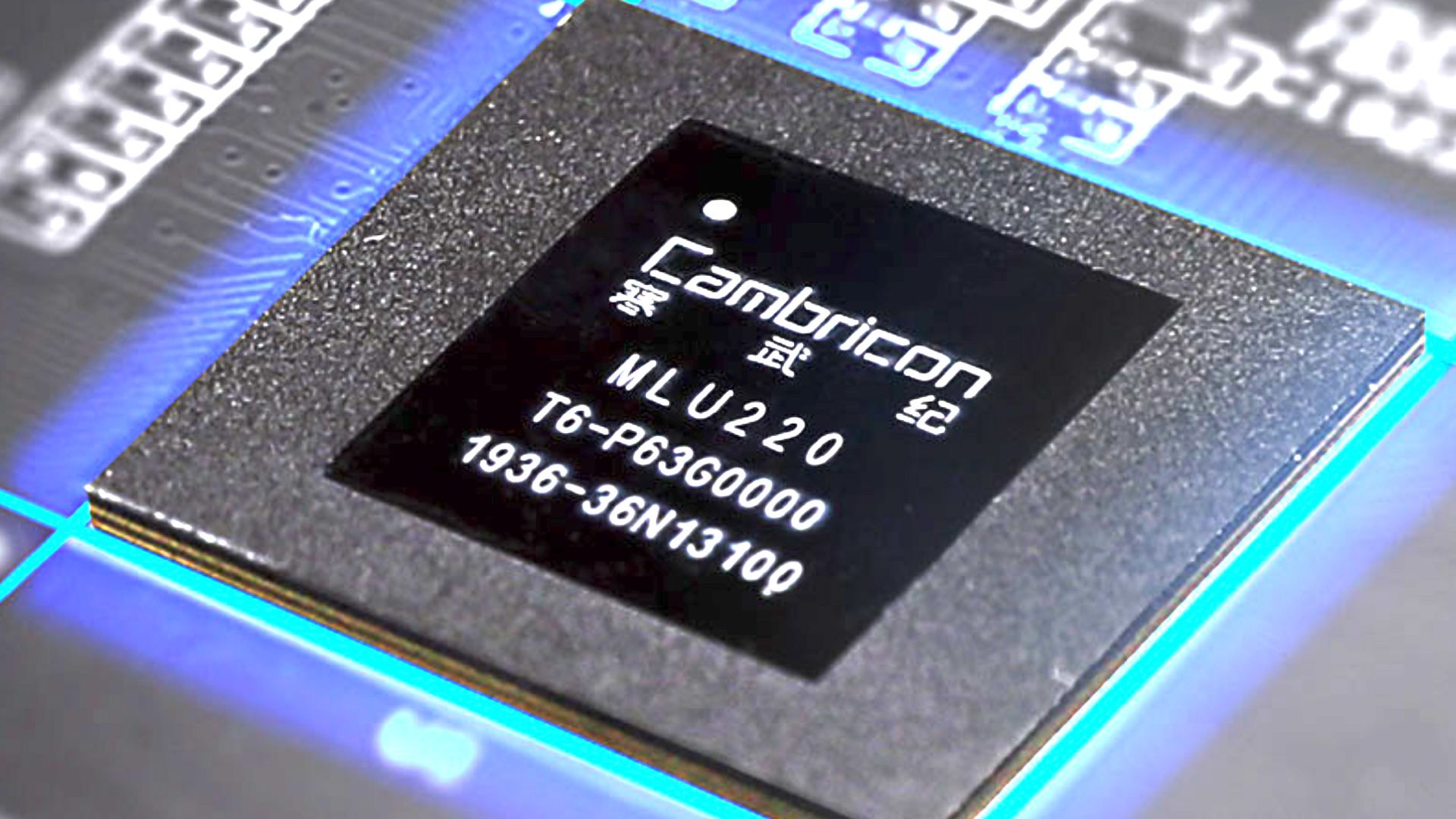
Cambricon Technologies is set to undertake one of the most ambitious production ramp-ups in the history of Chinese AI chipmaking, with plans to deliver approximately 500,000 AI accelerators by 2026. According to Bloomberg, this includes up to 300,000 units of its flagship Siyuan 590 and 690 processors. This production target, which represents a more than threefold increase from its 2025 output, comes amid ongoing challenges posed by U.S. export controls and geopolitical tensions, forcing Chinese firms to adjust their hardware strategies.
In the landscape of AI computing, the Siyuan line has emerged as Cambricon’s leading portfolio for both training and inference applications. The company counts ByteDance as its largest customer and looks to expand its collaboration with Alibaba as these companies enhance their domestic AI infrastructures.
Significantly, this shift in production is influenced by recent domestic policies, with Chinese officials encouraging major tech firms to decrease their reliance on Nvidia hardware. This initiative presents an opportunity for Cambricon and other local suppliers to fill the resulting gap in the market.
However, despite these ambitions, Cambricon faces considerable challenges in manufacturing. The company relies on SMIC’s N+2 (7nm) processes for its advanced chips, which utilize deep ultraviolet (DUV) lithography rather than the more efficient extreme ultraviolet (EUV) techniques employed by competitors like TSMC and Samsung. While SMIC’s technology can produce complex chips, the multi-patterning tests involved lead to higher costs and performance limitations.
Bloomberg reports that yield rates for Cambricon’s largest dies hover around 20%, meaning that approximately four out of five chips produced do not meet necessary specifications, such as voltage or frequency targets. Although some of these defective chips could potentially be repurposed for lower-end products, this yield rate is significantly below industry standards; for instance, TSMC’s 2nm process has demonstrated yields exceeding 60%.
The competitive landscape for wafer supply further complicates matters. Huawei, which has integrated its Ascend accelerators into many domestic training clusters, also depends on SMIC for production. The resurgence of demand for smartphone system-on-chips (SoCs) from Huawei has compounded the challenge, as any increase in Cambricon’s production capacity necessitates a reallocation of resources within SMIC, which services multiple key clients.
Even if Cambricon navigates these manufacturing hurdles, securing adequate memory supplies presents another critical challenge. AI accelerators require substantial amounts of high-bandwidth memory (HBM) to operate effectively. Currently, the HBM market is dominated by South Korean suppliers such as SK Hynix and Samsung, and despite investments, China has yet to establish a competitive domestic alternative. HBM shortages could significantly impede Cambricon’s ability to deploy its planned chip volume, even if they achieve their production targets.
Packaging solutions also play a vital role, as advanced integration and interconnect technologies are necessary for optimal performance. Although China’s packaging capabilities have improved, they still lag behind the sophisticated processes utilized by companies like Nvidia and AMD, limiting Cambricon’s options for chip configuration and memory integration.
The evolving procurement landscape among China’s major tech players is pivotal. With ByteDance accounting for more than half of Cambricon’s orders, and Alibaba poised to increase its involvement, the domestic market for AI chips is shifting. This is reflected in Cambricon’s recent financial performance, which showed a fourteen-fold increase in revenue during the September quarter, marking a return to profitability after several prior years of losses.
Other competitors, including Huawei, Hygon, MetaX, and Moore Threads, are also vying for various segments of the AI computing market. Yet, Cambricon’s strategic position within China’s largest internet companies enhances its influence over the domestic ecosystem’s growth. Should the Siyuan 690 meet performance expectations and yield rates improve, Cambricon could become a viable alternative to traditional Nvidia architectures, especially within China.
Nonetheless, significant performance gaps remain between Chinese offerings and Nvidia’s leading chips, particularly in processing power, memory bandwidth, and software development. These disparities are critical as Chinese manufacturers face pressure to reduce reliance on foreign technology and navigate the uncertainties of future supply chains. Cambricon’s goals for 2026 underscore a robust domestic demand and a strong dependence on local manufacturing capabilities. Achieving the target of 500,000 units could demonstrate that SMIC’s N+2 process can support much larger volumes of AI silicon than previously anticipated. Conversely, any shortfall would highlight the inherent limitations of China’s semiconductor manufacturing sector amidst its quest for technological self-sufficiency.
See also CYBRET AI Launches Autonomous Cyber Defence Systems Backed by Leading Nordic VCs
 AI One Signs 5,594 SF Lease in Flatiron District as Tech Firms Expand Office Footprints
 Cysic Launches Mainnet and $CYS Token to Decentralize ZK Proof Generation at Scale
 Aible Unveils Automated AI Agents with NVIDIA and HPE to Tackle Business Volatility