






















































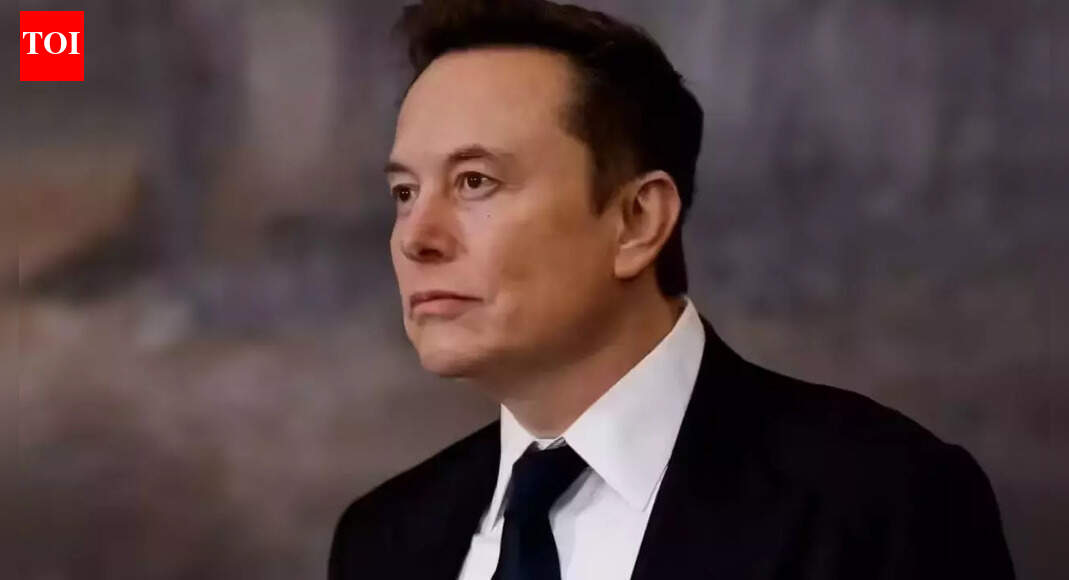
Tesla CEO Elon Musk has issued a stark warning about an impending “all-out war” in the realm of artificial intelligence hardware, citing Nvidia’s upcoming Blackwell chips as a pivotal factor in this evolving landscape. Musk’s comments followed investor Gavin Baker’s discussion on the “Invest Like the Best” podcast, where he highlighted the escalating competition among key players in AI infrastructure. According to Musk, the speed of hardware deployment, particularly in robotics, is crucial, stating, “AI is the highest ELO battle ever,” referencing the Elo rating system traditionally used in chess to evaluate competitive performance.
Baker elaborated on the challenges Nvidia faces in transitioning from its current Hopper chips to the Blackwell platform, describing it as “by far the most complex product transition we’ve ever gone through in technology.” This complexity includes increased power consumption, the need for liquid cooling, heavier rack systems, and effective heat management. The delays in Blackwell’s rollout have inadvertently allowed Google to gain a competitive edge, positioning itself as a low-cost producer of AI tokens and aggressively cutting prices to pressure rivals. Baker characterized Google’s strategy as rational but cautioned that it risks “sucking the economic oxygen out of the AI ecosystem.”
Looking ahead, Baker noted that the first major AI models trained on Blackwell chips are expected to debut in early 2026, with Musk’s xAI likely among the initial adopters. The new GB300 systems are designed for easy integration, potentially making Nvidia’s AI solutions the most cost-effective on the market. This shift could put Google’s current low-cost approach under strain, impacting its profit margins and stock performance. Baker warned that sustaining significant losses would be “painful” and might reshape competitive dynamics across the AI sector.
Compounding the competitive atmosphere, Meta Platforms is reportedly in discussions to acquire Google’s tensor processing units (TPUs) for its data centers by 2026, with broader deployment slated for 2027. Nvidia has acknowledged Google’s advancements but maintains that it remains “a generation ahead” of its competitors. Musk’s warning highlights the intense hardware-centric race in AI, where efficiency, speed, and scale are likely to dictate market leaders.
As Nvidia prepares to launch its Blackwell chips, the stakes in the AI infrastructure battle are set to escalate significantly. With major players like Google, Meta, and Nvidia vying for dominance in a rapidly evolving market, the next few years may prove crucial in defining the future landscape of artificial intelligence technology. The implications of these developments will extend beyond immediate market competition, influencing the broader strategies that tech companies adopt in their pursuit of innovation and economic viability.
See also Tiiny AI Launches Pocket-Sized Supercomputer, Verified as World’s Smallest by Guinness
 Google Invests $1M in AI Research to Combat Dementia with Tohoku University Partnership
 Top 5 AI Stocks for 2026: AMD, Alphabet, and Broadcom Lead Investment Insights
 Google Unveils Budget Tracker and BATS Framework to Enhance AI Tool Efficiency by 31%
 $400B AI Chip Investment Faces Scrutiny as Lifespan Estimates Shorten to 2-3 Years