





























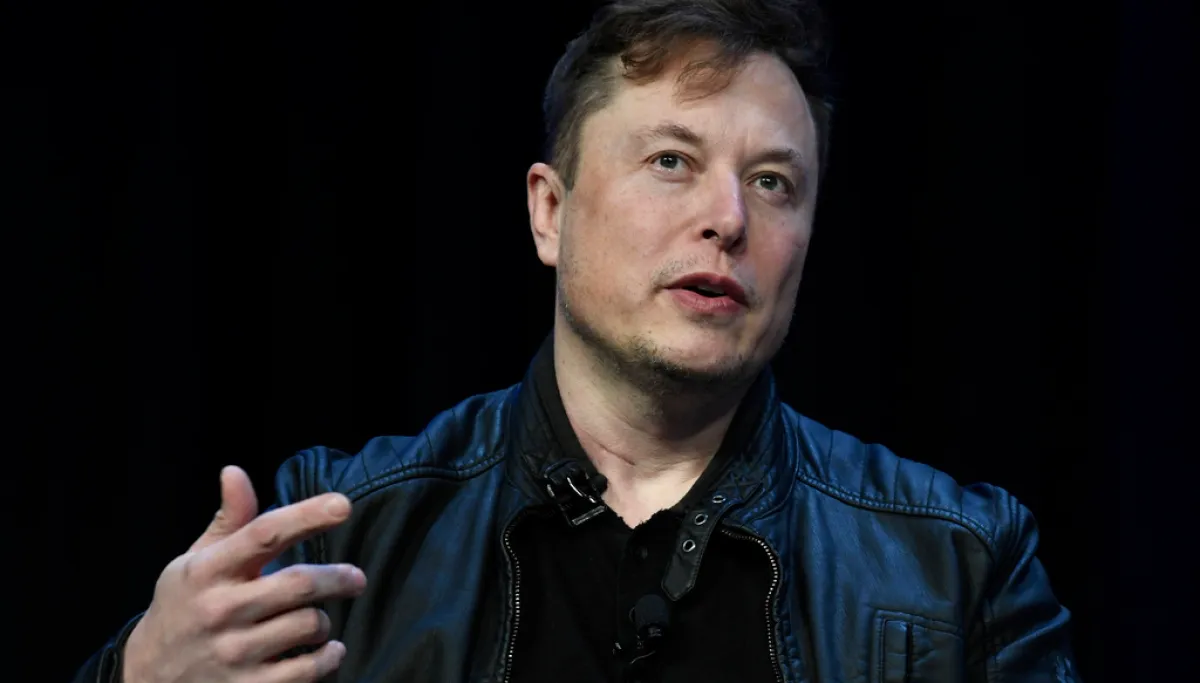
The future of work in an age of artificial intelligence (AI) is fraught with uncertainty, even as tech leaders express optimism about its transformative potential. Figures such as Elon Musk of xAI and Sam Altman of OpenAI have suggested that AI could redefine labor, making many jobs obsolete and paving the way for a society where work is optional. Musk, in particular, described a vision of “generally sustainable abundance” during a recent podcast, illustrating his belief in AI’s ability to automate tasks on a mass scale and significantly boost productivity.
Despite these promises, experts warn that the road to such a future is riddled with challenges. Conversations with professionals in the field reveal that the optimistic predictions hinge on the still-theoretical concept of artificial general intelligence (AGI). The uncertainty surrounding how advanced AI will be able to replicate all human tasks raises significant questions. “There are gaps in this utopian picture that don’t necessarily connect and don’t necessarily have a clear timeline or a clear causal chain,” said Kevin Frazier, an AI innovation and law fellow at the University of Texas School of Law.
Frazier pointed out that fundamental questions remain: Who will oversee the robots? Who will maintain them? “The second you start to ask some additional questions about who the resources would be compiling to, who will be managing both the AI systems and the physical infrastructure that’s required to sustain this vision — these, to me, are among the many unanswered questions,” he explained.
Daniel Cochrane, a senior research associate at the Heritage Foundation’s Center for Technology and the Human Person, echoed these concerns about the prevailing “high-level rhetoric” surrounding AGI. He cautioned that there is substantial disagreement regarding the practical implications of these advancements. “There’s a lot of smoke and mirrors,” Cochrane remarked, underscoring the uncertainty inherent in these ambitious predictions.
Nonetheless, the economic impact of AI is already being felt. A recent study from the Massachusetts Institute of Technology indicated that AI could replace 11.7% of the U.S. labor market, a trend accelerated by the technology’s ability to automate numerous jobs. Cochrane noted that significant improvements in AI technology are observable, exemplified by Anthropic’s Claude Opus 4.5 model launched in November. He suggested that while larger companies like Walmart and Amazon are exploring ways to integrate AI into their operations, smaller businesses could also benefit from reduced operational costs and improved efficiency.
As AI continues to evolve, job displacement appears inevitable. Frazier predicts that by 2026, AI will have increasingly taken over routine tasks in knowledge industries, such as legal, government, and human resources sectors, leading to a decline in entry-level job opportunities. “Automation and the use of artificial intelligence are going to reduce the total number of workers that are needed in those industries,” he pointed out, emphasizing that certain core tasks will increasingly be handled by machines.
In light of these anticipated layoffs, experts suggest that proactive measures are essential for reintegrating displaced workers into the labor market. Frazier highlights the importance of expanding private-public collaboration to ensure retraining programs yield long-term benefits. He advocates for improved communication between companies and training programs to better align skills with job market demands over the next decade.
Cochrane remains skeptical that AI will fully replace human roles across the board. He cited the societal value placed on human connection, particularly in fields like healthcare and counseling. “There’s a certain sense of dignity that is lost if there’s no human being in the loop overseeing those machines,” he asserted, drawing attention to the crucial human elements that technology may not replicate.
A recent YouGov poll revealed that 72% of U.S. adults are concerned about the broader economic effects of AI, echoing similar findings from a summer survey by Reuters, where 71% expressed apprehension about permanent job losses. This growing anxiety is compounded by fears of diminished human connection, with many worried that relationships might be sacrificed for AI companionship.
As discussions continue, Cochrane cautioned against the narrative propagated by certain tech elites suggesting AI could develop to the point of building trusting relationships like humans. He argued that such views risk oversimplifying the complexities of human experience, reducing people to mere “biological calculators.” “Human beings are, by our nature, not just rational calculators. We are souls, and we have the ability to make moral judgments,” he concluded, highlighting the irreplaceable essence of human interactions in a technology-driven future.
See also Nvidia Reveals Four Key Inversions Shaping GPU Economics and AI Hardware Value
 Micron Technology’s 170% Surge: Is It Still a Millionaire-Maker Stock?
 Shanghai Jiao Tong University Unveils LightGen, Breakthrough All-Optical Chip for Generative AI
 AI Bubble Fears Rise: $1.4 Trillion OpenAI Investment Faces Profitability Challenges
 MINISFORUM and AMD Launch AI Mini Workstation MS-S1 MAX, Cutting Costs by 80%