


















































The competition for global artificial intelligence (AI) computing power is escalating rapidly, fundamentally altering the technology landscape. A report from Huachuang Securities, citing predictions from the China Academy of Information and Communications Technology (CAICT), indicates that by 2030, the global computing power scale will surpass 16 ZFlops. Intelligent computing power is expected to grow from 63% in 2023, equivalent to 875 EFlops, to over 90% by 2030. This shift signifies a transition in the AI market from general-purpose computing to specialized solutions, driving tech giants to emulate NVIDIA’s InfiniBand and NVLink technologies through frameworks like UCE and UALink, aiming to reshape market dynamics with a combination of open interconnects and dedicated chips.
The report highlights several key trends. Firstly, the demand for global intelligent computing power is set to surge, with projections indicating that by the end of the decade, the computing power scale will reach unprecedented levels. NVIDIA’s strategy is currently leading the market; in 2024, AI servers with GPUs are anticipated to account for approximately 71% of the market, with NVIDIA capturing nearly 90% of this segment while AMD holds around 8%. The rapid growth in the need for computational inference is pushing major cloud providers like Google Cloud, Amazon Web Services, and Microsoft to develop proprietary ASIC chips tailored to optimize performance and costs.
In terms of market positioning, specialized semiconductor firms are establishing themselves as pivotal players. For instance, Broadcom has formed longstanding partnerships with hyperscale clients such as Google and Amazon, leading the ASIC market with a 55%-60% market share. Marvell Technology follows with a 13%-15% share. This competition further intensifies as AI firms strive for efficient, customized solutions amid soaring demand.
NVIDIA’s data center business is experiencing remarkable growth, driven by its robust CUDA ecosystem, which integrates software and hardware. The CUDA programming model, paired with hundreds of domain-specific software libraries and APIs, has created a significant barrier to entry, often referred to as a “moat.” With cumulative downloads surpassing 53 million, CUDA supports 5 million developers and thousands of AI companies. The fiscal year 2025 is projected to see NVIDIA’s data center revenue soar to $115.19 billion, accounting for 88.3% of total revenue, as it overtakes gaming as the company’s primary revenue driver.
Broadcom’s emergence as a “hidden champion” in AI-dedicated chips underscores its strategic focus on ASIC technology. Leveraging open standards such as Ethernet and PCIe, Broadcom is heavily involved in constructing the infrastructure needed for large-scale AI operations. In fiscal year 2025, the company expects to generate $20 billion in AI business revenue, reflecting a 65% year-on-year increase, while its semiconductor division is projected to reach $36.86 billion, comprising 58% of total revenue.
As the AI computing power ecosystem becomes increasingly competitive, companies are rapidly pivoting towards specialized solutions. NVIDIA continues to lead in global semiconductor sales, with $57 billion in revenue for Q3 2025, according to data from the World Semiconductor Trade Statistics (WSTS). The focus now shifts toward ASICs, with industry players aiming to establish themselves in this critical area. Notably, AMD is enhancing its ecosystem development, with the MI350 series chips set to compete effectively against NVIDIA’s offerings. AMD aims for a substantial increase in AI performance over the next few years, targeting a 1000-fold improvement by 2027.
Large cloud vendors are also prioritizing vertical integration by developing their own chips to minimize reliance on external suppliers. This strategic move aims to optimize cost structures and drive the industry towards tailored, specialized solutions. As the competition intensifies, it is evident that the AI computing landscape is undergoing a significant transformation, characterized by a shift towards heterogeneous integration and the localization of computing capabilities.
Looking ahead, investors are advised to closely monitor companies at the forefront of this evolving landscape. In the A-share market, notable firms include Cambricon, Hygon, and Inspur Information, while the U.S. market features giants like NVIDIA, Broadcom, and Advanced Micro Devices. These companies are poised to capitalize on the growing demand for intelligent computing solutions, which is expected to reshape industries globally.
See also AVEVA Launches AI Tools for Unified Engineering, Enhancing Design and Project Efficiency
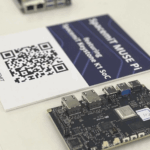 SpacemiT Secures $86M for Next-Gen RISC-V AI Chips to Boost Edge Computing
 Lenovo Partners with Borussia Dortmund as AI Innovation Leader, Investing $2 Billion in Tech Upgrade
 Etched Secures $500 Million Funding Round, Reaches $5 Billion Valuation in AI Processor Market
 AI’s Risks in Education Outweigh Benefits, Brookings Study Reveals Global Concerns