









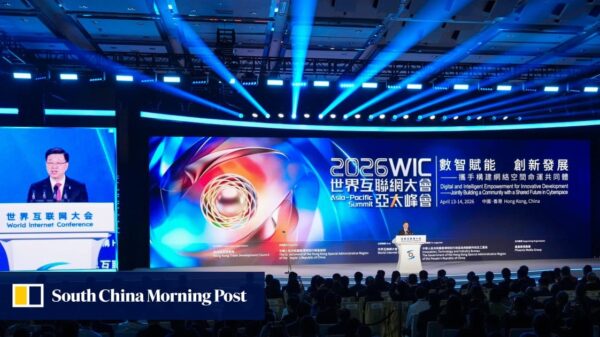


































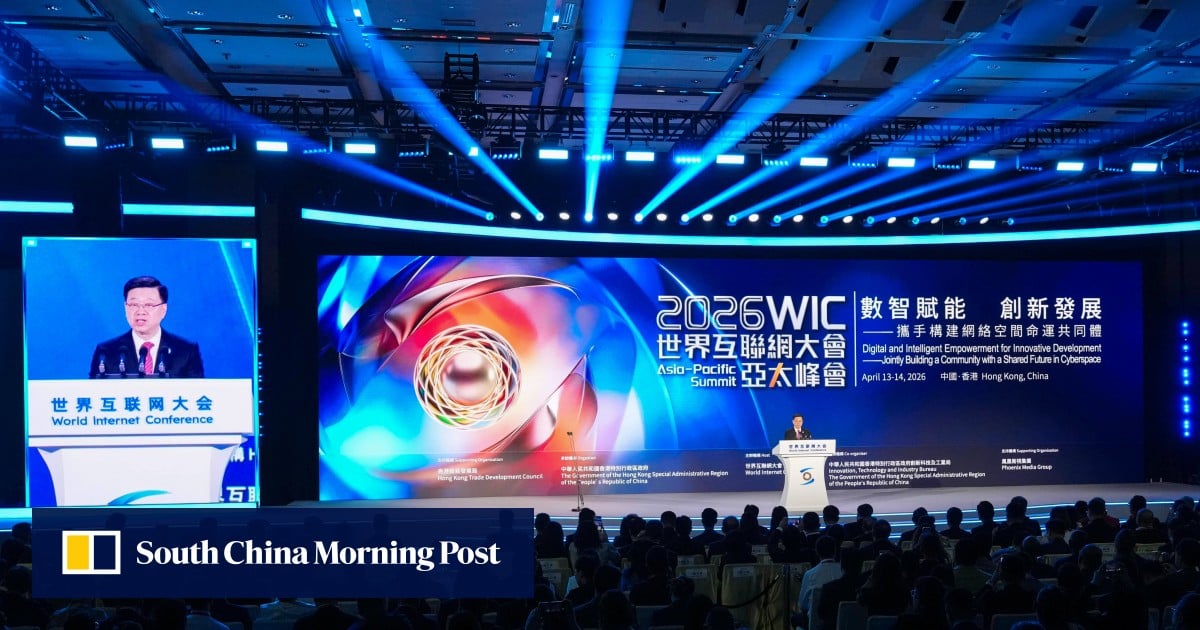
Hong Kong is positioning itself for a monumental leap in supercomputing power, banking on a 36-fold increase to solidify its status as a leading global hub for artificial intelligence (AI). This ambitious plan was outlined by Chief Executive John Lee Ka-chiu during his keynote address at the 2026 World Internet Conference (WIC) Asia-Pacific Summit, held at the Hong Kong Convention and Exhibition Centre in Wan Chai on Monday. In a competitive race for digital supremacy, Lee highlighted the city’s infrastructure development as a pivotal element in its strategy to rival renowned tech centers like London and New York.
“We are formulating a comprehensive strategy that combines world-class infrastructure, cutting-edge research and development, and a culture of responsible innovation. Boosting our computing power, a key driver of AI development, is a top priority,” Lee stated, emphasizing the significance of robust technological frameworks in advancing the region’s digital capabilities.
Currently, Hong Kong operates with a computing power of 5,000 petaflops, a figure that saw a significant boost with the launch of the Cyberport AI Supercomputing Centre in late 2024. However, the city is not resting on its laurels. Looking ahead, the government is focused on developing a new data facility cluster in Sandy Ridge as part of the larger Northern Metropolis megaproject. Lee announced that by 2032, this facility will deliver an astonishing 180,000 petaflops of computing power.
“That is 36 times Hong Kong’s current computing power,” he remarked to an audience of over 1,000 global delegates, underlining the scale of the planned investment and its potential impact on the city’s AI landscape.
The ambitious initiative reflects a broader trend of increasing reliance on AI and advanced computing capabilities across the globe. Nations and cities are actively seeking to enhance their technological infrastructures not only to attract talent and investment but also to position themselves favorably in the rapidly evolving digital economy. As AI continues to reshape industries and societies, the need for advanced computational power becomes more pronounced.
In addition to supercomputing, Hong Kong’s strategy includes fostering innovation through research and development initiatives. The government intends to nurture a culture of responsible innovation that balances technological advancement with ethical considerations. This approach aims to mitigate risks associated with AI, such as data privacy and algorithmic bias, thereby ensuring that the benefits of technological progress are widely shared and responsibly managed.
Experts have noted that Hong Kong’s strategic investments in supercomputing and infrastructure are timely, especially as other cities ramp up their AI initiatives. The competition for top-tier talent and resources in the tech sector is intensifying, and cities that fail to adapt may find themselves at a disadvantage. Lee’s vision for Hong Kong as a premier international innovation and technology hub is thus not merely aspirational but essential for the city’s economic future.
As the global landscape for AI development evolves, the successful implementation of Hong Kong’s plans will be closely watched by industry leaders and policymakers alike. The next few years will be crucial in determining whether the city can transform its ambitions into reality and secure its position among the top global players in artificial intelligence.
See also Tesseract Launches Site Manager and PRISM Vision Badge for Job Site Clarity
 Affordable Android Smartwatches That Offer Great Value and Features
 Russia”s AIDOL Robot Stumbles During Debut in Moscow
 AI Technology Revolutionizes Meat Processing at Cargill Slaughterhouse
 Seagate Unveils Exos 4U100: 3.2PB AI-Ready Storage with Advanced HAMR Tech