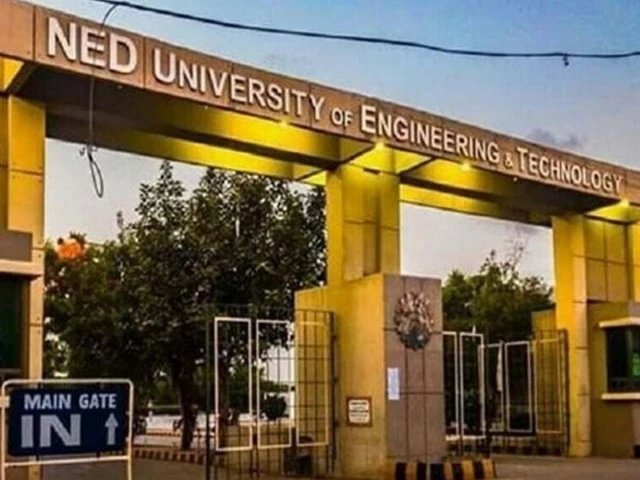
Engineers at the NED University of Engineering and Technology have successfully tested Pakistan’s first driverless car, showcasing its capabilities in a remarkable demonstration that captivated onlookers. The autonomous vehicle, equipped with advanced sensors, can recognize traffic lights, lanes, potholes, and uneven roads, marking a significant milestone in the country’s technological landscape.
The development of this driverless car began nearly a year ago at the National Centre for Artificial Intelligence within the Department of Computer and Information Sciences at NED University. Transforming a China-imported electric vehicle into a self-driving machine involved integrating AI, robotics, mapping technologies, and sophisticated sensor and vision algorithms. This ambitious project aims to navigate Pakistan’s unique and often challenging urban environment.
During the test event, Dr Muhammad Khurram, the director of the National Centre for Artificial Intelligence and head of the engineering team, noted that the project has matured significantly over the past year. “We are currently conducting road trials,” he stated, indicating the thoroughness of their developmental approach. The car operates with a speed algorithm limited to 15–20 km/h and includes capabilities for turning and traffic judgment concerning oncoming vehicles.
Team member Inzamam Khan emphasized the vehicle’s advanced sensor technology, which enables it to traverse potholes, uneven surfaces, and local infrastructure with heightened safety measures. “Our sensor technology is very strong, allowing the car to navigate unpredictable conditions,” he explained, underscoring the vehicle’s potential to function effectively in environments where conventional autonomous vehicles may struggle.
This pioneering initiative began during the tenure of former NED vice chancellor Dr Saroosh Hashmat Lodhi and has achieved remarkable progress under the current Vice-Chancellor Dr Tufail Ahmed. The team’s success not only represents a breakthrough for autonomous vehicle technology in Pakistan but also highlights the capabilities of local engineers and the potential for artificial intelligence innovation in the region.
The driverless car project at NED University reflects a growing trend in the global automotive industry, where advances in AI and sensor technologies have accelerated the development of autonomous vehicles. As countries worldwide explore the potential of self-driving cars, Pakistan’s entry into this innovative field could foster further advancements and collaborations in technology.
As the project moves forward, the implications for urban mobility and safety could be significant. The ability to recognize and respond to the complexities of traffic and road conditions may pave the way for the broader adoption of autonomous vehicles. While the immediate focus remains on perfecting the technology through rigorous testing, the long-term vision encompasses transforming transportation in Pakistan and potentially inspiring similar initiatives across the region.
See also Broadcom Projects $19.1B Q1 Revenue but Warns of Margin Drop Amid AI Surge
 Chindata and HEC Launch Gigawatt AI Compute Projects in Shaoguan and Ulanqab
 Cambricon Targets 500,000 AI Chips by 2026 Amid Supply Challenges and Rising Demand
 CYBRET AI Launches Autonomous Cyber Defence Systems Backed by Leading Nordic VCs
 AI One Signs 5,594 SF Lease in Flatiron District as Tech Firms Expand Office Footprints