










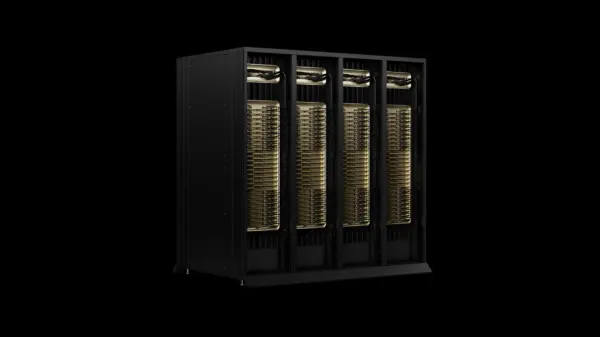

































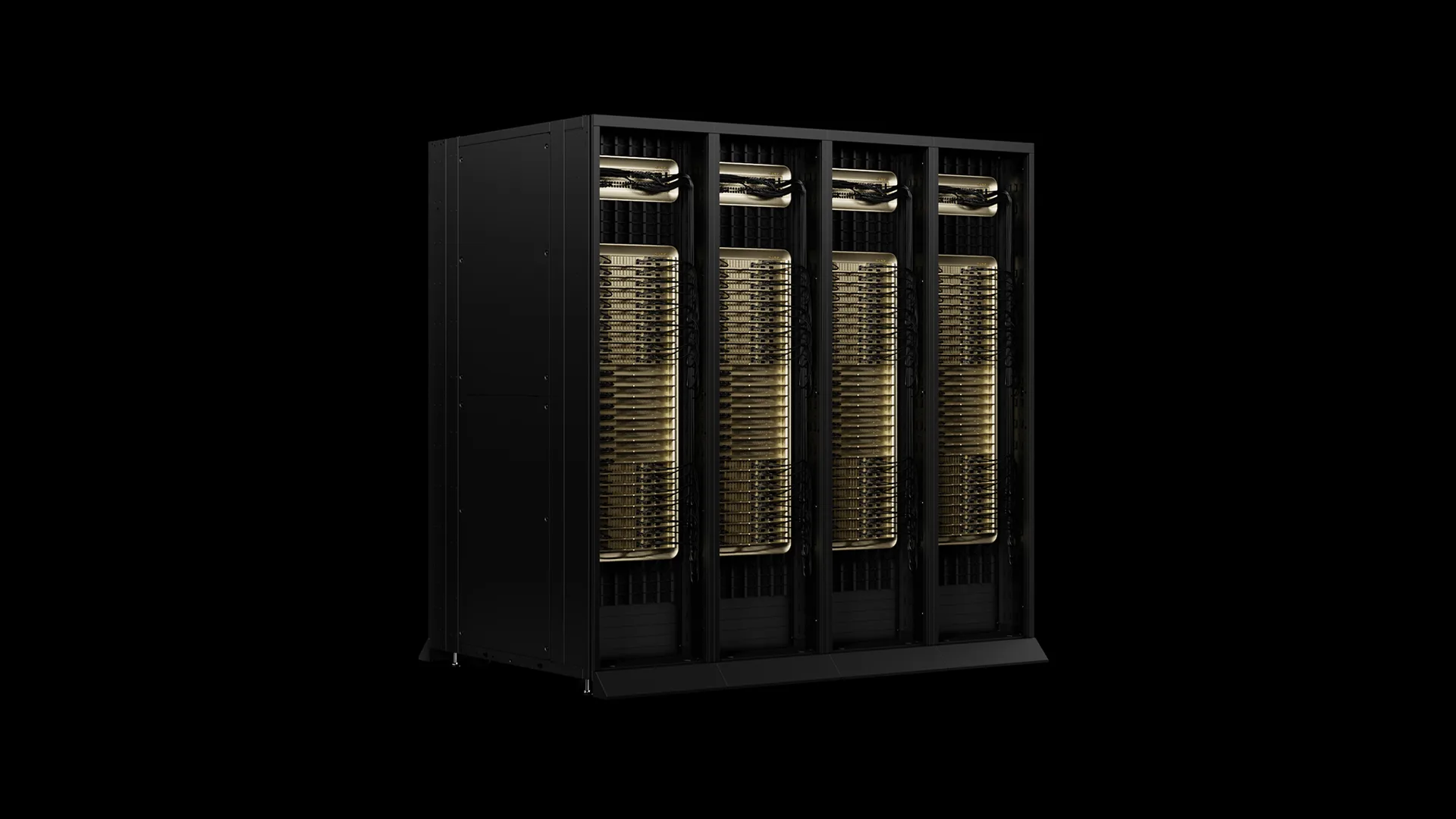
NVIDIA has unveiled the GB200 NVL72 and GB300 NVL72 systems, featuring its cutting-edge Blackwell architecture. These rack-scale supercomputers, equipped with 18 tightly coupled compute trays, are designed for high-performance computing (HPC) and artificial intelligence (AI) applications. The systems boast expansive GPU fabrics and high-bandwidth networking, essential for optimizing resource allocation and enhancing performance.
However, the challenge for AI architects and HPC platform operators extends beyond the sheer assembly of hardware; it lies in transforming this infrastructure into a safe and efficient resource for end-users. A significant operational complexity arises from the mismatch between hardware topology and workload scheduling. Many schedulers work on a flat pool of GPUs and nodes, which fails to capitalize on the hierarchical and topology-sensitive nature of these advanced systems.
To address this gap, NVIDIA has introduced a validated software stack known as Mission Control. This tool provides rack-scale control planes tailored for the NVIDIA Grace Blackwell NVL72 systems, integrating seamlessly with workload management platforms like Slurm and NVIDIA Run:ai. The software is designed to enable better management of resources, ensuring consistent performance and reliability across the GPU fabric.
At the core of effective AI workload scheduling is the acknowledgment of rack-scale topology. Each GB300 NVL72 and GB200 NVL72 system features a dense GPU fabric linked by NVLink switches, supporting NVIDIA’s Multi-Node NVLink (MNNVL) within the rack and enabling shared GPU memory across compute trays. Yet, traditional schedulers may overlook these intricate connections, which are crucial for optimal job performance.
NVIDIA addresses this through two system-level identifiers: the cluster UUID and clique ID. The cluster UUID signifies which GPUs belong to the same NVLink domain, while the clique ID highlights which GPUs are part of a specific NVLink partition. This information enables schedulers to make informed decisions regarding job placement and resource isolation, ensuring that workloads do not interfere with one another.
With the deployment of Mission Control, the management of multi-node workloads becomes more efficient. Using Slurm, for instance, operators can leverage the topology/block plugin, allowing for better recognition of the distinct blocks of nodes that offer lower-latency connections. This feature is vital, as it ensures that jobs are placed within a single NVLink partition by default, thus preserving MNNVL performance and optimizing resource utilization.
As organizations increasingly rely on high-performance computing, efficiently managing workloads becomes paramount. NVIDIA’s systems allow for the creation of distinct NVLink partitions within a single rack, enabling users to isolate workloads and manage resources effectively. This granular control means that users can access high-bandwidth GPU resources tailored to their specific needs without needing to understand the underlying complexities of the hardware.
In addition to Slurm, NVIDIA is extending support for multi-node NVLink workloads to Kubernetes through its Dynamic Resource Allocation (DRA) driver. This integration allows for finer control over how workloads are distributed across nodes sharing high-bandwidth connectivity. By introducing ComputeDomains, which represent sets of nodes connected by NVLink, NVIDIA ensures that Kubernetes can schedule workloads in a manner that acknowledges the underlying hardware architecture.
The importance of this feature cannot be overstated, as it maximizes the efficiency of AI and HPC applications. With automatic detection and labeling of GB200 NVL72 nodes, NVIDIA simplifies the process for users, allowing them to request distributed GPUs without needing to navigate complex scheduling mechanics.
NVIDIA Run:ai builds on these advancements to further enhance the usability of Grace Blackwell NVL72 systems. The platform automates critical pieces of resource management, ensuring that users are placed within the appropriate NVLink domains and that underlying resources like IMEX channels are properly instantiated. This automation facilitates a more streamlined experience, enabling users to focus on their workloads rather than the intricacies of the infrastructure.
As computational demands grow, solutions like Mission Control, Slurm, and NVIDIA Run:ai represent a significant shift in how organizations approach AI and HPC workloads. By effectively bridging the gap between hardware and software, NVIDIA is positioning itself as a leader in enabling organizations to harness the full potential of advanced GPU architectures for their most demanding applications.
See also Tesseract Launches Site Manager and PRISM Vision Badge for Job Site Clarity
 Affordable Android Smartwatches That Offer Great Value and Features
 Russia”s AIDOL Robot Stumbles During Debut in Moscow
 AI Technology Revolutionizes Meat Processing at Cargill Slaughterhouse
 Seagate Unveils Exos 4U100: 3.2PB AI-Ready Storage with Advanced HAMR Tech