























































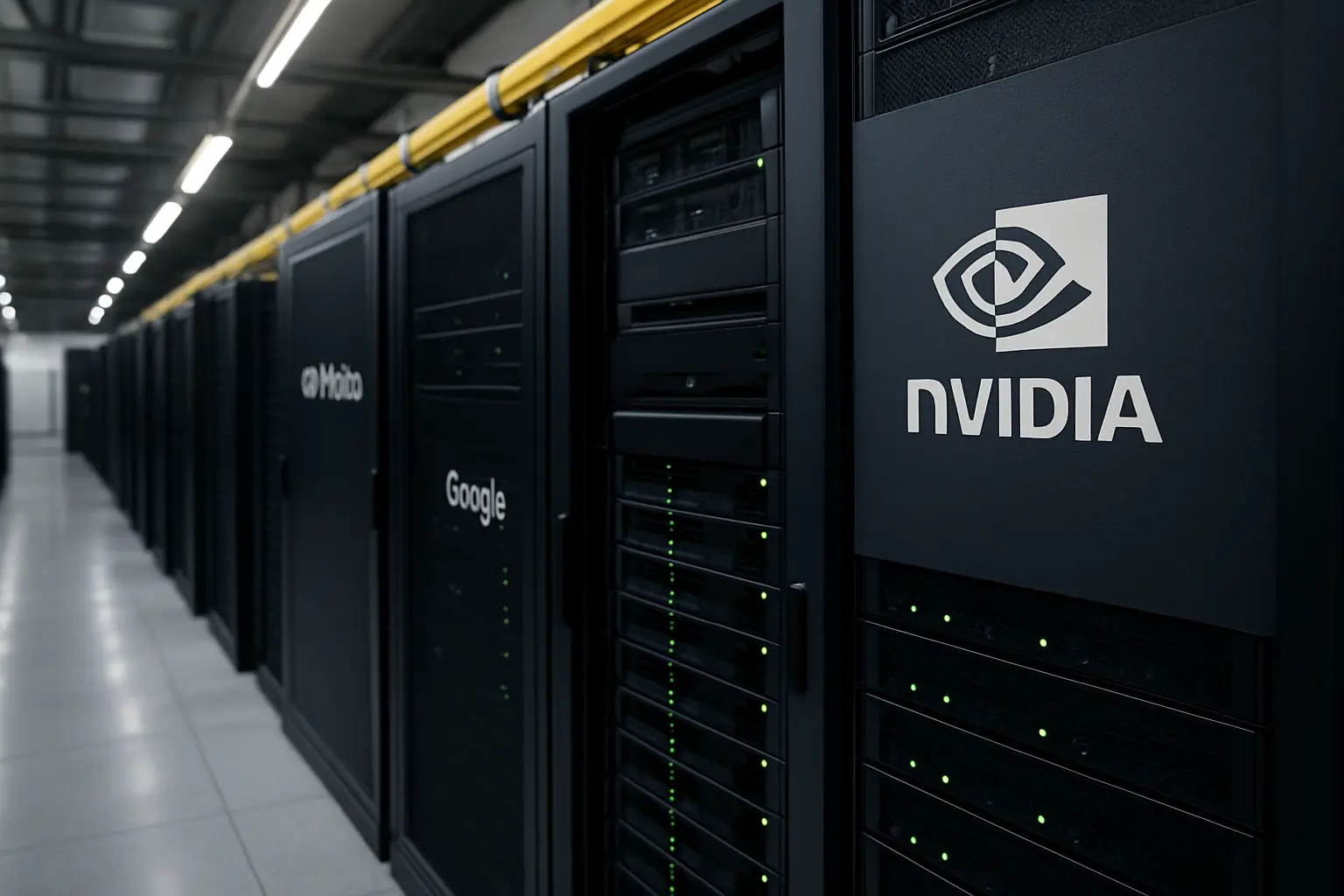
Shares of Nvidia (NVDA) fell sharply following reports that Meta Platforms may transition to using Google’s AI chips in future data centers, potentially starting as early as next year through Google Cloud. This development is significant as Meta ranks among Nvidia’s largest customers, and such a switch could intensify competition at the core of Nvidia’s AI chip operations. Investors responded swiftly to the news, reflecting concerns over potential market share loss.
This latest challenge comes amid an already volatile year for Nvidia, which achieved record Q3 revenue, established key AI infrastructure partnerships, and surpassed earnings expectations. Despite a notable 2.6% drop in share price today, Nvidia’s stock has seen a remarkable 28.6% gain year to date. The total shareholder return remains impressive at 29.9% over the past year. While long-term investors continue to enjoy substantial gains, the recent fluctuations underscore how rapidly market sentiment can shift in the dynamic AI sector.
In light of rising competitive pressures and the recent downturn, investors are grappling with a pivotal question: is Nvidia currently trading at an attractive valuation following this pullback, or has the market fully priced in anticipated growth?
According to restinglion, the estimated fair value for Nvidia shares is significantly higher than the latest closing price, suggesting that the stock may be undervalued. This perspective highlights core drivers that could enable Nvidia to sustain its leadership in AI amid increasing competition.
High revenue and gross margins (insane profits): Nvidia has generated $72 billion, a figure some publicly traded companies might never achieve. This number is projected to grow as the demand for AI technology continues to expand, with Nvidia at the forefront of innovation.
While some analysts maintain an optimistic outlook, they caution that slower revenue growth and intensifying competition in the chip market could challenge these favorable projections if upcoming quarterly results do not meet investors’ expectations.
Contrastingly, the SWS DCF model suggests that Nvidia might be overvalued, estimating the fair value at $163.79, below Nvidia’s recent share price of $177.82. This disparity implies that the market may be factoring in more growth than the underlying business can substantiate. It raises questions about whether investor enthusiasm has outpaced fundamental realities or if the DCF model is overlooking potential positive surprises.
As the tech landscape evolves, the future growth trajectory of Nvidia will be closely scrutinized. Investors must weigh the high stakes of competition from emerging players like Google against Nvidia’s established market advantages. Understanding these dynamics will be crucial as developments unfold.
For those looking to explore alternative views on Nvidia’s stock, crafting a personalized narrative can yield valuable insights. Investors are encouraged to examine key rewards and potential pitfalls that could influence their investment decisions.
Meanwhile, as opportunities continue to emerge in the tech sector, it is essential for investors to remain vigilant. The ongoing shifts may present unique chances for growth, underscoring the importance of staying informed in this fast-paced environment.
This article by Simply Wall St serves as a general overview of Nvidia’s current market position. It aims to provide commentary based on historical data and analyst projections without offering specific financial advice. Readers are encouraged to conduct their own research and consider their individual investment objectives.
Valuation is a complex undertaking, and understanding Nvidia’s position requires a comprehensive analysis. Insights into fair value estimates, potential risks, insider trades, and financial health are essential for informed decision-making in this dynamic market.
See also CIQ Expands to Gulf Region, Launching AI-Ready Infrastructure Amid Middle East Digital Transformation
 HP Launches OmniBook 5 AI Laptop at Rs. 83,000 for Enhanced Productivity and Performance
 BofA Reaffirms Buy Ratings for Nvidia, AMD, Broadcom as AI Chip Demand Surges
 Federal Judge Flags AI Use in ICE Reports, Citing Accuracy Concerns with ChatGPT
 Wedbush Predicts Nvidia’s AI Hardware Dominance with $10 ROI per Dollar Spent