







































Researchers are increasingly viewing quantum computing and artificial intelligence as complementary technologies rather than rivals, with hybrid systems emerging that leverage the strengths of each. In this evolving landscape, classical computing remains dominant, with AI playing a critical role in controlling and optimizing quantum systems, while quantum hardware is selectively used to accelerate specific tasks within AI workflows.
The narrative that quantum computing might replace AI has gained traction in recent years, driven by the perception that AI is burdened by its energy consumption, data intensity, and scaling challenges. Proponents of this view suggest that quantum computers, with their potential for exponential speedups, could usher in a new era of machine learning. However, many researchers argue against this framing, emphasizing that the future of these technologies lies in their integration.
“Quantum Artificial Intelligence (QAI, Quantum AI) is the intersection of both technologies and concerned with the investigation of the feasibility and the potential of leveraging quantum computing for AI, and vice versa, AI for quantum computing,” a team of German researchers recently noted. This perspective reflects a broader understanding within academia, national labs, and industry that both technologies can address limitations the other cannot resolve alone.
At present, AI is essential for making quantum computers operable by supporting experiment design, hardware calibration, error mitigation, and system optimization. Without these AI capabilities, the scaling of quantum systems would be considerably slower. Conversely, quantum computing is being explored to tackle specific computational bottlenecks within AI applications, including optimization, sampling, and reinforcement learning—not to replace existing neural networks or AI frameworks.
The strengths of modern AI systems lie in their ability to efficiently approximate solutions, identify correlations in vast datasets, and operate effectively in uncertain environments. This capacity has transformed applications in language processing, computer vision, recommendation engines, and decision-making support. Yet, these capabilities also underscore why AI is unlikely to be easily replaced by quantum technologies.
Researchers point out that training and inference workloads align well with classical computing infrastructure, especially GPUs and specialized hardware, which continue to evolve and improve. For most AI applications, classical systems remain the fastest, most cost-effective, and reliable option. However, within AI pipelines, certain problems—such as global optimization and high-dimensional sampling—can pose significant challenges due to their complexity and scaling limitations.
Quantum computing, while often hyped for its revolutionary potential, is currently more specialized. It excels in addressing problems that can be modeled as optimization landscapes or probabilistic sampling tasks, but it does not inherently outperform classical systems across all workloads. Most quantum hardware operates within the noisy intermediate-scale quantum (NISQ) era, characterized by fragility and susceptibility to errors. Consequently, current applications often rely on hybrid models where quantum components are integrated into broader classical computing frameworks.
Evidence of the convergence between AI and quantum computing is most compelling in the ways AI is already aiding quantum research. Quantum systems require precise control, continuous calibration, and effective noise mitigation—tasks that have proven too complex for manual solutions alone. Machine learning techniques are now being employed to design quantum experiments, optimize control algorithms, and enhance error correction processes, making AI indispensable to the quantum computing landscape.
While the prospect of quantum computing assisting AI remains less certain, researchers are concentrating on areas where AI faces computational bottlenecks. These include combinatorial optimization in scheduling, sampling within probabilistic models, and reinforcement learning in complex environments. Industries such as airlines and logistics are exploring hybrid quantum-classical optimization to expedite problem-solving without excessive computational costs.
The term “quantum AI” often generates confusion, as it may imply a new form of intelligence rather than a collaborative research domain. Most applications labeled as quantum AI are either simulations or hybrid models rather than truly quantum-native systems. As such, it may be more accurate to view quantum computing as a specialized co-processor, akin to GPUs, that accelerates certain tasks while relying on classical systems for broader operations.
The architecture developing within the tech landscape appears hybrid and hierarchical. Classical computing remains foundational, with AI models operating on conventional hardware. Quantum processors are expected to serve as specialized resources for problems that align with their strengths. AI orchestrates these workflows, determining when to utilize quantum capabilities and managing the complexities of integration.
For businesses, this shift implies a cautious approach to integrating quantum computing into existing AI frameworks. While quantum technology is unlikely to disrupt AI in the immediate future, its potential to reshape cost structures and capabilities in various sectors, including logistics and finance, should not be overlooked. For quantum developers, proficiency in AI techniques is becoming essential for overcoming challenges in hardware evolution and scaling.
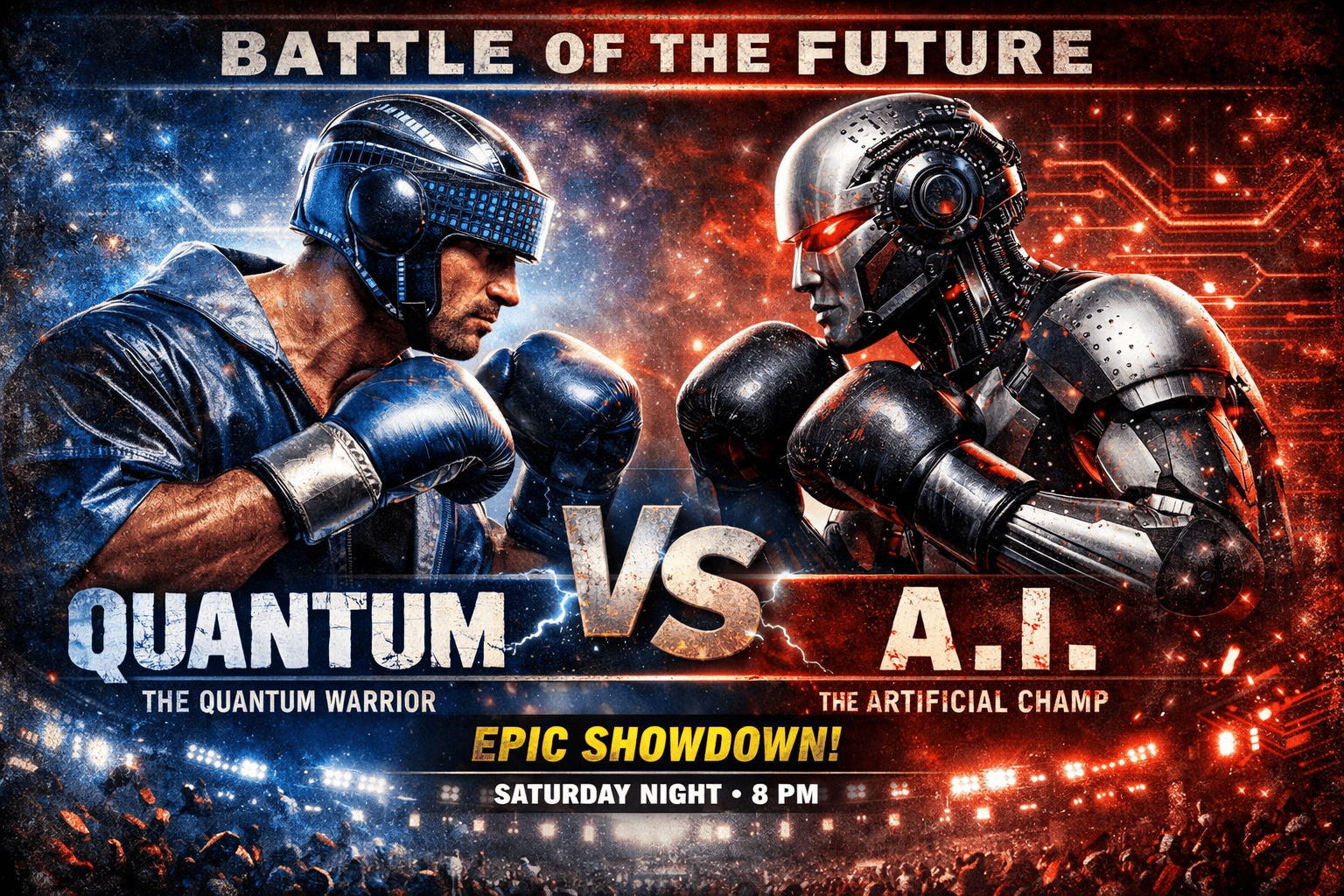
In conclusion, the intersection of quantum computing and artificial intelligence does not suggest a competitive landscape. Instead, the evidence supports a model where AI enhances the functionality of quantum systems, while quantum computing addresses specific computational hurdles within AI workflows. The future of advanced computing is not a question of quantum versus AI but rather quantum with AI, integrated and embedded within a broader classical ecosystem.
See also Razer Launches Forge AI Dev Workstation with Purpose-built Hardware for Developers
 Nestlé’s CIO Highlights AI’s Value Beyond Efficiency, Focusing on Enhanced Fulfillment
 Big 7 AI Companies Propel Edge Computing Innovations with 2026 Market Insights
 AMD’s Lisa Su Reveals AI Will Require 10 Yottaflops, Transforming Industry Standards
 Intel Launches Core Ultra Series 3 Processors, Powers New TGS-2000 Edge AI Computers