










































RIYADH: Artificial intelligence is evolving from a theoretical concept into a crucial element of Saudi Arabia’s energy sector, fundamentally altering the management and optimization of oil, gas, and power systems. Industry leaders such as Saudi Aramco are integrating smart technologies into their operations to enhance efficiency, reliability, and sustainability—essential components of the Kingdom’s initiative to modernize its industrial base and diversify its economy.
According to the International Energy Agency, oil and gas companies were among the pioneers of digital technology adoption. The agency estimates that implementing AI in power plant operations and maintenance could generate savings of up to $110 billion annually by 2035 through lowered fuel consumption and maintenance costs.
This technological shift presents not only a roadmap but also a significant opportunity for Saudi Arabia. Under its Vision 2030 initiative, the integration of data and intelligent automation is revolutionizing how energy is explored, refined, and delivered.
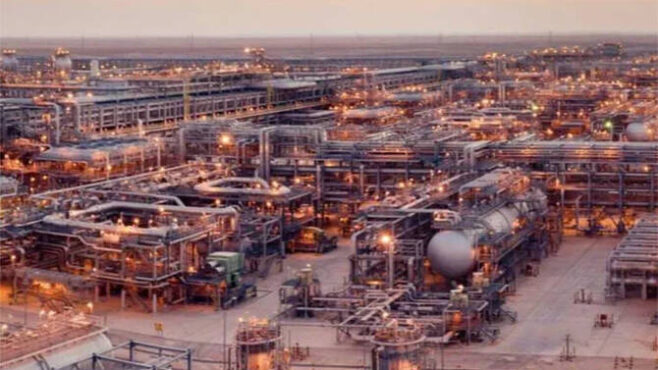
At the core of Saudi Aramco’s strategy is a digital transformation plan focused on artificial intelligence, big data, and the industrial Internet of Things. These technologies are utilized throughout the production process—from mapping reservoirs and optimizing drilling to enhancing efficiency and safety.
AI is also integral to Aramco’s Digital Transformation Program, which creates in-house smart tools and data-driven platforms aimed at reducing emissions, cutting costs, and improving performance while ensuring a stable energy supply. A notable example is the Upstream Innovation Center, where engineers have successfully deployed AI solutions that decrease fuel gas usage in boilers, enhance efficiency, and identify leaks through fiber-optic monitoring. In the Khurais oil field, over 40,000 sensors monitor approximately 500 wells via an Advanced Process Control system—the first of its kind in a conventional oil field at Aramco. This digitization has resulted in a production increase of about 15 percent, doubled troubleshooting speed, and reduced both costs and environmental impact.
These advancements demonstrate how Aramco’s framework is transforming into a connected, adaptive model that merges traditional engineering skills with digital intelligence. As Saudi Arabia forges ahead in establishing an AI-driven energy economy, the King Abdullah University of Science and Technology (KAUST) is playing a vital role in bridging digital innovation with industrial applications.
Bernard Ghanem, chair of the Center of Excellence for Generative AI at KAUST, noted that the university is collaborating with Saudi Aramco to develop AI systems that can predict the chemical properties of materials and expedite research into direct air capture technologies for carbon dioxide removal. He mentioned that KAUST is also partnering with SABIC and ACWA Power to apply AI for process optimization and materials discovery, translating lab-scale research into actionable solutions for the energy sector.
Ghanem emphasized that KAUST’s generative AI materials program harmonizes a robotic chemistry lab with its AI Chemist foundation model, which accelerates the development of catalysts, battery materials, and membranes for clean energy applications. “This is our lab of the future, automating experimentation and speeding up energy innovation,” he stated.
Mani Sarathy, a professor of chemical engineering at KAUST, pointed out that AI-driven reinforcement learning tools are already enhancing efficiency in hydrocarbon refineries by improving simulations and reducing analysis time. “AI is assisting energy companies in executing complex simulations that once took weeks, enabling quicker and more accurate operational decisions,” he told Arab News. Sarathy added that the next phase will likely combine automation with expert oversight, with hybrid human-AI control systems becoming standard in critical operations to ensure safety and reliability as the adoption of AI expands across Saudi industries.
These initiatives illustrate KAUST’s increasing role in evolving AI from an academic discipline into a catalyst for industrial innovation in Saudi Arabia’s energy sector under Vision 2030. Meanwhile, Skeleton Technologies is bringing its AI-driven energy storage solutions to partners in Saudi Arabia, reshaping industrial systems already prevalent in Europe and beyond. The company merges AI with advanced materials to enhance efficiency and reduce energy consumption in data centers, electricity grids, and defense systems.
“Our solutions enable AI infrastructure to consume less electricity and mitigate grid connection needs, enhancing the energy efficiency of AI operations,” said Arnaud Castaignet, vice president of government affairs and strategic partnerships at Skeleton. Inside its facilities, Skeleton employs AI-driven digital twin models, developed in collaboration with Siemens Digital Industries, to simulate production, optimize operations, and facilitate predictive maintenance. At the heart of its technology is curved graphene, a proprietary carbon material that provides Skeleton’s supercapacitors with outstanding conductivity.
“This allows our supercapacitors to charge and discharge in as little as 12 microseconds, a feat batteries cannot achieve,” Castaignet noted. The company’s flagship Graphene GPU system, built on these supercapacitors, reduces energy usage in AI data centers by up to 40 percent and decreases grid requirements by 45 percent while enhancing computing performance. These devices are free from lithium, nickel, and cobalt, relying instead on graphene derived from silicon carbide—essentially sand—processed entirely in Germany. “To create sustainable AI infrastructure, energy-efficient hardware and renewable power are both essential,” Castaignet added. “Our Graphene GPU exemplifies the successful integration of both.”
As Saudi Arabia continues to merge engineering expertise with digital intelligence, its industrial advancement is increasingly measured in not just barrels of oil but also in bytes, data, and the sophisticated systems that are shaping its energy future.
See also Agentic AI Revolutionizes Advertising as Yahoo DSP Launches Autonomous Campaign Management
 Alibaba Stock Rises 4.8% Following China’s Approval of Nvidia H200 AI Chips
 ON Semiconductor Drives EV Revolution with Advanced SiC Tech and Image Sensors
 AI Risks Surge Without GDPR Compliance, Warns Data Protection Expert Muhammad Gjokaj