





































By Tina Meketa, University Communications and Marketing
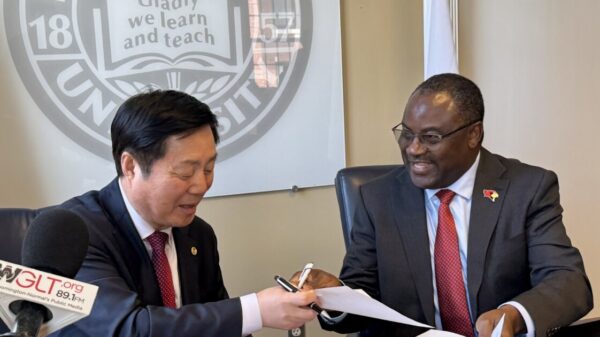
The University of South Florida (USF) has partnered with defense contractor By Light Professional IT Services LLC to enhance the development of artificial intelligence (AI) systems aimed at improving national security and other sectors. This strategic alliance aims to address the need for safer and more reliable AI technologies in an ever-evolving technological landscape.
Under this agreement, the two entities will collaborate on a variety of modern conflict and technology challenges, focusing on areas such as AI, aerospace operations, hypersonics, and cybersecurity. A shared objective of the partnership is to ensure that emerging AI technologies are not only robust but also trustworthy.
“As a USF alumnus, I’ve seen firsthand the university’s trajectory in becoming a premier research institution,” said Bob Donahue, CEO of By Light. “Formalizing this partnership allows By Light to bridge the gap between academic rigor and operational necessity. USF’s world-class research, particularly within the Bellini College of Artificial Intelligence, Cybersecurity and Computing and the Global and National Security Institute, provides the foundational ‘AI assurance’ required to deploy these technologies in high-stakes environments where failure is not an option.”
By Light specializes in crafting advanced simulation environments and AI-driven systems tailored for defense applications, while USF’s researchers bring their expertise in mathematics and theoretical computer science to verify that these systems function as intended.
“AI systems are already being used to make complex decisions in high-stakes environments. Our role is to ensure those systems are reliable, transparent and aligned with human expectations.”
Assistant Professor Ankur Mali
USF Bellini College of Artificial Intelligence, Cybersecurity and Computing
A central aspect of this collaboration is the focus on developing “AI assurance” methods that go beyond conventional training algorithms, incorporating mathematical evaluations to validate AI behaviors. One of the projects underway aims to improve automated target recognition systems by implementing formal safeguards that help AI distinguish between legitimate targets and protected entities while ensuring measurable confidence in its decisions.
Rather than relying solely on data and probability, USF researchers are employing formal methods—rigorous mathematical techniques—to create clear operational boundaries for AI systems. “Our work focuses on providing formal guarantees—mathematically proving how these systems will behave under different conditions,” stated Anshuman Chhabra, assistant professor of computer science and engineering. “It’s about adding a layer of robustness and accountability that goes beyond traditional AI development.”
Due to the complexities of real-world defense scenarios, By Light generates extensive synthetic data through advanced simulations that mimic various environments, including different weather conditions and communication disruptions. USF researchers subsequently analyze this data, ensuring the models are sound and that the AI systems trained on it deliver reliable performance.
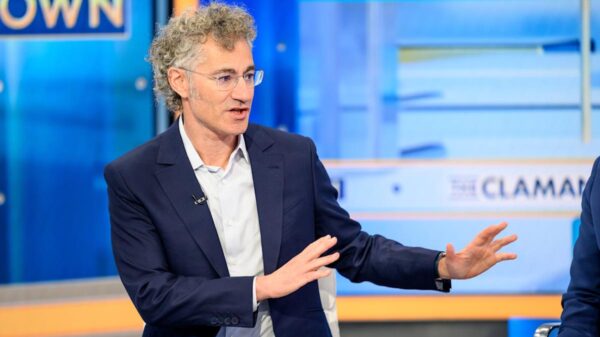
“Since real-world data is limited, simulation plays a critical role,” explained Seungbae Kim, assistant professor in the Bellini College. “Our goal is to ensure that synthetic data leads to reliable performance in real-world environments.”
Another focus of the partnership addresses the challenges of autonomous systems operating in GPS-denied environments, where navigation signals may be compromised. Researchers are working on methods to enable unmanned systems to operate safely and effectively in these conditions, ensuring they can function even without external guidance.
Although the primary applications of this partnership are centered on national security, the implications of their work extend beyond the defense sector. Techniques to validate AI decision-making may find applications in healthcare, cybersecurity, and critical infrastructure—essentially anywhere AI supports high-stakes decisions.
This partnership also strengthens USF’s role as a leader in emerging technologies and enhances the connections between academia, industry, and national security partners. USF’s collaborative ecosystem—which includes the Global and National Security Institute, Institute of Applied Engineering, and Bellini College—aims to address national security challenges at the intersection of technology and policy.
By merging real-world applications with foundational research, the collaboration opens avenues for students and researchers to engage in cutting-edge innovations that promise global impact.
See also Tesseract Launches Site Manager and PRISM Vision Badge for Job Site Clarity
 Affordable Android Smartwatches That Offer Great Value and Features
 Russia”s AIDOL Robot Stumbles During Debut in Moscow
 AI Technology Revolutionizes Meat Processing at Cargill Slaughterhouse
 Seagate Unveils Exos 4U100: 3.2PB AI-Ready Storage with Advanced HAMR Tech