




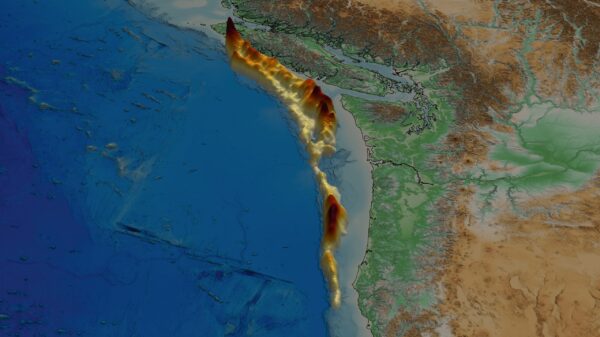

















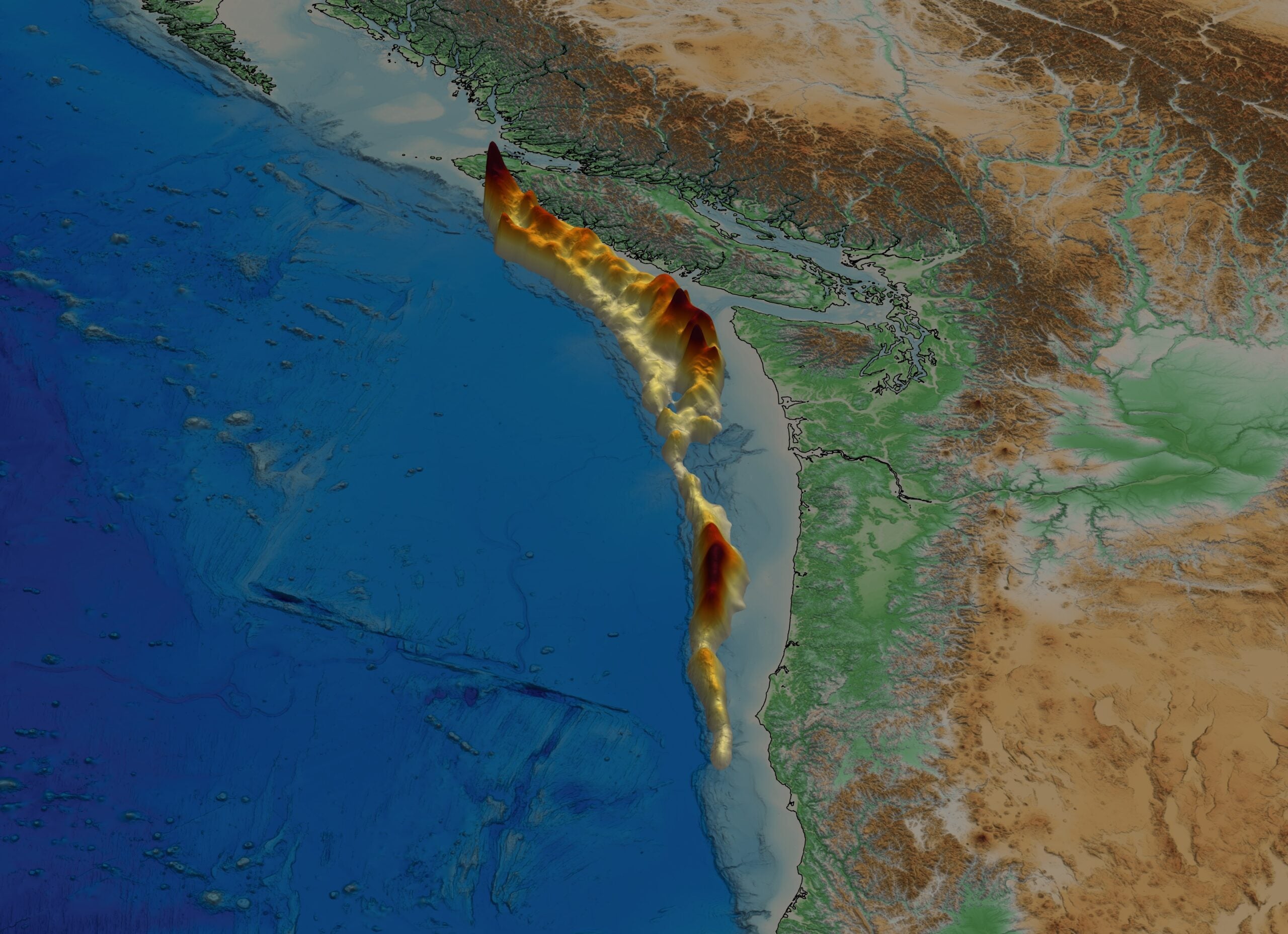
A team of researchers at the University of Texas at Austin has unveiled a groundbreaking tsunami forecasting system that could significantly enhance coastal safety. This innovative technology, developed for the Cascadia Subduction Zone off the Pacific Northwest coast—a region facing nearly a 40% probability of a major earthquake in the upcoming decades—has earned the prestigious 2025 Association for Computing Machinery (ACM) Gordon Bell Prize, often regarded as the “Nobel Prize” of supercomputing.
The success of this research stems from a decade-long investment in a digital twin research ecosystem at UT Austin, where cutting-edge methods, high-performance computing, and experimental facilities converge. This national push toward AI for Science sees digital twins powered by artificial intelligence evolve from traditional simulations into dynamic predictive decision engines, capable of addressing urgent technological and safety challenges.
“UT is a national leader in digital twin research, advancing foundational theory and deploying this technology across sectors such as aerospace, natural hazards, energy, and healthcare,” said Fernanda Leite, interim vice president for research at UT Austin. “The University offers full-stack capabilities that accelerate discovery and transform critical infrastructure globally.”
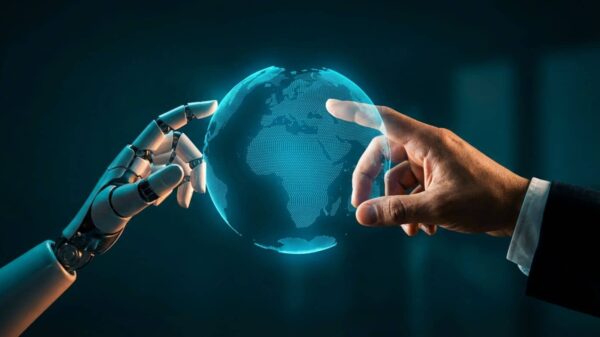
The digital twin concept serves as a virtual replica of physical systems, updated with real-time sensor data to reflect their physical counterparts. This dynamic nature allows for high-precision predictions of future behaviors, optimization of performance, and prevention of potential failures. The research highlights how these tools can be applied, from testing new medical devices prior to surgery to optimizing urban traffic patterns.
At the Oden Institute, researchers are leveraging scientific machine learning to develop autonomous discovery tools that go beyond mere data processing to understand the inherent laws of physics. For instance, biophysical models of tumors are being created to optimize treatments for cancer patients, while digital twins are being used to predict hurricane storm surges, equipping local government leaders with crucial evacuation information.
According to Karen Willcox, director of the Oden Institute, the establishment of mathematical foundations for predictive digital twins is critical. Researchers are integrating scientific machine learning with reduced-order modeling, allowing for real-time updates and rigorous uncertainty quantification essential for high-stakes decision-making. Collaborations with national laboratories and industry partners further enhance the research scope.
In a notable example, UT researchers are collaborating with the Texas Institute for Electronics (TIE) to develop a digital twin focused on optimizing the semiconductor manufacturing process, a critical initiative for the Department of Defense. Mark Papermaster, chief technology officer at AMD, emphasized the potential of this partnership to accelerate innovation in semiconductor technology.
The tsunami forecasting system that garnered the Gordon Bell Prize utilized advanced algorithms to achieve a speedup of 10 billion times over existing methods. This achievement condenses a task that previously required 50 years of supercomputing time into mere seconds, providing life-saving forecasts at critical moments.
“AI for Science differs from commercial AI because it reflects the laws of nature,” explained Omar Ghattas, a key member of the research team. “By learning from data through physics models, we can make accurate predictions with rigorously quantified uncertainties.” This framework not only addresses earthquake risks but can also be adapted for other hazards, including wildfires and severe weather.
In a parallel initiative, associate professors Kevin Clarno and Derek Haas are utilizing an $18 million research grant to build a digital twin for nuclear reactors, aiming to accelerate the safety and licensing of advanced nuclear technologies. This endeavor seeks to overcome the slow pace of innovation in the nuclear industry, where even minor changes require extensive physical testing and regulatory approval.
At the J.J. Pickle Research Campus, data streamed from a 1-megawatt research reactor assists in creating models that predict future operating conditions, allowing for more efficient daily operations. The interdisciplinary collaboration among nuclear engineers, data scientists, and high-performance computing specialists exemplifies UT’s comprehensive approach to research.
Looking ahead, the integration of new computational power through the National Science Foundation’s Leadership-Class Computing Facility will further enhance UT’s capabilities in digital twin research. The upcoming Horizon supercomputer is expected to be ten times more powerful for scientific simulations and a staggering one hundred times more powerful for AI tasks than its predecessor, Frontera. This development promises to revolutionize how digital twins are applied across various sectors, from energy and healthcare to natural hazard response.
As the field of digital twin technology continues to evolve, UT Austin is uniquely positioned to tackle critical societal challenges through its expansive research initiatives and collaborations, shaping the future of predictive analytics and decision-making.
See also Tesseract Launches Site Manager and PRISM Vision Badge for Job Site Clarity
 Affordable Android Smartwatches That Offer Great Value and Features
 Russia”s AIDOL Robot Stumbles During Debut in Moscow
 AI Technology Revolutionizes Meat Processing at Cargill Slaughterhouse
 Seagate Unveils Exos 4U100: 3.2PB AI-Ready Storage with Advanced HAMR Tech