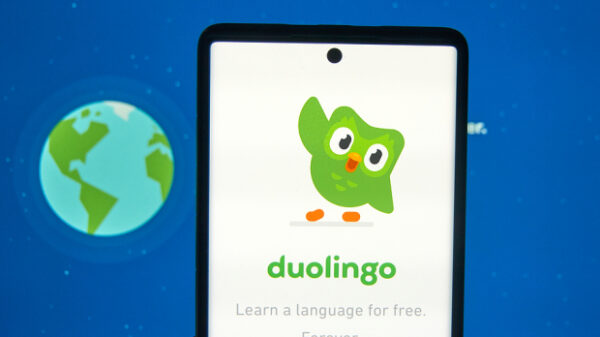



























As the integration of artificial intelligence becomes increasingly essential in the workplace, some companies are reconsidering its role in employee performance assessments. Duolingo, the popular edtech platform, has notably shifted its stance on evaluating AI usage among its employees.
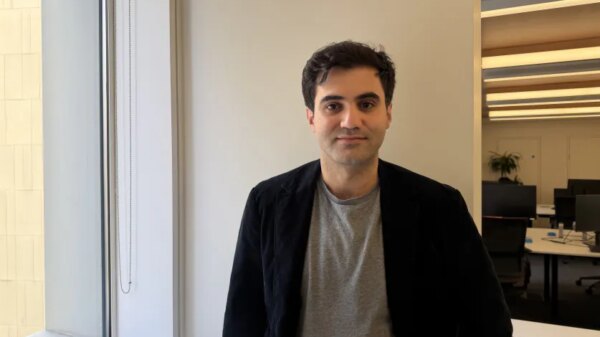
Nearly a year after declaring the company would adopt an “AI-first” approach to employee evaluations, CEO Luis von Ahn announced on April 28, 2025, that Duolingo would discontinue that metric. The initial decision to assess employees based on their AI usage drew significant public backlash, with long-time users expressing dissatisfaction to the point of deleting the app.
In a recent interview on the Silicon Valley Girl podcast, von Ahn recounted the feedback from employees, many of whom questioned whether Duolingo was encouraging AI use for its own sake rather than for genuine job performance. “At the end, we backtracked, and we said ‘no.’ Look, the most important thing in your performance is that you are doing whatever your job is as well as possible,” he stated. He emphasized that while AI can support productivity, it should not be a compulsory element of every employee’s workflow.
This pivot contrasts sharply with the strategies of other companies, who have doubled down on promoting AI in their workplaces. Meta, for instance, previously maintained a leaderboard showcasing the top 250 AI token users across the company, fostering a competitive environment for AI engagement. Similarly, Omnisend, a marketing automation platform, plans to reward outstanding AI users with raises ranging from 2% to 4%, based on quantifiable outcomes from their AI activities.
However, a recent global survey conducted by SAP subsidiary WalkMe revealed that more than a third of employees avoid using AI for tasks, citing concerns about disruptions to their workflow and potential time loss. This hesitance reflects a broader apprehension among workers about AI as a potential threat to job security. Last year, von Ahn’s comments regarding the replacement of contractors with AI raised eyebrows and fueled fears about the technology’s impact on employment.
Since then, von Ahn has sought to clarify his position, asserting that he does not view AI as a replacement for human workers. “The reality is it’s not yet the case that AI is better at coding than humans. I think you still really need engineers, and you’re going to need them for a long time,” he remarked during the podcast. He added that AI-generated code can often be challenging to debug and lacks the reliability needed for tasks such as writing educational content for Duolingo.
Duolingo has long utilized AI to personalize learning experiences and expand access to education. A company spokesperson reiterated that technology plays a central role in their development efforts. “Our teams’ work depends on human judgment, expertise, and creativity. AI tools assist with that work; they don’t make decisions or replace the people building Duolingo,” the spokesperson stated. The company underscores that its primary focus remains on what benefits learners the most.
As the landscape of workplace technology continues to evolve, the conversation surrounding AI’s role in employee performance assessments is likely to persist. Companies must balance the potential efficiencies offered by AI with the necessity of maintaining human-centered practices and addressing employee concerns. This ongoing dialogue highlights a significant challenge in the broader adoption of AI technologies: finding the right equilibrium between leveraging advanced tools and preserving the human elements that drive success in any organization.
See also AI Transforms Health Care Workflows, Elevating Patient Care and Outcomes
 Tamil Nadu’s Anbil Mahesh Seeks Exemption for In-Service Teachers from TET Requirements
 Top AI Note-Taking Apps of 2026: Boost Productivity with 95% Accurate Transcriptions
 Machine Learning Tools Transform Materials Discovery, Enhancing Semiconductor Efficiency