











































Artificial intelligence (AI) is increasingly being leveraged in the field of geoscience, according to recent studies that highlight both progress and challenges in this evolving domain. A review published in Computers and Geosciences outlines the growing influence of AI technologies in areas such as seismic analysis, damage assessment, and environmental monitoring. Researchers led by Z. Sun and colleagues emphasize that AI can significantly enhance data processing and predictive modeling, enabling more efficient management of geological risks.
As the geoscience community continues to explore the potential of AI, a paper in Innovation by T. Zhao and team paints a picture of the current landscape, noting that while AI applications have expanded, several hurdles remain. Key issues include data quality, interpretability of AI models, and the need for interdisciplinary collaboration. The authors argue that overcoming these challenges is crucial for fully realizing the benefits of AI in practical applications, particularly in regions prone to natural disasters.
A comprehensive review by W. Zhang et al. in Gondwana Research further delves into the integration of machine learning and optimization algorithms in geoengineering and geoscience. The study outlines various applications, including modeling subsurface conditions and predicting geological hazards. However, the authors caution that while machine learning can provide valuable insights, reliance on these technologies must be balanced with rigorous validation against traditional methods.
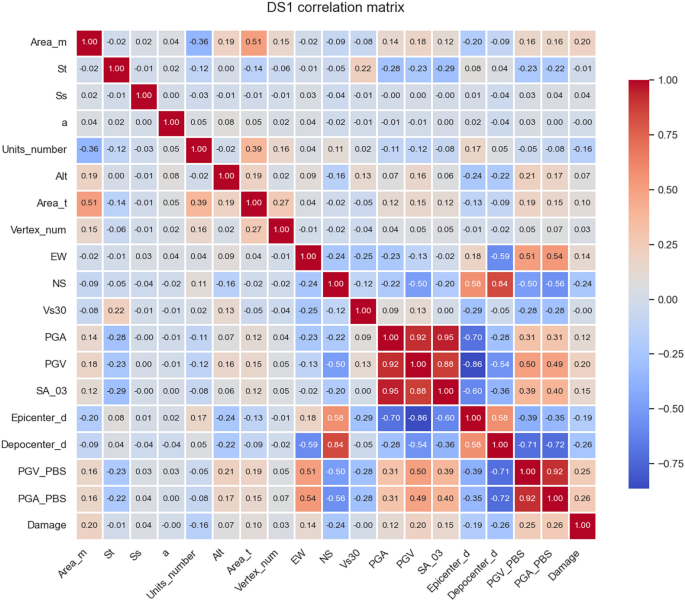
The urgency of improving seismic resilience has prompted researchers to develop empirical fragility curves. In a study slated for publication in Bulletin of Earthquake Engineering, I.E. Monsalvo Franco and colleagues investigate unconventional ground motion intensity measures derived from physics-based simulations. Their findings aim to enhance the accuracy of seismic risk assessments, providing a foundation for better urban planning and disaster response strategies.
Among the innovative methodologies being explored is the application of machine learning to classify earthquake damage in buildings. Research by S. Mangalathu et al. in Earthquake Spectra demonstrates the effectiveness of AI-driven approaches to assess building vulnerability, enabling faster and more accurate damage evaluations following seismic events. This work aligns with a broader trend toward utilizing machine learning for rapid assessments of earthquake impacts, as seen in studies by Z. Stojadinović and others.
The use of AI in real-time damage assessment is particularly critical in the aftermath of significant earthquakes. For instance, the 2009 L’Aquila earthquake and subsequent events have spurred extensive research into the effectiveness of machine learning for damage classification. A recent comparison of tools for damage classification by F. Di Michele et al. in Natural Hazards underscores the evolving landscape of post-disaster management, integrating advanced algorithms to enhance accuracy in evaluations.
There is also a notable emphasis on developing databases that combine earthquake damage data with ground motion parameters. The project known as “Shakedado” is a key example, aiming to create a comprehensive data collection for Italy, as reported in Artificial Intelligence in Geosciences. This initiative is expected to facilitate future research and applications in risk assessment and urban planning.
Looking ahead, the integration of AI in geoscience presents both opportunities and responsibilities. Researchers emphasize the importance of ensuring that AI applications are transparent and accountable, particularly as they become more prevalent in critical decision-making processes. As the field continues to evolve, fostering collaboration among scientists, engineers, and policymakers will be vital for harnessing the full potential of AI in addressing geoscientific challenges.
See also AI Transforms Health Care Workflows, Elevating Patient Care and Outcomes
 Tamil Nadu’s Anbil Mahesh Seeks Exemption for In-Service Teachers from TET Requirements
 Top AI Note-Taking Apps of 2026: Boost Productivity with 95% Accurate Transcriptions
 Machine Learning Tools Transform Materials Discovery, Enhancing Semiconductor Efficiency