
































In 2026, artificial intelligence (AI) is no longer a futuristic concept; it is actively reshaping the job market. From writing legal briefs to analyzing spreadsheets and generating code, AI systems increasingly perform tasks traditionally handled by entry-level employees. This shift has prompted students and parents to question how to choose pathways that ensure relevance in an AI-driven world.
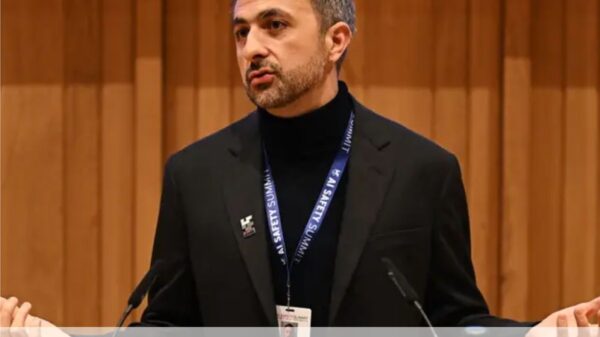
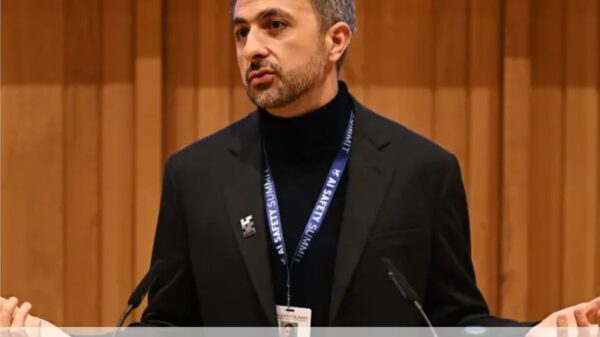
Industry leaders have acknowledged that AI will transform, and in some instances, replace significant segments of work. Mustafa Suleyman, CEO of Microsoft AI, forecasted that numerous white-collar roles could be automated within the next 12 to 18 months, as AI becomes adept at managing professional responsibilities across various fields such as law, accounting, and project management.
Warnings about the potential impact of AI on employment are becoming more frequent. Matt Shumer, CEO of Hyperwrite, posited that AI’s ramifications on job markets could surpass the disruptive effects of the COVID-19 pandemic, encouraging young individuals to start upskilling immediately. Meanwhile, Geoffrey Hinton, a Nobel laureate often called the “godfather of AI,” remarked, “We’re going to see AI get even better. It’s already extremely good. We’re going to see it having the capabilities to replace many, many jobs.”
Such statements have sparked widespread anxiety among today’s youth and early-career workers, particularly those in entry-level or routine positions. A recent Reuters survey found that young workers are notably concerned about AI’s potential to alter their job functions, with many believing that AI will significantly change their daily work tasks.
The early wave of automation has focused mainly on routine or rule-based jobs—roles that once formed the foundation of entry-level employment, such as customer support, basic programming, scheduling, data entry, and routine analysis. These positions, once seen as stepping stones in many careers, are now under threat due to AI’s rapid advancement, propelled by large language models and generative tools. The traditional career trajectory of starting at the bottom and gradually ascending is being redefined.
Given this context, choosing a stream in Class 11 is not merely about selecting “Science,” “Commerce,” or “Humanities.” Rather, it involves adapting education to acquire skills that the AI era values.
AI excels at automating repetitive tasks but struggles with creative thinking, human empathy, complex decision-making, and interdisciplinary problem-solving. Students are urged to move beyond rote learning and focus on critical thinking, creative communication, teamwork, leadership, and digital literacy, which will remain essential even as AI tools evolve.
When considering future academic streams, students should approach their choices through a 2026 lens. In Science, students can enhance their studies by incorporating coding, data science, robotics, and advanced mathematics. This pathway particularly suits those passionate about technical challenges and innovation. In Commerce, a focus on business analytics, fintech, digital marketing, and data-driven economics is recommended, as emerging roles like financial analysts leveraging AI tools are becoming increasingly relevant. In Humanities, students can explore careers in communication, ethics, psychology, law, and policy, with human-centric professions such as counselling, education, public policy, and creativity remaining resilient amid technological change.
While opinions vary on the potential for mass unemployment due to AI, not all tech leaders agree that automation will lead to a net loss of jobs. Sundar Pichai, CEO of Google, stated that AI could create more jobs than it displaces, referencing historical patterns where technological advancements have ultimately generated new opportunities—if societies adapt and reskill their workforces. However, the consensus among economists and labor analysts indicates that the nature of work is indeed changing, necessitating that students prepare to adapt.
To stay ahead, students can take practical steps today by learning how AI functions rather than just how to use it, building real project portfolios, enrolling in online courses focused on coding, data analysis, and digital design, and honing soft skills such as communication and emotional intelligence. Ultimately, the pivotal question for today’s Class 11 students is not merely “What should I major in?” but rather “What skills will make me indispensable to tomorrow’s employers?” While AI may assume many routine tasks, it cannot replicate human creativity, judgment, ethics, and connection. Students who prioritize developing these human strengths, alongside mastering digital skills, are more likely to thrive in the future job market.
Published By: Megha Chaturvedi
Published On: Feb 14, 2026
See also Anthropic CEO Dario Amodei Cautions Against OpenAI’s Risky AI Compute Investments
 Sandisk’s 1,220% Surge Outpaces Micron: Why It’s the Superior AI Investment Now
 AI’s $660B Boom Sparks Market Volatility as Investors Fear Job Disruption and Profit Margins
 Blueberry Markets Reveals 2026 Broker Review with Key Insights on Regulation and Trading Conditions
 Fintech Xchange 2026: Industry Leaders Address AI, Ethics, and Consumer Empowerment