
















































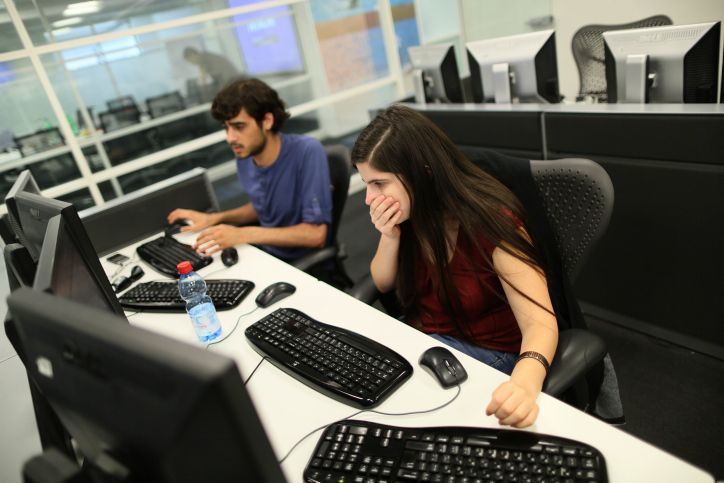
The rapid rise of artificial intelligence (AI) is reshaping Israel’s job market, particularly in the high-tech sector. A report published on Sunday by the Employment Service reveals that the number of unemployed tech professionals has more than doubled over the past three years. As of December 2025, 16,300 tech workers were registered as job seekers, up from just 7,200 in January 2022. This increase is largely attributed to AI tools capable of automating coding and other repetitive tasks, which has reduced demand for software developers and systems analysts.
The software sector has been hit hardest in this transformation. While overall joblessness in Israel fell by 10% since 2022, high-tech unemployment rose by a staggering 126%. Of the 16,300 unemployed tech professionals, 59% work in software—approximately 9,600 people—with more than half serving as developers or analysts. Since December 2022, software unemployment has increased 1.75 times, compared to a 1.05-fold rise among mechanical engineers and technicians. The Employment Service warns that these trends could accelerate as AI tools become more embedded in development and maintenance, prompting some professionals to explore career changes.
Despite this surge in unemployment, the broader high-tech market continues to expand. Job postings rose by 15% in 2025, from 15,900 to 18,300 positions, providing roughly 112 openings per 100 job seekers. However, this growth has largely bypassed the software sector, where vacancies grew only 5% in the last quarter. This disconnect illustrates a growing disparity within the tech industry, as opportunities in other areas expand while software roles stagnate.
High-tech remains a cornerstone of the Israeli economy. It employs 435,000 people, contributing nearly 20% of the nation’s GDP and accounting for over half of exports. Average salaries in this sector are substantially higher, with tech professionals earning an average of 32,500 shekels per month at the end of 2025, more than double the 13,600-shekel average in other sectors. Even unemployed tech workers maintain relatively strong earnings, averaging 21,700 shekels.
The crisis is also affecting more experienced professionals. The share of job seekers aged 35 to 50 increased from 40.5% to 44.5% between December 2023 and December 2025, indicating that mid-career workers are increasingly vulnerable in a market reshaped by AI. This demographic shift underscores a potential long-term transformation in the workforce, as seasoned professionals face new challenges in adapting to rapidly evolving technologies.
Looking ahead, the integration of AI into various sectors may continue to drive changes in job requirements and labor dynamics. As the demand for technical skills shifts, both new graduates and experienced professionals may find themselves needing to adapt to an increasingly automated environment. Initiatives aimed at reskilling and upskilling will be critical in addressing the impending challenges posed by technological advancements.
For more information on AI and its impact on various industries, visit OpenAI and Microsoft.
See also Elon Musk Defends xAI’s Safety Culture Amid High-Profile Departures and Internal Strife
 Global AI Leaders Converge in Delhi for Landmark Summit, Driving India’s Tech Future
 Amazon Layoff Sparks Tech Pro’s New Journey: Upskilling in AI for Future Roles
 FTC Expands Probe into Microsoft’s AI, Cloud Practices Amid Strategic Partnerships and Investments