
















































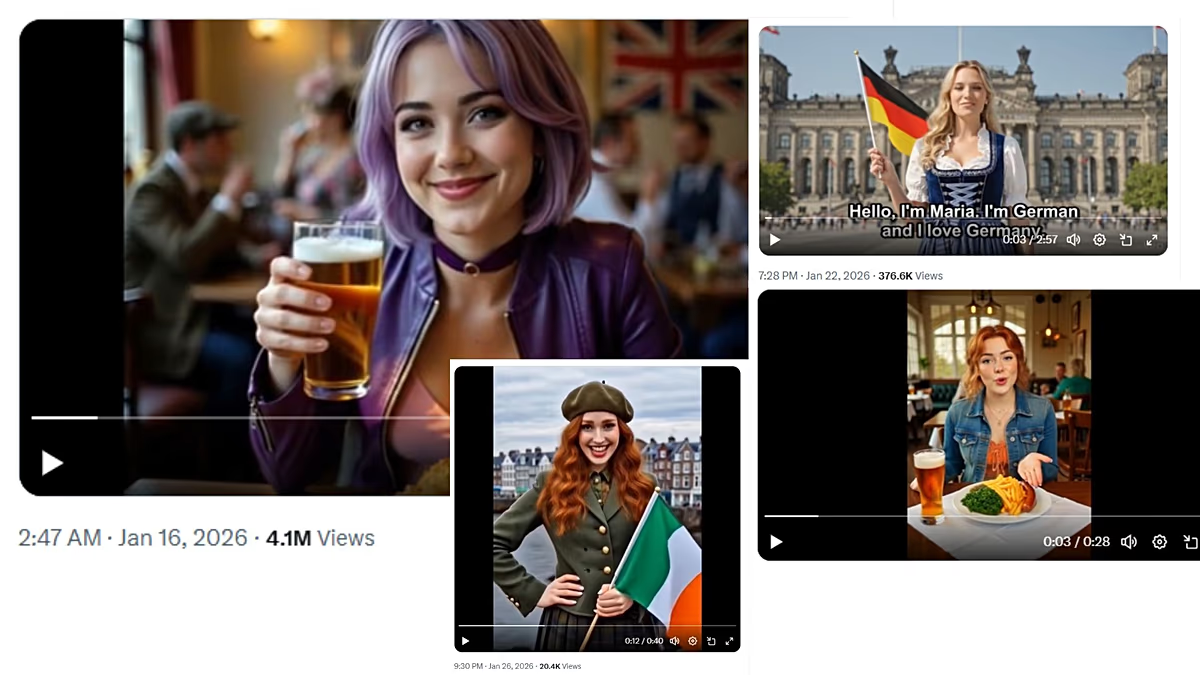
Nearly identical AI-generated characters promoting anti-immigration and anti-government messages have emerged across social media platforms like X and Facebook in Europe. Versions of these characters, including Dutch-speaking “Emma”, German “Maria”, and Irish “Amelia”, have garnered significant attention, each adorned with national symbols and political references tailored to their respective countries.
In Germany, Maria dons a traditional Bavarian dirndl and expresses nostalgia for “a cold beer in our village pub,” while voicing concerns that her government is failing to protect her from Muslim immigrants. Meanwhile, in the Netherlands, Emma insists on preserving Christmas “in the traditional way.” In Ireland, a red-haired Amelia criticizes the country’s taoiseach, Micheál Martin, labeling him a “mouthpiece for Brussels” and claiming that Ireland’s “open borders” are forced upon it, despite the nation not being part of the Schengen area. These videos have attracted thousands of views, particularly on X, reflecting a growing interest in the characters that have become emblematic of regional discontent.
The character of Amelia originated in the UK, where an AI-generated schoolgirl with purple hair went viral, with her initial post amassing over 1.4 million views. The character appeared first in an educational game called Pathways, developed by the UK-based social enterprise Shout Out UK in collaboration with local authorities in Hull and East Riding of Yorkshire. Funded by the UK Home Office as part of a counter-extremism prevention program, the game requires students to choose characters and navigate various online scenarios, enabling discussions about safe versus unsafe behaviors.
Matteo Bergamini, CEO of Shout Out UK, emphasized that the game was specifically designed to address the risks of radicalization, particularly among youth aged 13 to 18. He noted that the threat primarily stems from the rising online far-right ecosystem. Contrary to the narrative that has developed around Amelia, Bergamini clarified that the character is not a protagonist or role model but rather a minor figure encouraging risky online behavior. The game does not advocate for referring children to the UK government’s Prevent program to discuss issues of mass migration.
As the meme culture around Amelia has taken root, it has drawn significant backlash from far-right circles, who interpret the character as a caricature of their views against immigration and government intervention. Researchers monitoring Amelia’s rise indicate that while many versions of the character on mainstream platforms are relatively benign, extreme iterations proliferate in niche online communities, particularly on platforms like Telegram. Siddharth Venkataramakrishnan, an analyst at the Institute for Strategic Dialogue (ISD), noted that the meme has been adopted by diverse online groups, from those using it ironically to prominent anti-migrant accounts.
While not every version of Amelia employs hate speech, some use dehumanizing and violent imagery targeted at specific communities. Shout Out UK has reported that the character has been “memefied and sexualised” by right-wing actors, linking it to racist, antisemitic language, and far-right tropes. The campaign has extended beyond digital spaces, resulting in threats and abusive messages directed at the organization’s staff. Furthermore, researchers have identified accounts promoting Amelia-themed meme coins, illustrating a trend where viral movements are monetized.
Venkataramakrishnan expressed concern about distinguishing between genuine ideological support for Amelia and profit-driven motives that accompany such online trends. “Where does the line cross from supporting something because of ideology to supporting it because you want to make money?” he questioned. He also pointed out that emotionally charged memes tend to gain traction on social media, amplifying their spread and impact.
As AI-generated characters like Amelia continue to generate discussion and debate, they illustrate the complexities of digital narratives in shaping societal attitudes toward immigration and governance. The intersection of technology, social media, and political messaging raises important questions about the influence of these characters and the broader implications for discourse on immigration across Europe.
See also Sheikha Moza Champions Human-Centered Ethics in AI at Web Summit Qatar 2026, Urging Global Leadership
 LG AI Research Patents Exaone Discovery, Revolutionizing AI-Driven Materials and Drug Development
 AI Experts Predict Transformative Changes in AI’s Impact on Jobs, Health, and Creativity by 2028
 Xero Reports 2M AI Users, Secures Melio Integration, Targets FY28 Profitability
 AI-Optimized Middle-Mile Linehaul Platforms Market to Surge 244% by 2035, Driven by E-Commerce Demand