















































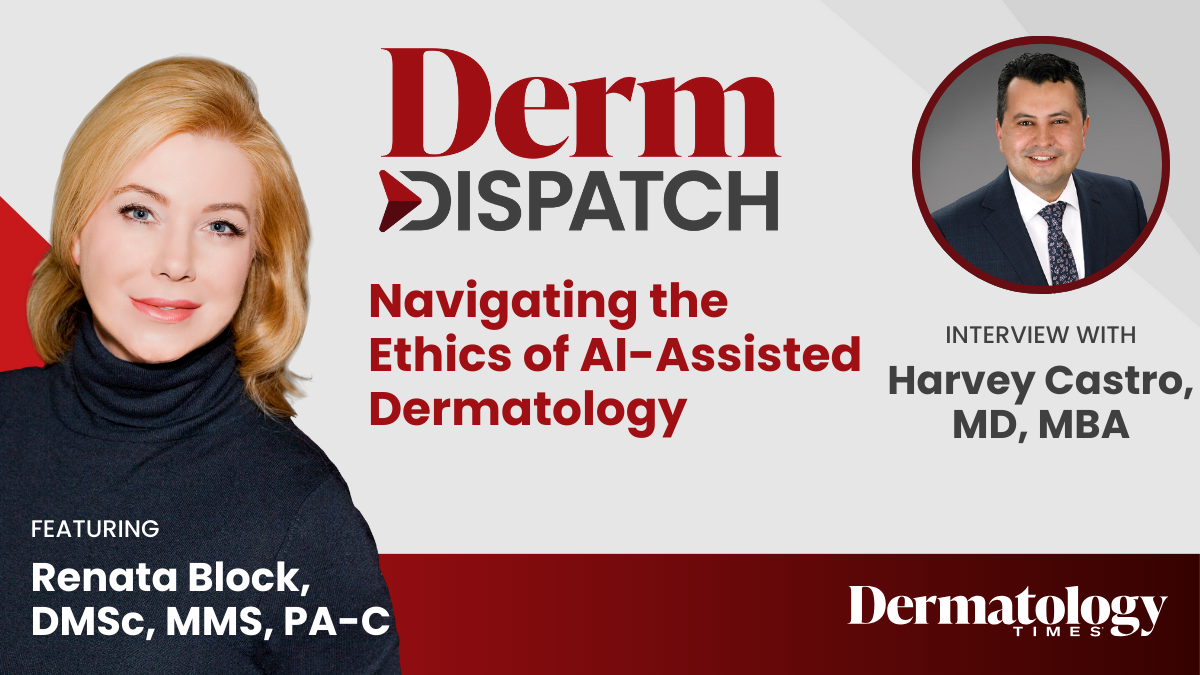
In the inaugural episode of Derm Dispatch for 2026, host Renata Block, DMSc, MMS, PA-C, engaged in a discussion with emergency physician Harvey Castro, MD, MBA, known as “Dr GPT,” about the growing influence of artificial intelligence (AI) in dermatology and the wider clinical landscape. Castro framed AI as a vital clinical partner rather than a replacement for healthcare professionals, emphasizing the need for institutions to budget for AI as they would for utilities and staffing, rather than solely pursuing short-term returns on investment.
A significant challenge in adopting AI, Castro noted, is the technical and financial strain associated with integrating these systems into electronic medical records (EMRs). He argued that waiting for a clear demonstration of ROI could hinder progress, as AI is likely to become a fundamental component of standard care. Instead, he suggested that healthcare institutions should start by defining their clinical objectives—such as enhancing operational efficiency, achieving earlier disease detection, and reducing morbidity—and then select AI tools that align with these goals.
Equity and bias emerged as critical themes during Block and Castro’s conversation. Castro highlighted that the effectiveness of AI systems is heavily contingent on the quality of the training data, noting that dermatological training materials have historically underrepresented darker skin tones. This disparity poses a risk of perpetuating diagnostic inequities, especially for individuals with Fitzpatrick skin types V and VI. To combat this issue, he recommended localized training of smaller AI models using institution-specific data, as well as employing federated learning systems, which allow the sharing of anonymized data “weights” across different sites while maintaining patient privacy.
Trust and transparency were also pivotal in Castro’s discussion about patient acceptance of AI in dermatology. He proposed an “AI Bill of Rights” that would disclose how AI tools are utilized, their established biases, and their limitations. This initiative, he argued, would serve a function similar to nutrition labels, helping patients understand how AI influences their healthcare decisions.
While recognizing the advantages of AI in bolstering diagnostic accuracy and efficiency, Castro cautioned against excessive automation. He stressed the importance of clinicians retaining fundamental diagnostic skills and the capacity to question machine-generated outputs. He advocated for continued emphasis on clinical reasoning during training, including designated periods when AI tools are switched off to preserve the clinician’s instinctual judgment.
Looking to the future, Castro envisioned a shift in dermatology from episodic diagnoses to a more comprehensive, predictive care model. He highlighted potential advancements such as digital twins, genetic data, wearables, and AI-driven analytics, which could facilitate earlier disease detection, personalized treatment paths, and even preventive interventions before symptoms manifest. This paradigm shift could transform the management of chronic inflammatory diseases and skin cancer over a patient’s lifetime.
As the healthcare industry grapples with the integration of AI, the insights shared by Castro during this episode underscore the technology’s promise and the ethical considerations necessary for its implementation. With a focus on collaboration and accountability, the future of dermatology may not only enhance patient outcomes but also address long-standing disparities in care.
See also Global Stocks Near Record Highs as Tensions Simmer; TSMC Fuels AI Market Rally
 Meta Cuts 1,000 Jobs at Reality Labs to Focus on AI and Mobile Energy Solutions
 AI Revolutionizes Cardiac Imaging: Ventripoint’s MRI-Precision Shifts $9B Market Dynamics
 New Jersey Gov. Phil Murphy Signs $25M MOU with NVIDIA to Boost AI Education and Research






