









In a rapidly evolving landscape, companies like Anthropic and Harvey are redefining the boundaries of artificial intelligence in business. Founded in 2021, Anthropic has swiftly gained recognition, achieving a valuation of over $300 billion in under five years, positioning itself as a leader behind only OpenAI, ByteDance, and SpaceX among unlisted startups. Similarly, Harvey, born in 2022, has amassed a client base of 15,000 law firms across the United States, boasting an Annual Recurring Revenue (ARR) exceeding $100 million and a valuation of $8 billion.
These examples highlight a burgeoning trend where enterprises do not just use AI; they are built on it. In Silicon Valley, the AI customer service firm Sierra, founded in 2023, has already become a unicorn with an ARR nearing $100 million. In China, the newly established DeepSeek has created a large-language model akin to ChatGPT in record time, igniting what some are calling the “DeepSeek Moment.”
Yuaiweiwu, also established in 2023, has unveiled “Aixue,” a real-human-level AI tutor that covers subjects like Chinese, mathematics, and English. With over a million users, it has quickly matched the valuation of older competitors like Speak, which integrated ChatGPT only in 2023.
What sets these companies apart is their foundational approach; they are “AI-Native,” meaning AI is not merely an enhancement but the core of their operational logic and business model. Unlike traditional enterprises that often seek incremental improvements through AI, these AI-Native firms are designed from the outset to leverage artificial intelligence in every aspect, from product development to organizational structure.
The notion of AI-Native organizations signals a significant shift in how businesses are structured. As with the rise of “Internet-native” companies like Google and Amazon two decades ago, AI-Native firms represent the forefront of a new business paradigm. They integrate AI deeply into their workflows, fostering a model of human-machine collaboration that enhances efficiency and agility.
Yuaiweiwu is a prime case study in this new paradigm. The company’s inception was catalyzed by a conversation between co-founders Zhang Huaiting and Liu Wei following the Spring Festival in 2023. They questioned the potential of AI to transform education and recognized their unique capability to lead this change.
To create their AI tutor, Yuaiweiwu had to rethink not only their product but also their entire organizational structure. Traditional companies often struggle to fully harness AI due to rigid hierarchies designed around human collaboration. Yuaiweiwu, however, has restructured its workflow to enable deep integration of AI, fostering a collaborative ecosystem where human and machine contributions are interconnected.
In the context of product development, for instance, Yuaiweiwu’s product managers leverage AI to conduct requirement research and generate minimum viable products (MVPs) within hours, rather than days. This approach allows for rapid verification and iteration, significantly shortening the product development cycle. The shift from traditional practices to an AI-integrated workflow not only enhances efficiency but also liberates product managers to focus on creativity and user engagement.
The impact of this new model extends beyond product development. In departments such as R&D, design, and sales, AI tools enable teams to optimize workflows and enhance decision-making processes. For example, R&D engineers can concentrate on system architecture instead of routine coding tasks, while sales teams transition to roles that prioritize strategy over transactional interactions.
According to Zhang Huaiting, the objective of this human-machine symbiosis is not to replace human talent but to free them from mundane tasks, allowing for more strategic and creative endeavors. This transition transforms organizations into intelligent systems capable of self-optimization.
However, the theoretical advantages of AI-Native organizations require validation in practical scenarios. Yuaiweiwu’s focus on personalized education serves as a rigorous testing ground, aiming to break through longstanding challenges in the education sector. By offering a one-on-one AI tutor, the firm seeks to address the “impossible triangle” of large-scale, high-quality, and cost-effective educational solutions.
The integrated system at Yuaiweiwu employs advanced technologies to analyze data and adapt teaching methods to individual student needs, a feat that has historically been difficult to achieve at scale. Continuous data flows allow for real-time adjustments in teaching, enhancing educational outcomes while maintaining operational feasibility.
As AI continues to reshape industries, the emergence of AI-Native companies like Yuaiweiwu may herald a new era of innovation and competitiveness, where organizations harness the full potential of artificial intelligence to create value and drive growth.
See also India’s AI Impact Summit to Host Bill Gates, 100+ Nations, Driving Global AI Dialogue
 AI Models Predict Georgia’s Political Landscape and EU Relations by 2026
 China’s Humanlike AI Regulations Aim to Shape Global Standards and Enhance User Safety
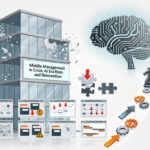 AI’s Rise Triggers Layoffs: Middle Managers Essential Yet Under Threat by 2025 Cuts
 Character.AI Hosts Pro-Anorexia Chatbots Despite Violating Service Terms, Report Reveals