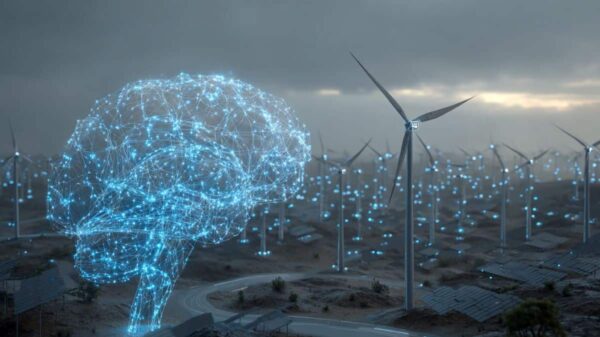














































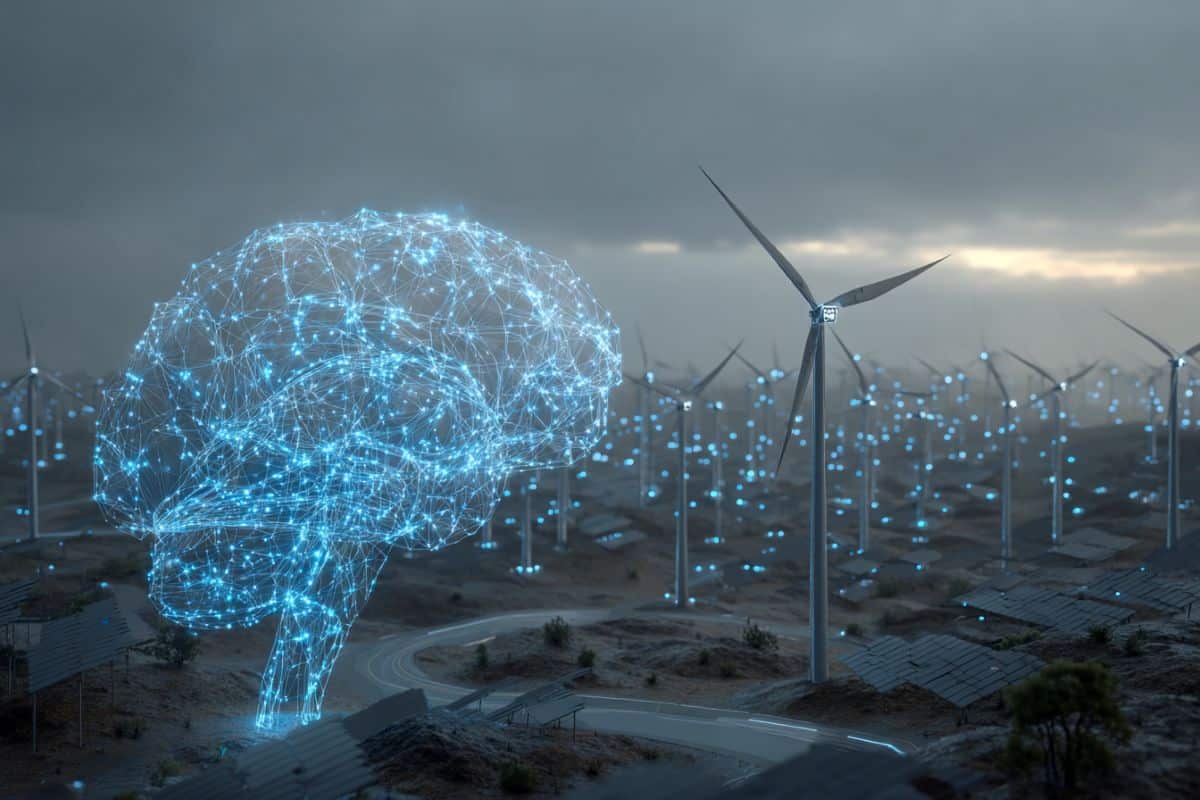
As the global energy landscape shifts from fossil fuels to renewable sources like solar and wind, the challenge of maintaining electrical grid stability has intensified. Traditional power plants, with their heavy spinning turbines, provide a level of inertia that helps stabilize electricity supply. In contrast, renewable sources rely on inverters that lack this inherent stability, making grids susceptible to volatility and potential failures. To address this pressing issue, researchers at the University of Vaasa in Finland have developed an innovative solution inspired by the human brain.
Hussain Khan, a doctoral candidate at the university, has introduced advanced Artificial Neural Networks (ANN) that serve as “biomimetic” controllers. These AI-driven systems can predict and react to fluctuations in energy output from renewable sources in real-time, thereby enhancing grid reliability. The adaptability of this technology marks a significant improvement over conventional methods, which often depend on multiple physical sensors.
The challenge of grid stability stems from the natural intermittency of renewable energy sources. While traditional power plants can provide consistent power, solar and wind generation can vary rapidly due to changing weather conditions. Khan’s AI controllers are designed to learn from thousands of scenarios, enabling them to anticipate grid instabilities before they occur. By adjusting voltage and current in milliseconds, the system ensures a seamless energy supply even during abrupt changes.
Another noteworthy aspect of Khan’s research is the reduction in hardware reliance. Traditional grid systems typically require multiple physical sensors to monitor important parameters like voltage and current. In contrast, Khan’s AI can effectively manage these factors with as few as one sensor, significantly lowering infrastructure costs and reducing potential mechanical points of failure. “By training the neural network effectively, the system can provide reliable results with fewer physical components,” Khan stated.
Despite its promising results, the integration of AI into critical infrastructure poses new challenges, particularly regarding transparency. The AI operates like a “black box,” where inputs and outputs are visible, but the decision-making process remains opaque. While rigorous real-time validation has demonstrated the system’s effectiveness, the need for “Explainable AI” (XAI) is evident to foster greater trust among engineers and regulators.
This research is pivotal for the development of microgrids, which allow local communities to integrate higher percentages of renewable energy without risking blackouts. As the world pursues a carbon-neutral future, Khan’s findings could serve as a crucial building block, enabling electricity grids to support a larger share of wind and solar power.
Khan’s work not only addresses the immediate concerns of grid stability but also contributes to broader environmental goals. As countries around the globe aim to reduce carbon emissions, innovative solutions like these may facilitate the transition to a more sustainable energy ecosystem.
See also Germany”s National Team Prepares for World Cup Qualifiers with Disco Atmosphere
 95% of AI Projects Fail in Companies According to MIT
 AI in Food & Beverages Market to Surge from $11.08B to $263.80B by 2032
 Satya Nadella Supports OpenAI’s $100B Revenue Goal, Highlights AI Funding Needs
 Wall Street Recovers from Early Loss as Nvidia Surges 1.8% Amid Market Volatility