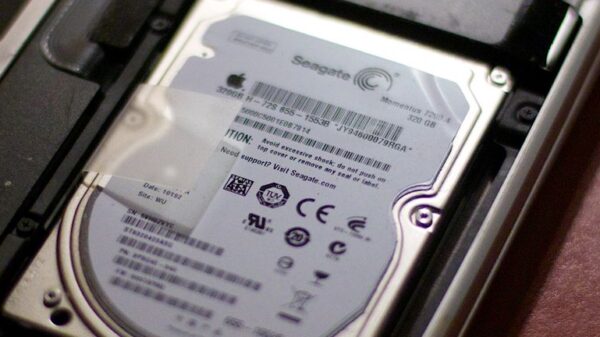












































Hard drive prices have surged significantly, increasing by an average of 46% since September 2025, according to a report from the German publication ComputerBase. This price hike affects nearly the entire hard drive segment, encompassing both mass-market solutions and high-end models. The analysis particularly highlights substantial increases in individual models, such as those from Seagate and Toshiba, which have seen prices rise by more than 60%. The renowned Seagate BarraCuda 24 TB, previously priced at around $239, is now available for approximately $500, primarily from third-party sellers.
In the U.S. market, similar trends are observed. Tom’s Hardware indicates that the IronWolf 4 TB model has jumped from $70 to $99, while the 8 TB version has escalated from $130 to $199. The price dynamics are consistent across key manufacturers, including Western Digital and Toshiba, suggesting a systemic shortage rather than isolated incidents.
A parallel situation is unfolding in Russia, where major retailers report significant price increases across various models. For instance, the Seagate Exos 7E10 8 TB has soared from 18,000 to 32,000 rubles since October 2025, marking an almost 80% increase. In early January, prices peaked at 38,000 rubles. Additionally, the Seagate SkyHawk 4 TB rose from 10,000 to 15,000 rubles, while the WD Purple Pro 10 TB climbed from 29,000 to 40,000 rubles, stabilizing at around 36,000 rubles. Even entry-level models like the WD Blue 1 TB and Seagate BarraCuda have seen price increases of 70% to 75% in just a few months, rising from 7,000 to 12,000 rubles.
This trend indicates that even traditional hard drives, once regarded as a cost-effective storage option, are swiftly losing their price advantage. The underlying cause of this market shift is closely tied to the growing boom in artificial intelligence. Manufacturers of memory and storage are reallocating production capacities to fulfill corporate orders, particularly for server centers focused on training neural networks, which are consuming an increasing number of high-capacity storage devices.
Despite hard drives not being technically dependent on shortages of DRAM or HBM memory, the data storage market is now closely aligned with the AI trend, following the trajectory previously set by graphics processing units (GPUs) and solid-state drives (SSDs). For regular consumers, this signals a crucial reality: it would be unwise to anticipate price declines in the coming months. The escalating demand for computational power and storage capacity is pushing the entire components market towards higher prices.
As the tech landscape evolves, the implications of these developments are profound, affecting not just individual consumers but also businesses reliant on data storage solutions. Without significant changes in supply chain dynamics or production strategies, the upward pricing trend may be a long-term fixture in the market.
See also Investment Firms Must Embrace AI-Driven Strategies to Avoid Costly Technology Failures
 TSMC Reports $16B Q4 Earnings, Signals $56B AI Investment Surge and Market Confidence
 Radware’s ZombieAgent AI Vulnerability Sparks Valuation Concerns Amid High P/E Ratio
 Microsoft Launches ‘Community-First AI Infrastructure’ to Support Local Communities