



















































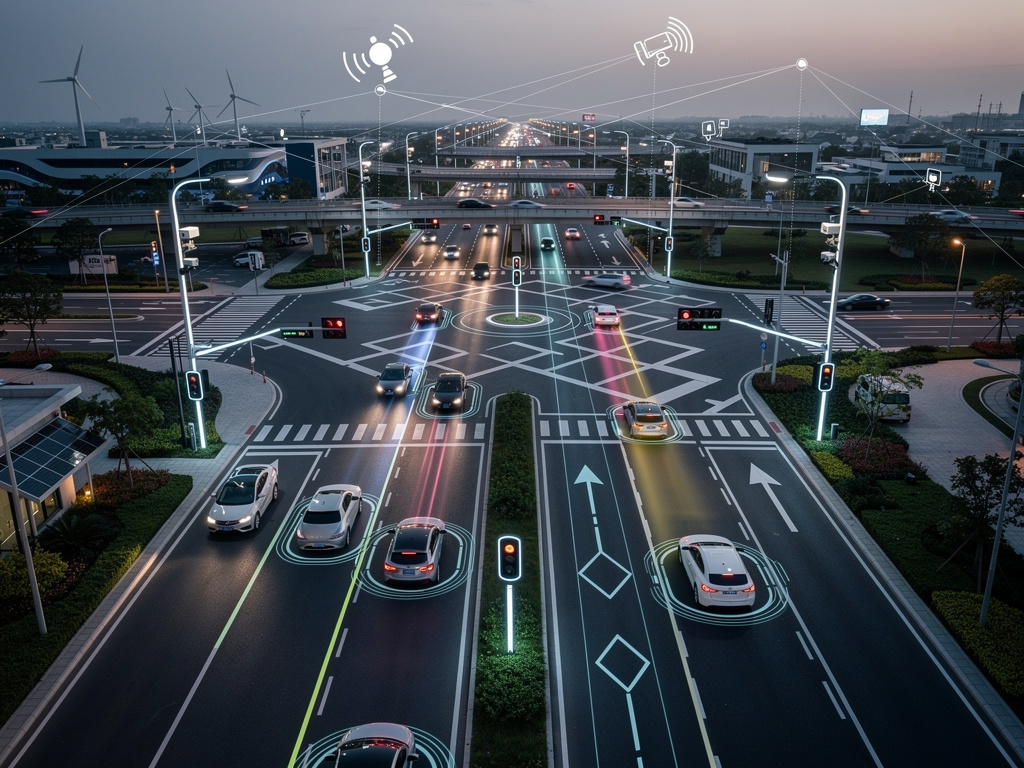
As urban populations continue to swell and traffic conditions worsen, the demand for safer and smarter streets is intensifying. Recent advancements in technology are reshaping roadways from mere corridors of transport into dynamic systems that emphasize safety, efficiency, and sustainability. A recent video by MSN highlighted seven key technological breakthroughs that are contributing to this transformation, emphasizing the role of artificial intelligence, connectivity, and eco-friendly materials.
Leading the charge are intelligent traffic management systems that utilize real-time data to enhance signal timing and alleviate congestion. According to a report by UrbanSDK, cities like New York and Los Angeles are increasingly adopting these systems, which employ AI algorithms to analyze traffic patterns and predict bottlenecks. This adoption has resulted in significant reductions in intersection delays, not only reducing idling emissions but also minimizing driver frustration and potential collisions at high-risk locations.
Enhancing this technological landscape are advanced vehicle-to-infrastructure (V2I) communication systems, which enable vehicles to relay information to road elements like signs and barriers. Trials conducted in the U.S. and the U.K., as reported by AVEVA, demonstrate how sensors embedded in highways can gather data on issues ranging from potholes to erratic driving behavior. This information is then communicated to drivers through in-car displays or mobile applications, allowing for proactive hazard avoidance and aligning with the objectives of smart city initiatives.
AI-Powered Surveillance: A New Era in Road Safety
The deployment of AI-driven cameras for real-time monitoring marks another significant advancement. Companies like Flock Safety are redefining safety in dense urban areas through their ecosystems that include license plate readers and traffic analytics. These technologies allow law enforcement and city planners to identify and address dangerous driving behaviors swiftly. In 2025, cities such as Chicago reported enhanced protection for bike lanes through these integrated technologies, fostering a safer environment for multi-modal transportation.
At a global level, satellite technology is also making strides in road safety. Insights from the World Economic Forum indicate that the combination of satellites and AI can provide comprehensive overviews of traffic incidents, identifying high-risk areas and informing necessary infrastructure improvements. For instance, in regions susceptible to adverse weather conditions, satellite data can predict hazardous situations, triggering automated alerts that could save lives, particularly in remote areas.
According to the International Bridge, Tunnel and Turnpike Association, these satellite innovations are vital in addressing the ongoing issue of road fatalities, which exceed one million annually. By leveraging precise location data, transportation authorities can more effectively deploy resources, manage traffic around incidents, and optimize emergency responses, making this technology especially crucial for developing nations where infrastructure is still evolving.
Self-Healing Roads: Merging Durability and Sustainability
India’s Green Highways Policy has been integrating ecological features such as tree-lined corridors and wildlife underpasses, as recently shared in updates from Megh Updates. These initiatives not only improve safety by mitigating animal-vehicle collisions but also promote sustainability through features like solar lighting and water harvesting, setting a precedent for how infrastructure can coexist with nature.
In a separate development, China is pioneering autonomous highway construction, as noted in updates from Interesting Engineering. AI-powered machinery is now capable of building roads without human intervention, exemplified by a 158-kilometer stretch on the Beijing-Hong Kong-Macao Expressway. This approach promises improved efficiency and safety in construction, thereby enhancing overall quality.
As enforcement technologies evolve, there is a noticeable shift towards preventive measures rather than punitive actions. In 2025, automated speed enforcement and AI-driven violation detection systems are expected to discourage unsafe behaviors without the constant presence of law enforcement. This data-centric approach enables targeted interventions, including dynamic speed limits that adjust based on real-time conditions.
The road safety market is projected to reach $43.64 billion by 2031, according to recent insights from OpenPR, driven by government investments in smarter mobility solutions. Cities globally are prioritizing innovations like Dubai’s AI-powered Dynamic Message Signs, which adapt messaging to reduce travel times and enhance safety.
As we look to the future, the integration of these technologies—from self-healing materials to satellite oversight—signals a shift toward smarter urban mobility, enhancing safety and efficiency. With ongoing advancements anticipated through 2025 and beyond, the road infrastructure landscape is poised for a transformative leap, reflecting a commitment to public safety and sustainability.
See also Pew Research: 64% of US Teens Use AI Chatbots, Raising Mental Health Concerns
 AI Breakthroughs: Machine Vision Transforms Industries, Raises Ethical Concerns by 2025
 Vanguard Projects 2.25% US Growth in 2026 Amid AI Investments, Cautious Fed Rate Cuts Ahead
 YouTube’s “AI Slop” Content Rakes in $117M Annually; 20% of New Recommendations
 Indiana GOP Senator Under Fire for AI Images of Santa Clobbering, Dismisses Critics as ‘Snowflakes’