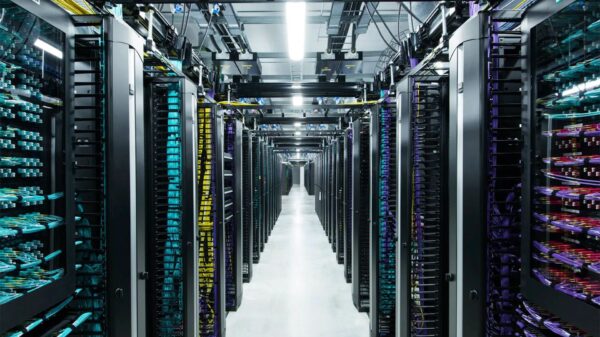

















































Cisco and SharonAI Holdings have unveiled Australia’s first Cisco Secure AI Factory in collaboration with NVIDIA, which is powered by 1,024 NVIDIA Blackwell Ultra GPUs and Cisco’s networking and security suite. This facility aims to provide sovereign, high-performance AI infrastructure while ensuring that all data and processing remain onshore. The launch underscores a growing trend in which sovereign and hyperscale AI projects are incorporating NVIDIA technology at the core of national and enterprise-level infrastructure, particularly in regions like India, where NVIDIA’s data center deployments continue to expand.
The new AI factory in Australia is a significant development that could enhance NVIDIA’s narrative as a leader in AI infrastructure. To hold a stake in NVIDIA, investors must believe in the global expansion of AI factories and the enduring demand for NVIDIA’s comprehensive array of GPUs, networking solutions, and software. While the establishment of the Cisco–SharonAI Secure AI Factory certainly supports this investment thesis, it does not substantially alter the immediate catalysts for NVIDIA, which include forthcoming data center guidance concerning the Blackwell GPUs. Key risks also loom, particularly in the form of export controls and competition from custom silicon solutions developed by hyperscalers.
Another noteworthy development is Yotta Data Services’ plan to deploy 20,736 NVIDIA Blackwell Ultra GPUs in India. This initiative illustrates the intersection of sovereign and hyperscale AI projects and highlights NVIDIA’s growing backlog. Investors are particularly focused on whether these substantial AI factory initiatives will lead to sustained orders across various markets, thereby bolstering NVIDIA’s financial outlook.
While the narrative surrounding NVIDIA’s expansion in AI infrastructure is compelling, investors must remain vigilant regarding potential shifts in risk profiles. Factors such as export regulations and customer concentration could substantially impact NVIDIA’s market position. Currently, NVIDIA is projecting revenues of $337.2 billion and earnings of $187.9 billion by 2028, necessitating an ambitious annual revenue growth rate of 26.8% and a profit increase of approximately $101.3 billion from the current $86.6 billion.
Market analysts have varying perspectives on NVIDIA’s future performance. The most bearish projections suggest that earnings may only reach about $177.1 billion by 2028, with a price-to-earnings ratio of 27 times, indicating significant disagreement on how factors such as U.S.-China relations, customer dependency, and AI demand will materialize as these new deployments take shape.
As investors analyze NVIDIA, they are encouraged to consider the intricacy of valuation. There are 309 other fair value estimates for NVIDIA that suggest the stock might be worth 26% less than its current price, highlighting the range of opinions existing within the market. The ongoing dialogue about NVIDIA’s growth trajectory and its role in the AI sector remains active, with various analysts offering differing views on its potential.
For those questioning existing narratives, history has shown that extraordinary investment returns often come from independent thought rather than consensus. As the market evolves, keeping a critical eye on emerging trends will be essential for those navigating this complex landscape.
With NVIDIA’s influence in the AI space becoming increasingly pivotal, understanding its market positioning and potential risks will be crucial for investors looking to make informed decisions. As the industry adapts to these rapid advancements, the performance and strategies of companies like NVIDIA will be closely monitored for indications of future success.
See also Mistral AI Acquires Koyeb for $13.8B to Enhance Full-Stack AI Cloud Capabilities
 Amazon Invests $12B in AI Data Centers in Louisiana, Creating 540 Jobs Amid Market Skepticism
 Amazon Invests $12B in Louisiana AI Data Centers, Creating 540 Jobs
 xAI’s Grok Approved for Use in Classified US Military Systems Amid Anthropic Dispute
 Meta Announces $100B AMD AI Infrastructure Deal, Boosting AMD Shares by 14%