






















































Australia’s National AI Plan indicates a strategic shift in how the nation will contend with the intensifying global competition in artificial intelligence. Contrary to earlier expectations that Australia would adopt a comprehensive AI Act modeled on European legislation—with stringent guardrails and mandatory risk classifications—the government has pursued a more cautious approach. This decision prioritizes existing laws and targeted oversight over sweeping regulatory reforms, a choice influenced by various political, economic, and international pressures.
Industry organizations, including major global technology platforms, voiced concerns about premature regulations that could stifle innovation. They argued that Australia risked imposing constraints more quickly than its competitors. The Treasury’s projection of a potential $100 billion boost from AI adoption further supported calls for a measured regulatory pace. The Productivity Commission’s guidance underscored this sentiment: pause new laws, assess existing frameworks, and gather data before committing to significant regulatory changes.
The resulting plan demonstrates a consensus around this cautious strategy. Instead of establishing a new regulatory framework, the government will utilize Australia’s existing “technology-neutral” legal structures to address AI risks. This approach facilitates an ongoing refinement process, emphasizing adaptability over prescriptiveness.
At the core of this strategy is the newly established AI Safety Institute. Its role is primarily analytical, focusing on identifying emerging systemic risks, validating assumptions, advising ministers, and bridging gaps between current legislation and practical realities. This institute is envisioned as a critical link between Australia’s current light-touch regulatory phase and a potential future move toward more robust regulations. Its effectiveness will hinge on its analytical independence and capacity to elevate AI risk from a technical issue to a broader governance challenge.
The plan also highlights significant investments in infrastructure—ranging from multi-billion-dollar data centers to renewable energy-linked computing. This expansion is designed to enhance Australia’s domestic capabilities, enabling it to compete within global AI ecosystems without being overly dependent on foreign technologies. The emphasis on capacity-building aims to attract long-term investments from global tech firms seeking stable regulatory environments.
However, reliance on existing legal frameworks exposes Australia to structural risks. Many of these laws were crafted around traditional human decision-making, emphasizing transparency and accountability, while AI systems often operate opaquely and at scale, complicating accountability. This misalignment raises fundamental questions about the adequacy of trying to govern a transformative technology with outdated legal structures, likening it to “patching a modern submarine with timber from the Endeavour.”
Former minister Ed Husic raised concerns regarding a “whack-a-mole” regulatory model, suggesting that a reactive approach to responding to harms will not suffice. International examples, particularly from the United Kingdom and Singapore, indicate that adaptive regulatory frameworks tend to emerge as legacy systems face limitations.
A crucial yet understated element of the plan pertains to AI’s role in the workplace. The government has acknowledged the necessity of reviewing how algorithmic decision-making intersects with labor rights, workplace surveillance, and automated management systems. These domains are likely to evoke the most immediate and significant public concern, as AI in workplace management has historically triggered regulatory scrutiny and legal challenges. Australians may tolerate many innovations, but they are unlikely to accept being managed by unaccountable algorithms.
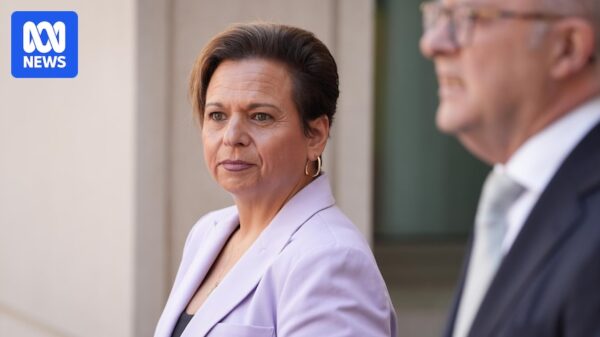
Industry Minister Tim Ayres articulated the launch of the AI plan at the Lowy Institute as a blend of economic opportunity and national resilience. Nonetheless, his speech notably omitted discussions on how Australia plans to address systemic risks that span privacy, competition, employment law, national security, and democratic integrity. This omission highlights a critical tension in the government’s approach, raising the question of whether the current strategy could lead to regulatory instability in the future.
While Ayres positioned the decision to forego a standalone AI Act as pragmatism, it reflects a deeper gamble on legacy legislation. His remarks on resilience and fairness resonate; however, they fail to address the potential pitfalls of deferring regulatory action while other nations accelerate their AI frameworks. The risk is clear: Australia could become a policy-taker in a global AI landscape, constrained by rules drafted elsewhere.
Ultimately, Ayres framed the political rationale for the plan effectively, yet the strategic case against complacency remains pressing. Flexibility without a clear direction can lead to stagnation—a luxury that Australia cannot afford in a fast-evolving technological environment. The urgency is clear: Australia must either develop its own sovereign AI capabilities or risk being left behind once again.
For further insights into AI’s evolving landscape, explore OpenAI, DeepMind, and Microsoft.
See also Google’s Gemini for Education Reaches 10 Million Students Across 1,000 US Institutions
 Proconex Launches Linque: AI-Driven Platform to Transform Industrial Operations Safely
 AI Advances Quantum Computing: Integration Boosts Supercomputers for Intractable Problems
 Morgan Lewis Advises Nebius on $3B AI Infrastructure Deal with Meta
 C-Suite Executives Report Critical Gaps in AI Preparedness Amid Rising Costs, HFMA Finds