


















































Several major technology companies have recently reported earnings and provided projections for their capital expenditures (CapEx) in 2026, with a collective investment in artificial intelligence (AI) infrastructure expected to surpass $700 billion (€590 billion) this year. This staggering figure exceeds the entire nominal GDP of Sweden for 2025, according to International Monetary Fund (IMF) estimates. The US Semiconductor Industry Association has projected that global chip sales will reach $1 trillion (€842 billion) for the first time in 2026, further underscoring the escalating demand for AI capabilities.
Leading banks and consulting firms, including JPMorgan Chase and McKinsey, forecast that total AI CapEx will exceed $5 trillion (€4.2 trillion) by 2030, driven by what they describe as “astronomical demand” for computational power. CapEx refers to the funds companies allocate to build, improve, or maintain long-term assets, and is an important indicator of future operational strength and growth potential.
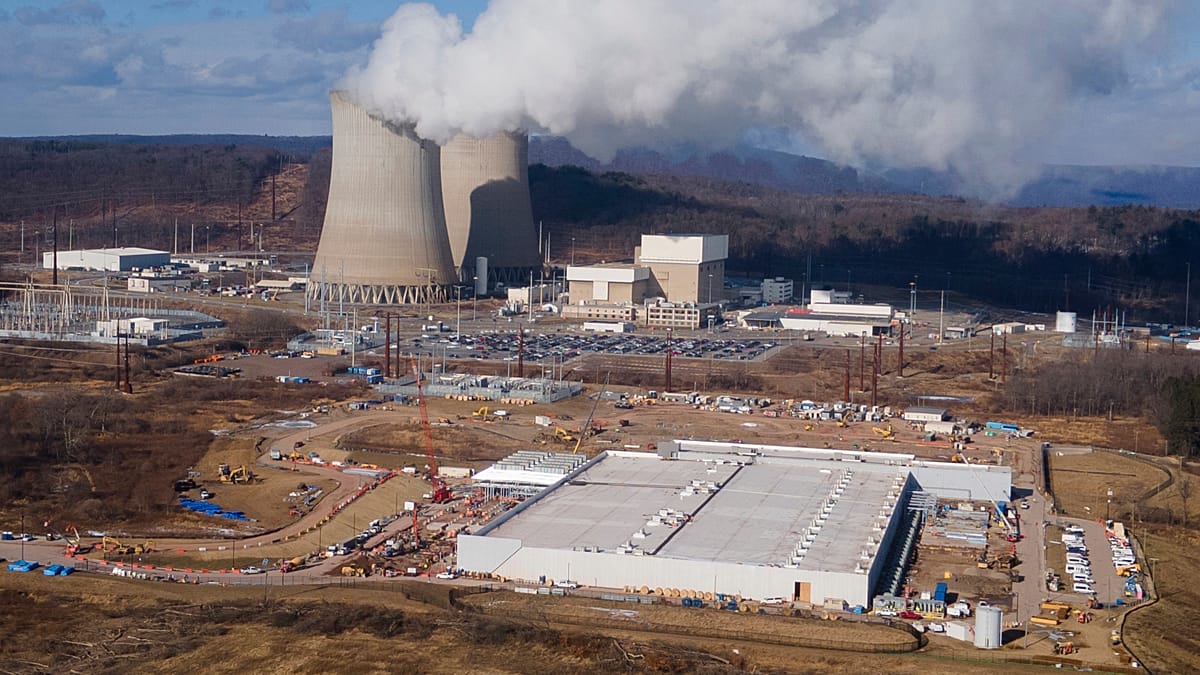
This year’s surge in AI-related spending marks a significant pivot for the sector, which is estimated to have invested approximately $400 billion (€337 billion) in AI CapEx in 2025. Nvidia founder and CEO Jensen Huang stated at the World Economic Forum in Davos last month that the industry is undergoing “the largest infrastructure build-out in human history.”
At the forefront of this spending spree is Amazon, which is projected to invest an astounding $200 billion (€170 billion) in AI infrastructure for 2026. To put this into perspective, Amazon’s individual CapEx guidance exceeds the combined nominal GDP of the three Baltic nations for 2025, based on IMF data. Following closely behind are Alphabet, Google’s parent company, with a forecast of $185 billion (€155 billion), and Microsoft and Meta, which plan to spend $145 billion (€122 billion) and $135 billion (€113 billion), respectively. Oracle has also increased its CapEx estimate to $50 billion (€42.1 billion), nearly $15 billion (€12.6 billion) above previous projections.
Tesla is set to ramp up its spending to nearly $20 billion (€16.8 billion), primarily to expand its robotaxi fleet and develop the Optimus humanoid robot. Elon Musk’s xAI plans to invest at least $30 billion (€25.2 billion) in 2026, including a new $20 billion (€16.8 billion) data center in Mississippi, touted as “the largest private sector investment in the state’s history.” The company will also expand its Colossus data center cluster in Tennessee, which Musk has described as the world’s largest AI supercomputer.
In contrast, Apple lags behind with a projected $13 billion (€10.9 billion) investment. However, the tech giant announced a multi-year partnership with Google last month to incorporate Gemini AI models into future iterations of Apple Intelligence, particularly enhancing Siri and on-device AI features. This strategy suggests that Apple may be relying on external partnerships to bolster its AI capabilities without significantly increasing its own CapEx.
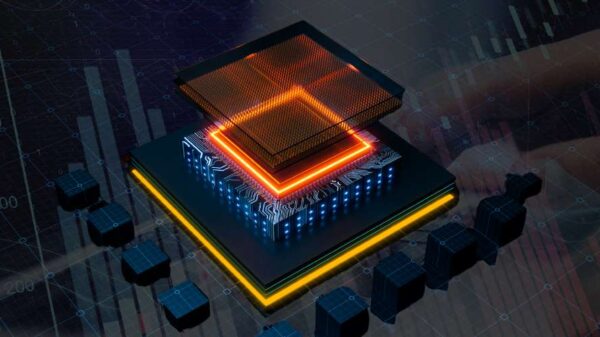
Nvidia, which is primarily focused on selling AI chips, is expected to capture a major portion of the tech giants’ spending as they build out data centers. The company will report its earnings and projections on February 25, with CEO Jensen Huang having estimated a cost of between $50 billion (€42.1 billion) and $60 billion (€50.5 billion) per gigawatt of data center capacity, with about $35 billion (€29.5 billion) allocated to Nvidia hardware.
Wall Street’s reaction to the anticipated spending has been mixed. While investors recognize the necessity of establishing a competitive edge in the AI sector, the sheer magnitude of planned expenditures has raised concerns among shareholders. Morgan Stanley anticipates that hyperscalers will borrow around $400 billion (€337 billion) in 2026, more than double the $165 billion (€139 billion) borrowed in 2025. This increase could push total high-grade US corporate bond issuance to a record $2.25 trillion (€1.9 trillion) this year.
Despite the ambitious AI CapEx plans, projected AI revenue for 2026 is yet to match the spending, leading to skepticism about sustainability. Analysts have highlighted concerns regarding rapid hardware depreciation and high operational costs, particularly energy usage. Google CEO Sundar Pichai noted this month that there are “elements of irrationality in the current spending pace.” Some analysts, like Rothschild & Co’s Alex Haissl, have downgraded ratings for Amazon and Microsoft, warning that the economics of the AI boom may differ significantly from past trends.
As this landscape evolves, Europe faces pressing questions regarding its ability to compete in the AI sector. While US firms mobilize nearly €600 billion in a single year, the European Union’s coordinated efforts fall short, with total spending on sovereign cloud data infrastructure projected at only €10.6 billion in 2026. Although this represents an 83% year-over-year increase, it pales in comparison to the US’s investments.
Mistral AI, one of the few European companies making strides in this arena, has announced a €1 billion CapEx plan for 2026, alongside a major €1.2 billion investment in a new data center in Sweden, designed to support high-performance computing compliant with EU regulations. This initiative highlights Europe’s struggle to establish a competitive foothold amid a landscape dominated by American technological advances.
As 2026 unfolds, the stakes are clear. The US is betting heavily on AI dominance, leveraging its financial resources and credit rating, while Europe remains cautious, hoping that targeted investments and regulatory frameworks will allow it to carve out a significant role in a technology increasingly defined by American innovation.
See also OpenAI Warns U.S. Lawmakers of DeepSeek’s AI Model Replication Threat
 Mistral AI Acquires Koyeb to Enhance Serverless Infrastructure for AI Workloads
 5 AI Tools Empowering Artists: Enhance Creativity and Workflow in 2026
 PM Modi: AI to Empower 1.4B Citizens, Advancing India’s Digital Public Infrastructure by 2047