






















































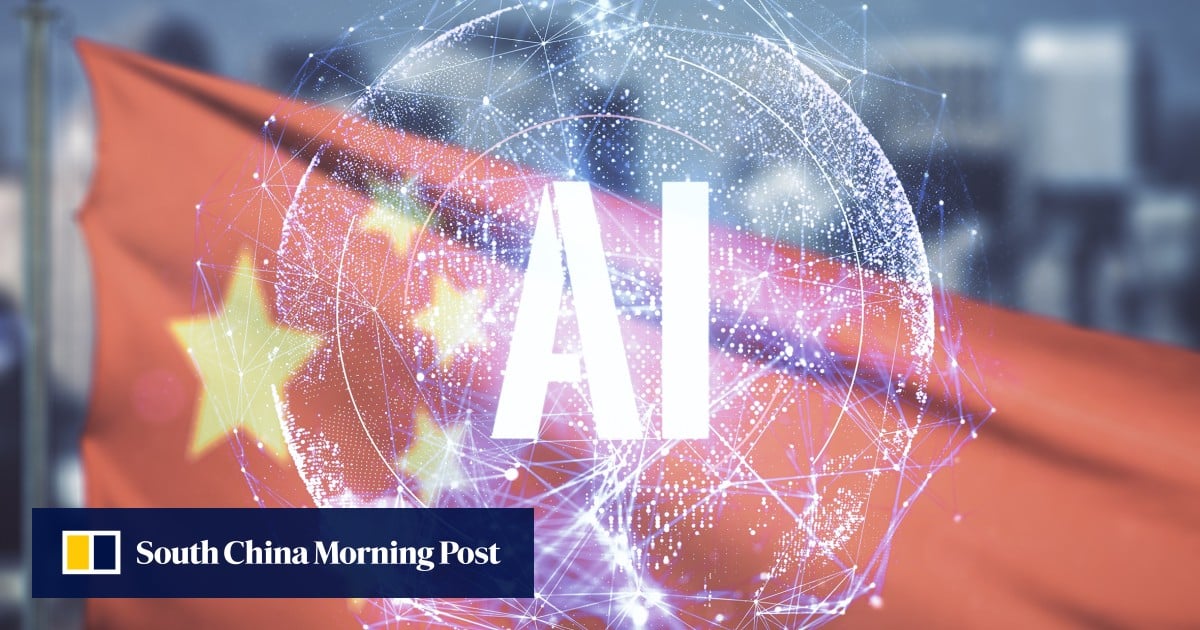
China has successfully built and launched a super-powered artificial intelligence (AI) system that connects directly to its national supercomputing network, enabling it to conduct high-level scientific research autonomously. The initiative, which commenced on December 23, was unveiled just a month after former U.S. President Donald Trump announced the Genesis Mission, an ambitious effort likened to an “AI Manhattan Project” aimed at establishing U.S. technological supremacy.
While the U.S. initiative is constrained by strict timelines that demand demonstrable progress within 270 days, China has already rolled out its AI system on a large scale, providing services to over a thousand potential institutional users across the nation. This robust deployment underscores China’s rapid advancements in AI technology and its strategic focus on leveraging supercomputing resources.
The newly developed AI agent is capable of interpreting simple natural language commands, breaking down complex research tasks, allocating computing power, running simulations, analyzing data, and generating comprehensive scientific reports—all without the need for constant human oversight. This capability has been highlighted by the official China Science Daily, which emphasizes the system’s significant potential in advancing scientific research.
Central to this AI system is the National Supercomputing Network (SCNet), a high-speed digital infrastructure that interconnects more than 30 supercomputing centers across China. This extensive network facilitates nearly 100 scientific workflows in diverse fields, including materials science, biotechnology, and industrial AI, showcasing China’s broad focus on harnessing AI for various scientific applications.
The implications of this technological leap extend beyond mere advancements in research capabilities. As nations around the world ramp up their investments in AI, China’s swift and extensive deployment of this super-powered AI system is poised to reshape the competitive landscape. The rapid integration of AI into scientific research not only enhances productivity but also accelerates the pace of discovery, potentially positioning China as a leader in multiple scientific domains.
As the global race for AI supremacy intensifies, stakeholders in technology and policy circles will be closely monitoring developments in both the U.S. and China. The contrasting approaches reflect differing national strategies toward technological innovation and research investment, raising questions about the future balance of power in the fast-evolving arena of artificial intelligence. The significance of these developments may well extend into long-term geopolitical implications, driving nations to reassess their positions in the global technology landscape.
For more information on China’s advancements in this field, visit the Chinese Government’s official site or explore the China Science Daily for detailed scientific insights.
See also Accenture’s AI Strategy Shift: Integrating AI as Core Business, Not a Side Project
 xAI Sues OpenAI for $7M Employee Poaching and Trade Secret Theft in AI Showdown
 Soulm8te Explores AI’s Emotional Grip: A Chilling Reflection on Human Loneliness
 Berkshire Hathaway Poised to Boost Amazon Stake Amid Rising AI Market and Strong Growth
 Qualcomm Launches Snapdragon X AI Chip for Mid-Range PCs, Boosting AI Performance