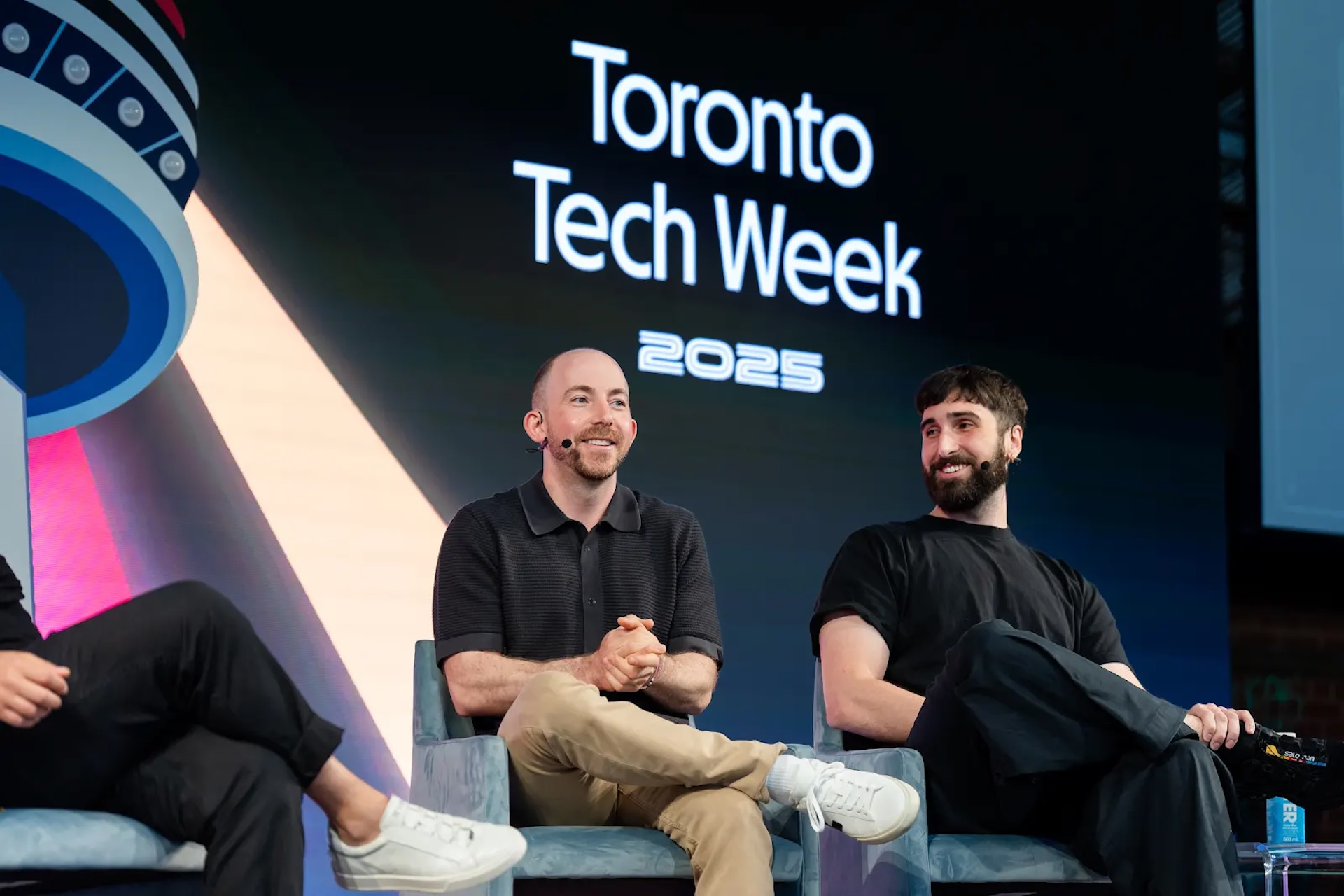
Co-founders of Cohere, Aidan Gomez, Nick Frosst, and Ivan Zhang, have been recognized as Canada’s innovation leaders for 2025, tying with Wealthsimple CEO Michael Katchen, according to an annual survey conducted by The Logic. The results reflected a competitive field, with the winners each garnering just under 16 percent of the votes, while Christian Weedbrook of Xanadu followed closely behind.
Katchen’s ascent to a shared top spot comes after previously ranking second in last year’s survey and fourth in 2022. The Western University business graduate has driven Wealthsimple, a trading platform offering services in traditional securities, gold, and cryptocurrency, to manage approximately $100 billion in investor funds.
Survey participants praised Katchen’s company for its impressive year-on-year growth and engagement strategies. “I have young adult children who all are [Wealthsimple] clients and are clearly engaged with their growth and marketing strategy,” one respondent noted. Katchen, however, was unable to comment on his recognition.
Meanwhile, Cohere’s Canadian roots resonate within a national landscape increasingly focused on navigating the complexities of artificial intelligence amid concerns about sovereignty and relations with the United States. Respondents highlighted that Cohere’s “focus on multilingual models, sovereign deployments, and international expansion beyond the U.S. positions Canada as a serious AI producer, not just an adopter or subcontractor.” Another remarked, “Canada has the makings of a true global champion in Cohere, and that is rare.”
In a related query, Cohere also led as the company most respondents expressed interest in monitoring closely in 2026, firmly establishing its status as a significant player in the Canadian tech industry. The firm specializes in providing large language models (LLMs) tailored for corporate clients, diverging from the public offerings of OpenAI’s ChatGPT and Google’s Gemini.
Cohere’s milestone achievements in 2025 included the launch of an agentic platform named North, which empowers employees of corporate clients to create AI-driven tools beyond text. RBC, Canada’s largest bank, became the platform’s first client. “We’ve been building the business,” Zhang stated in an interview. The company reported substantial revenue growth, acquiring major clients including telecom leader Bell and defense contractor Thales.
“This year is when we’ve closed the gap between, ‘Hey, you can buy this LLM and prompt it,’ to, ‘OK, you can use this capability for actual business impact,’” Zhang noted. He emphasized North’s versatility, which allows customers to deploy AI in diverse environments, even on ships. With ongoing enterprise demand for AI integration, Zhang sees considerable potential for further expansion, stating, “They’re getting pressured to streamline operations and unlock top-line revenue growth.”
Cohere’s 2025 achievements also featured a substantial $240 million in federal funding for a significant compute project and a pioneering agreement with the federal government to explore Cohere’s tools for improved operations. Additionally, the company secured US$600 million in financing across two deals, the latter valuing it at US$7 billion. The recruitment of AI expert Joelle Pineau from Meta further bolstered Cohere’s appeal as a competitive alternative to U.S. tech giants.
Despite rapid growth, the company has faced challenges, including a lawsuit over alleged copyright violations in training its models, which it firmly rejects, and a leadership reshuffle. Some survey respondents voiced concerns about the potential risks for AI companies in the coming year, suggesting that the “AI bubble may expand and then a burst could follow.” Another warned, “AI will go snaky.”
Acknowledging the broader industry climate, Zhang asserted that Cohere is strategically avoiding the pitfalls associated with the AI hype cycle. Unlike competitors like OpenAI or xAI, the firm is not heavily investing in massive data centers, nor is it pursuing “superintelligence.” Instead, Cohere adopts a more capital-efficient strategy, purchasing rather than building necessary computing resources and developing new products based on client feedback. “A lot of hype will probably not pan out,” Zhang remarked, reinforcing a focus on sustainable growth driven by customer utility.
Looking ahead, Zhang expressed a desire to witness further breakthroughs in Canadian innovation. “I want to see more Canadian innovation in the ecosystem,” he said, hopeful for the emergence of another remarkable company to challenge Cohere’s leading position next year.
Wealthsimple, for its part, aspires to ascend to the upper echelons of Canadian financial institutions. To achieve this, Katchen’s firm has expanded its offerings to include traditional retail services such as credit cards and loans, directly competing with established banks. The company raised $750 million in the autumn, achieving a valuation of $10 billion—more than doubling the valuation assigned by its major shareholder, Power Corp., in late 2024.
Although Weedbrook and Xanadu finished third in this year’s survey, respondents foresee a bright future for quantum computing, likening its potential to that of the Internet and AI. Xanadu is preparing to go public with a valuation of US$3.6 billion. Clio CEO Jack Newton, whose legal tech firm recently raised US$500 million at a US$5 billion valuation, received over 10 percent of the votes, with one survey participant highlighting his firm’s significant yet previously understated market reach.
See also Andrew Ng Warns AI’s Limitations: AGI Distant, Investments Risk Bubble Burst
 JPMorgan Projects 2026: AI Adoption Fuels Growth, M&A Revival, and Stock-Pickers’ Edge
 OpenAI and Anthropic Double AI Usage Limits for Developers During Holiday Season
 2025 Marks Shift to Circular Investment in AI Amidst Growing Trust Issues and Regulatory Pressures
 Transform Project Management: Must-Read AI Books Streamlining Workflows and Strategy