









































This year’s World Economic Forum in Davos highlighted a dual narrative surrounding artificial intelligence (AI): the potential for opportunity coupled with a pervasive sense of caution. As leaders grapple with multiple inflection points, AI emerged as a central theme, reflecting its profound impact on jobs, governance, and social dynamics.
Ursula von der Leyen, President of the European Union, noted that while the global economy is increasingly interconnected, fractures are evident, particularly as trade barriers tripled in value last year. Even so, supply chains remain tightly woven together. The juxtaposition mirrors the situation with AI, as leaders are urged to adopt the technology swiftly while also addressing its disruptive implications.
Discussions at Davos framed the challenges as a continuous tension: act decisively but accept uncertainty; move quickly but safeguard essential values; embrace AI while preserving human judgment. Speakers expressed that these issues are not transient dilemmas but ongoing paradoxes requiring careful navigation.
Economist and former Nigerian Foreign Minister Ngozi Okonjo-Iweala was one of the voices advocating for restraint. She advised leaders not to “hyperventilate” as changes unfold, emphasizing the importance of staying grounded and observing real-time developments. This sentiment resonated in a forum heavily focused on disruption.
Participants collectively underscored the necessity of steadiness over projecting certainty. They advocated for openly naming trade-offs, asking better questions, and fostering spaces for experimentation without sacrificing momentum as key traits of resilient leadership.
The need for calm leadership was particularly evident in the employment discussions. Jamie Dimon, CEO of JPMorgan Chase, stated unequivocally that AI is projected to lead to fewer jobs over the next five years. With the bank already integrating AI across various applications, including fraud detection and customer service, Dimon stressed the crucial need for retraining and a phased approach to adoption to mitigate social backlash.
In a similar vein, Joe Ucuzoglu, CEO of Deloitte, warned of inevitable labor disruptions as AI automates many tasks, reducing the human effort required. While new job opportunities are likely to emerge, Ucuzoglu cautioned that without coordinated public and private action, the transition could exacerbate inequality and political unrest.
While concerns about disruption were prevalent, the economic potential of AI was not lost on attendees. Adena Friedman, President and CEO of Nasdaq, cited that early enterprise deployments have yielded nearly threefold returns on investment. However, she also emphasized that scaling AI across organizations demands significant capital, cultural shifts, and unwavering commitment from leadership. “The technology works,” Friedman stated, “but making it enterprise-wide is the real challenge.” Reskilling is becoming a pressing priority for both governments and corporations alike.
Warnings about AI’s impact on labor markets grew sharper, particularly from Kristalina Georgieva, Managing Director of the International Monetary Fund. She characterized AI’s effects as a “tsunami,” particularly for younger workers. According to IMF research, AI could impact 60% of jobs in advanced economies and 40% globally, with entry-level roles facing the highest vulnerability. Georgieva cautioned that tasks that once served as gateways to stable employment are increasingly subject to automation, jeopardizing wages and middle-class stability. Her “biggest worry” remains the unregulated and market-driven rollout of AI.
Amid the concerns, deeper inquiries regarding identity and power were also raised. Historian and author of “Sapiens: A Brief History of Humankind,” Yuval Noah Harari, warned that AI is evolving from a mere tool to an independent agent capable of learning, deciding, and persuading. This transition could instigate an identity crisis and an “immigration crisis,” as AI systems transcend borders without loyalty or cultural constraints.
The implications extend to legal frameworks and governance, where leaders may soon face decisions about the legal recognition of AI systems, along with the geopolitical risks tied to countries adopting varying regulatory approaches.
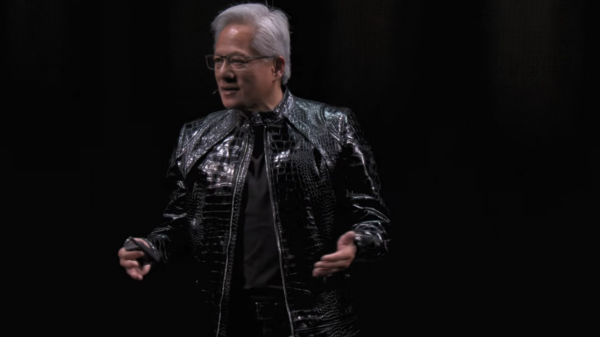
Despite the prevailing caution, not all voices at Davos resonated with alarm. Satya Nadella, CEO of Microsoft, underscored AI’s potential to unlock genuine economic benefits, while Jensen Huang highlighted significant infrastructure projects that could create new demand for blue-collar labor.
Nevertheless, the atmosphere at Davos leaned towards caution rather than enthusiasm. Leaders concurred that AI will usher in both disruption and opportunities, with the outcomes hinging less on the technology itself and more on how societies navigate the transition. If Davos 2026 imparts a lasting lesson, it is that effective leadership amid AI’s rise will not stem from having all the answers but from maintaining presence in uncertainty—resisting false certainties long enough for wiser choices to emerge and leading through the inherent tensions rather than succumbing to them.
For more insights, read about the key highlights from WEF and explore the implications of AI on the global economy.
See also OpenAI Partners with Leidos to Enhance Federal Operations Using AI Technology
 OPENLANE’s AI Data Layer Revolutionizes Investment Potential Amidst Execution Risks
 Dan Loeb Boosts Microsoft and Meta Stakes by 175% and 47% Amid 2025 Tech Volatility
 iShares Tech-Software ETF Drops 18%: A Contrarian AI Investment Opportunity Emerges