



































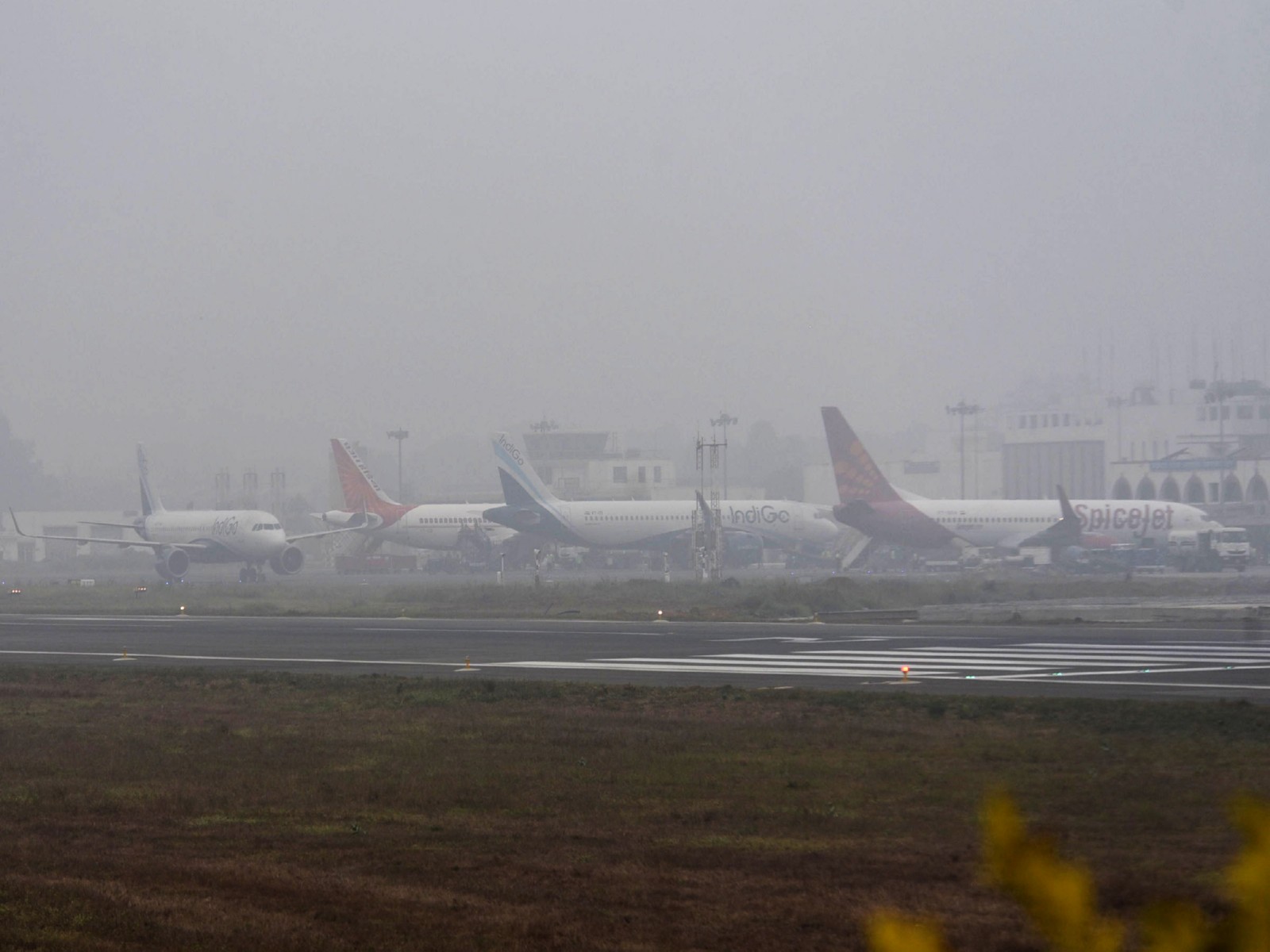
New Delhi [India], December 10 (ANI): GMR Aero-led Delhi International Airport Limited (DIAL), the operator of India’s busiest airport, has bolstered its winter readiness through the deployment of next-generation AI systems, advanced predictive analytics, and enhanced runway capabilities. These upgrades aim to ensure safer and more efficient flight operations while minimizing passenger disruption during low-visibility conditions.
Central to these initiatives is the Airport Predictive Operations Centre (APOC), which integrates real-time data, predictive weather models, and operational inputs into a unified command environment. This integration facilitates quicker decision-making and more accurate resource allocation during fog, optimizing runway utilization and gate allocation while enhancing communication with all operational partners. The coordinated, data-driven approach aims to maintain operational continuity even amid rapid visibility fluctuations.
DIAL also launched a pilot project utilizing the Winter Fog Experiment (WiFEX), which boasts an 85% accuracy rate in fog prediction. This project is expected to enable greater anticipation of fog events, allowing for proactive operational planning and seamless coordination among airlines, Air Traffic Control, and ground teams. The result will likely be fewer delays and a more reliable travel experience for passengers during winter months.
The WiFEX project is a collaborative effort by the Pune-based Indian Institute of Tropical Meteorology (IITM), the India Meteorological Department (IMD), and DIAL. Over a decade, the program will gather comprehensive data on temperature, humidity, wind profiles, aerosols, pollution particles, radiation, microphysics of fog droplets, and visibility changes. This data will be collected using advanced instruments such as LIDARs, ceilometers, and remote sensing towers, helping to build sophisticated fog prediction models that can forecast conditions from as far out as 36 hours.
In conjunction with these technological advancements, DIAL has completed a significant airside upgrade. The Dwarka end of Runway 10/28, which serves as the second runway, has been equipped with a CAT III Instrument Landing System. With this enhancement, three runways at Delhi Airport—10/28, 11L/29R, and 11R/29L—are now CAT-III compliant at both ends. This compliance enables safe landings even under dense fog, allowing for approximately 30 landings per hour during low-visibility conditions.
This upgrade is expected to reduce fog-related recovery time significantly—from six hours down to two—thereby protecting flight schedules and minimizing passenger inconvenience. “Fog is a natural and unavoidable part of Delhi’s winter, but at DIAL, we are committed to ensuring that its impact on passengers is minimized as much as possible,” said Videh Kumar Jaipuriar, CEO of DIAL. He emphasized that the airport’s enhanced preparedness includes next-generation AI tools and advanced predictive analytics, which facilitate early fog prediction.
Jaipuriar stated, “While weather-related disruptions cannot be eliminated completely, these upgrades will greatly improve our ability to plan, respond, and recover quickly. Our focus remains firmly on ensuring a reliable, safe, and comfortable travel experience for all passengers throughout the winter season.”
Through these cutting-edge technological upgrades and enhanced runway capabilities, Delhi Airport has further solidified its position as India’s most prepared and future-ready aviation hub. These improvements ensure safe, predictable, and passenger-friendly operations throughout the challenging winter fog season, ultimately contributing to a more reliable travel environment.
See also YouTuber Bypasses AI Safety, Triggers Robot to Shoot Him with BB Gun in Disturbing Experiment
 Apple’s Steady Strategy Fuels 35% Stock Surge Amid AI Spending Scrutiny
 Broadcom Stock Rises 1.64% on Microsoft AI Chip Collaboration Talks
 Nexon’s AI Ethics Debate Could Reshape Investment Outlook Amid Arc Raiders Launch
 Google Enhances AI Mode with More Source Links and Global Preferred Sources Rollout