

















































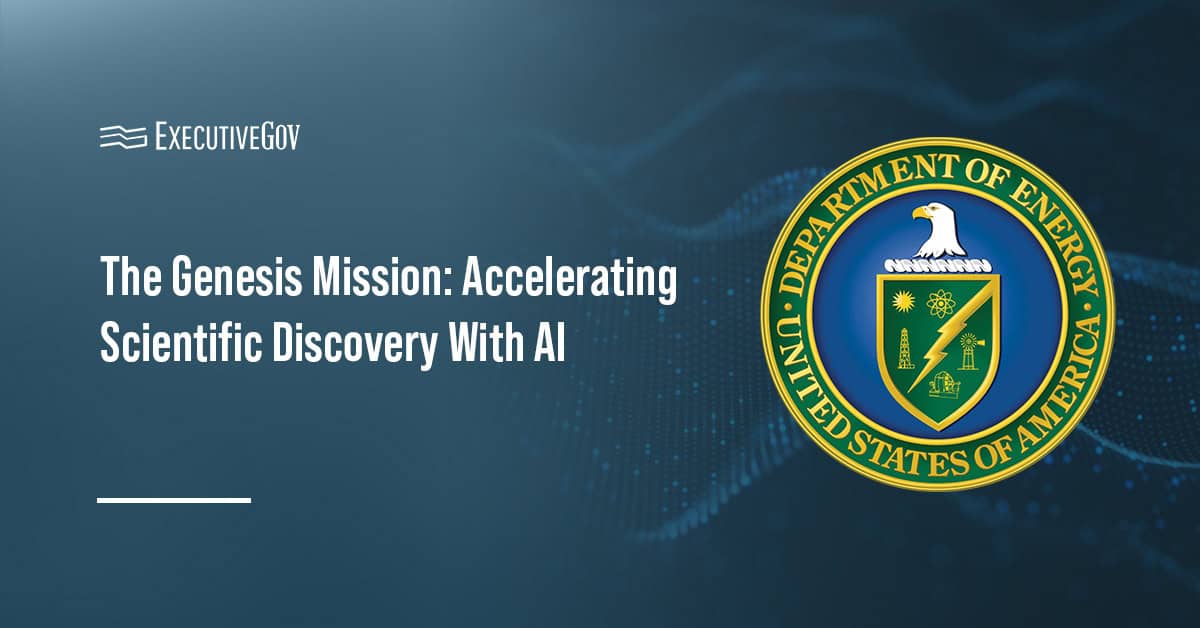
The Genesis Mission: Advancing AI for Scientific Discovery
The Genesis Mission, a pivotal initiative launched by the Department of Energy (DOE), aims to enhance scientific discovery and innovation through the application of artificial intelligence (AI) and advanced computing. As a cornerstone of America’s AI Action Plan, this national effort seeks to bolster the nation’s technological prowess, global competitiveness, energy security, and national defense.
At the heart of the Genesis Mission is a collaboration among the DOE’s 17 national laboratories, along with partnerships in the private sector and academia. This united effort will create a secure and integrated platform for scientific discovery that connects state-of-the-art supercomputers, extensive data resources, advanced AI, quantum systems, and scientific instruments. Approximately 40,000 DOE scientists, engineers, and technical staff will contribute their expertise to tackle critical national science and technology challenges.
The program highlights the roles of key partners such as the Pacific Northwest National Laboratory (PNNL), the National Nuclear Security Administration (NNSA), and the Oak Ridge National Laboratory (ORNL). PNNL is spearheading advancements in AI-driven capabilities aimed at autonomous discovery in fields like chemistry and materials science, while also focusing on expedited environmental permitting and secure energy grids. The NNSA will concentrate on classified AI developments and data management, contributing to advanced model capabilities. ORNL is furthering these goals by deploying new computing systems—Discovery and Lux—that are designed to enhance AI-driven research and support the formation of the American Science Cloud.
Berkeley Lab, with its strong tradition in computational science and data analysis, is also integral to the Genesis Mission. The laboratory leads initiatives such as the Multi-Office particle Accelerator Team (MOAT) and Synergistic Neutron and Photon Autonomous Science – Imaging (SYNAPS-I), alongside other projects designed to advance AI-driven bio-design through the Orchestrated Platform for Autonomous Laboratories (OPAL).
To date, 24 organizations have signed collaboration agreements with the DOE, establishing public-private partnerships aimed at developing scalable AI capabilities and shared research infrastructure. Among these private sector partners are notable companies such as Anthropic, Oracle, and NVIDIA.
The partnership with Anthropic focuses on enhancing AI applications in energy systems, biological and life sciences, and increasing research productivity across national laboratories. Anthropic will supply AI tools and technical expertise to help researchers link models with scientific data and workflows, effectively building on past collaborations to further AI-enabled scientific inquiry.
Oracle has entered into a non-binding agreement with the DOE to fast-track both current and future AI and advanced computing initiatives, including the Genesis Mission. This collaboration aims to develop robust domestic computing and data capabilities, promote responsible AI practices, and create an integrated platform that connects advanced computing systems and research facilities.
NVIDIA’s involvement as a private-sector partner is secured through a memorandum of understanding with the DOE. This partnership seeks to enhance efforts in areas including open AI science models, AI-driven manufacturing, nuclear energy, quantum computing, and advancements in robotics and materials science.
In the broader context, the Genesis Mission aligns with the White House’s AI Action Plan, which, since its release in July, has catalyzed significant actions by federal policymakers aimed at reinforcing the U.S. position in the global AI landscape. The plan outlines over 90 federal policy actions across three pillars: accelerating AI innovation, building American AI infrastructure, and leading international AI diplomacy and security.
As the Genesis Mission gains traction, it embodies a vital step toward integrating AI into the fabric of scientific research, fostering innovation, and ensuring that the United States maintains its leadership in technology and scientific exploration. The collaboration between governmental, academic, and private entities signals a transformative phase in harnessing AI for the greater good.
For those interested in exploring the implications and developments in this arena, the Potomac Officers Club will host the 2026 Artificial Intelligence Summit on March 19, which promises to be a significant gathering for government and industry leaders in AI.
Department of Energy | Anthropic | Oracle | NVIDIA | Berkeley Lab | White House AI Action Plan
See also 2026 Cyber Risk: Geopolitical Tensions, Maritime Targets, and Shadow AI Transform Resilience Strategies
 Microsoft Shares Dip 0.8% Amid Tech Slowdown; Wedbush Sees FY26 as AI Inflection Year
 Top 3 AI-Focused ETFs to Maximize Returns amid Rapid Tech Growth
 Two AI Stocks Set for Major Gains in 2026: SentinelOne and Datadog Poised for 42% Upside
 FuriosaAI Launches RNGD Chip, Promises Double Efficiency Over Nvidia GPUs