


































SEOUL, South Korea — In a dramatic intersection of cutting-edge artificial intelligence and elite human esports, Elon Musk has challenged League of Legends icon Lee “Faker” Sang-hyeok and his T1 team to face xAI’s Grok 5 in an exhibition match slated for 2026. This announcement has generated significant global interest, raising questions about whether machines can surpass the abilities of one of the sport’s greatest players.
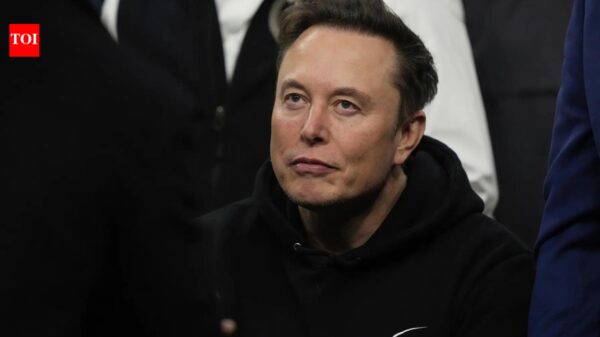
Musk, the tech billionaire behind Tesla, SpaceX, and xAI, initially proposed the idea in a November 2025 post on X, expressing confidence that Grok 5, a next-generation AI model, could defeat the world’s top League of Legends team. He specifically named T1, the reigning champions fresh from their latest World Championship victory, as the ultimate challenge.
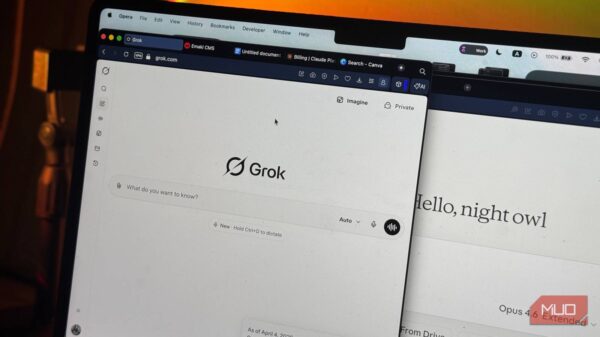
This challenge comes with specific constraints, aimed at leveling the playing field and pushing the limits of AI perception and decision-making. Grok 5 would observe the game through a camera aimed at a monitor, limited to human-level 20/20 vision and restricted to reaction times and clicks no faster than those of a professional player. The AI would not have direct access to its code or the ability to utilize superhuman processing speeds.
T1 has eagerly accepted the proposal. The organization responded on social media with a GIF of Faker making his iconic “shh” gesture, along with the message, “We are ready. Are you?” This playful yet confident reply has sparked fan enthusiasm across Korea and the global esports community.
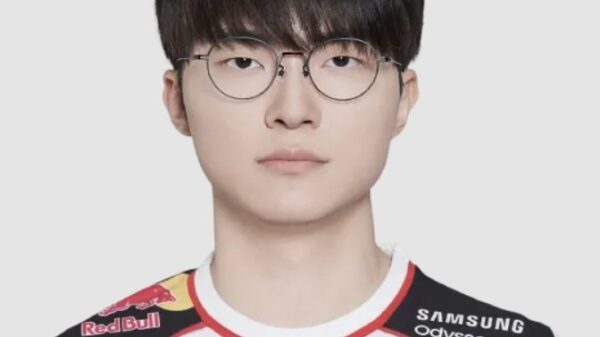
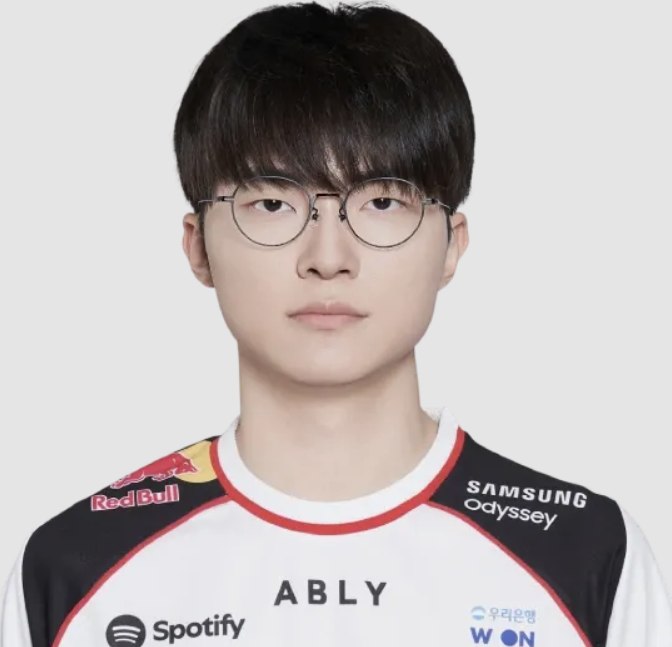
Faker addressed the challenge at a December 2025 news conference in Seoul. The 29-year-old midlaner, often hailed as the greatest League of Legends player in history with multiple world titles, expressed gratitude for AI companies’ interest in gaming, while affirming his belief in human superiority. “Chess may have already fallen to AI, but I believe we can win the match next year,” he said. Faker pointed to the complexities of League of Legends, including its fog of war, team dynamics, real-time adaptation, and psychological elements, as areas where human intuition could outmatch advanced AI.
The proposed matchup evokes memories of landmark man-versus-machine contests, such as IBM’s Deep Blue’s victory over chess champion Garry Kasparov in 1997, and Google DeepMind’s AlphaGo triumph over Go master Lee Sedol in 2016. However, League of Legends presents unique challenges, including its dynamic, team-based nature, incomplete information, rapid meta shifts, and the need for creative outplays that extend beyond mere calculation.
Musk framed the challenge as more than entertainment; he characterized it as a step towards assessing progress in artificial general intelligence. He invited talent to join xAI to develop systems capable of mastering complex games under realistic conditions. The imposed limitations on vision and reaction speed are designed to compel the AI to depend on authentic strategic understanding instead of brute-force capabilities.
As of April 2026, the exact date for the exhibition remains unconfirmed, but speculation points to an early-to-mid 2026 event, potentially coinciding with major esports calendars. Rumors have circulated within the Korean server regarding high-win-rate accounts possibly linked to AI training, although xAI has not confirmed any involvement.
Esports analysts note that current AI systems already excel in specific aspects of League of Legends, such as micro-level mechanics and drafting simulations in controlled environments. However, translating those skills to full 5v5 professional play using only camera input remains uncharted territory. Players like Faker bring years of muscle memory, pattern recognition developed through thousands of games, and an intangible ability to “read” opponents, an experience that AI may struggle to replicate without physical involvement.
Korean fans have reacted with a mixture of excitement and national pride. In online communities, many regard Faker as an untouchable “God” of the game, defending humanity against this technological contender. Discussions often revolve around whether Grok’s probabilistic calculations can overcome Faker’s legendary intuition, particularly during clutch moments within the fog of war.
T1’s recent success further heightens the stakes. The organization has consistently excelled on the international stage, with Faker serving as a cornerstone despite his advancing age. His contract extension through at least 2029 ensures that the veteran player will anchor the squad for the anticipated AI showdown.
Riot Games, the developer behind League of Legends, has yet to issue an official statement on facilitating the match but has a history of supporting innovative exhibitions. Technical logistics, including secure camera setups, standardized hardware, and broadcast integration, would require close collaboration among xAI, T1, Riot, and event organizers.
The broader implications of this contest extend beyond gaming. It could illuminate AI’s potential in real-time strategy, teamwork simulation, and adaptive learning, with applications in fields like robotics and autonomous systems. Conversely, a decisive human victory would reaffirm the enduring importance of human creativity and experience in complex domains.
Critics argue that even with constraints, an AI backed by extensive computational resources could eventually dominate. Supporters of Faker counter that the intricacies of League of Legends—demanding split-second communication, strategic baiting, mind games, and meta awareness—favor the human side for the foreseeable future.
As preparations gear up, the esports world is watching closely. Musk has a history of ambitious public goals, from reusable rockets to neural interfaces. A victory for Grok 5 would mark a significant milestone in AI achievement, while a win for T1 would solidify Faker’s legacy as the player who stood firm against the rise of machines.
As spring 2026 approaches, anticipation builds in Seoul’s esports scene and tech hubs worldwide. One thing is clear: when Faker faces off against Grok, millions will be watching to see if the “unkillable demon king” can once again prove that human ingenuity retains the upper hand.
See also Germany”s National Team Prepares for World Cup Qualifiers with Disco Atmosphere
 95% of AI Projects Fail in Companies According to MIT
 AI in Food & Beverages Market to Surge from $11.08B to $263.80B by 2032
 Satya Nadella Supports OpenAI’s $100B Revenue Goal, Highlights AI Funding Needs
 Wall Street Recovers from Early Loss as Nvidia Surges 1.8% Amid Market Volatility