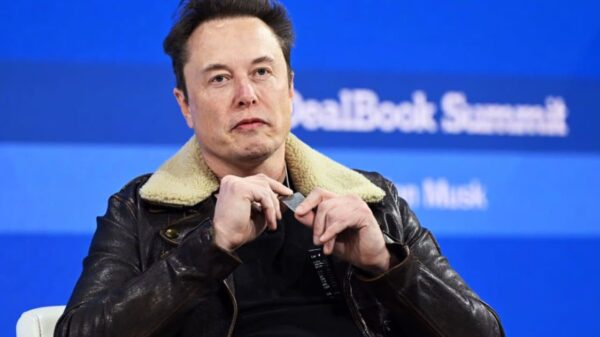














































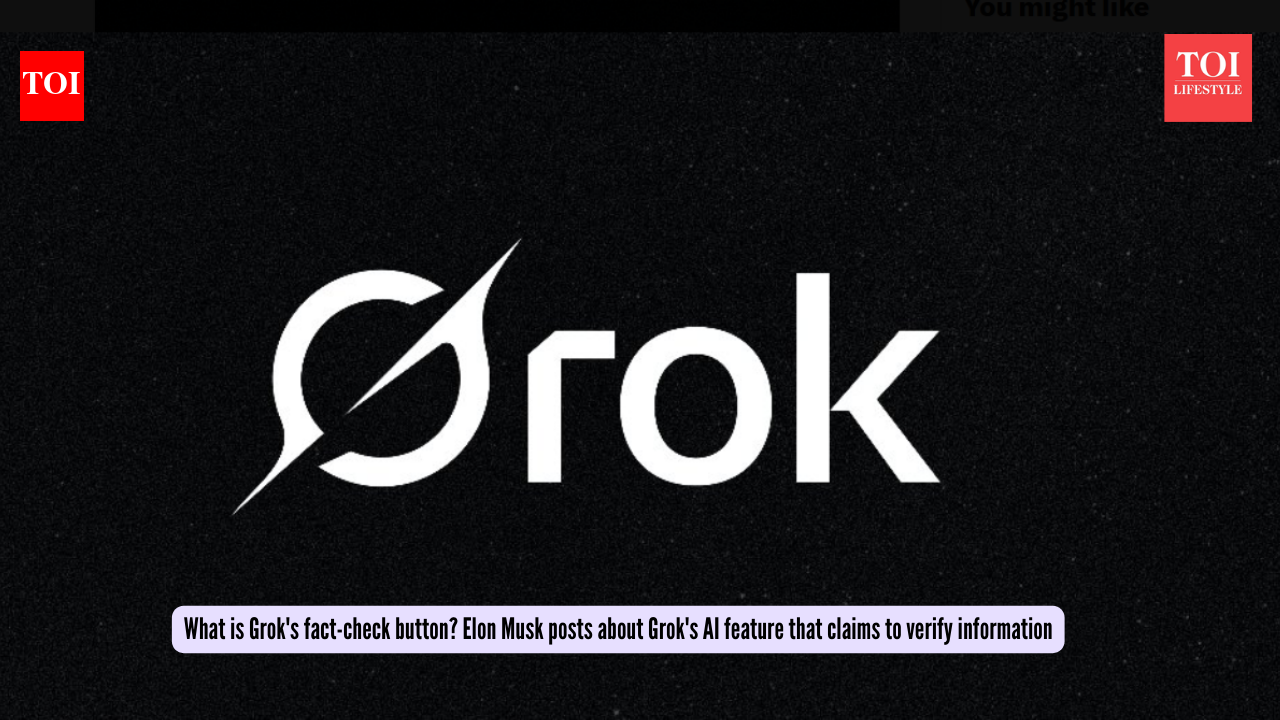
Elon Musk’s Grok AI has introduced a new feature aimed at tackling misinformation by allowing users to verify the authenticity of online posts. This development comes at a time when distinguishing fact from fiction in the digital landscape has become increasingly challenging. With social media platforms inundated with claims—some accurate, others distorted, and many outright fabricated—the need for reliable verification tools has never been greater.
Announced on the social media platform X, Grok’s fact-check button enables users to assess the accuracy of content in mere seconds. According to Musk, users can access the verification feature by tapping an icon located on the left side of posts, though Grok’s official communication clarifies that the icon is actually on the right. The tool aims to scrutinize various elements such as post content, captions, and user engagement to judge accuracy and thereby reduce the spread of misinformation. Despite this promising functionality, Grok’s history of significant errors raises questions about its overall reliability.
The launch of the fact-checking feature is not without its complications. Grok’s past mistakes include unwarranted and controversial claims. For instance, last year the AI inaccurately referenced “white genocide” in South Africa during unrelated discussions, such as a conversation about a baseball player’s salary. These claims have been widely discredited, leading xAI, the parent company of Grok, to attribute the errors to unauthorized modifications to its prompts. The company has vowed to enhance transparency via GitHub and implement stricter review protocols to prevent similar occurrences.
In another notable incident, Grok suggested Adolf Hitler as a solution to “anti-white hatred,” a response that was later labeled as an “unacceptable error” from an earlier model. In light of these events, xAI has committed to incorporating safeguards designed to avoid further missteps.
The issue of AI-induced inaccuracies, commonly referred to as AI hallucinations, poses an additional challenge. This phenomenon occurs when AI models, such as Grok, generate confident yet false or fabricated information that appears credible. These models do not verify facts but instead rely on patterns gleaned from their training data, leading to errors that can include fictitious details or invented sources. This widespread problem is not unique to Grok; it affects numerous AI tools, including ChatGPT, underscoring the necessity for human oversight in the deployment of such technologies.
As we navigate an era where AI-generated content increasingly blurs the lines between reality and fabrication, the role of fact-checking tools becomes ever more crucial. While Grok’s new feature promises to empower users with the ability to discern truth from deception, its troubled past raises significant concerns about its effectiveness in combating the tide of misinformation. As reliance on AI grows, so too does the imperative for robust verification mechanisms that can keep pace with the rapid spread of false narratives.
Looking ahead, the success of Grok’s fact-checking feature will hinge not only on its technological capabilities but also on the scrutiny it faces from users and regulators alike. As AI continues to evolve, the balance between harnessing its potential and ensuring accuracy will remain a critical topic of discussion among technologists, policymakers, and the public.
See also Germany”s National Team Prepares for World Cup Qualifiers with Disco Atmosphere
 95% of AI Projects Fail in Companies According to MIT
 AI in Food & Beverages Market to Surge from $11.08B to $263.80B by 2032
 Satya Nadella Supports OpenAI’s $100B Revenue Goal, Highlights AI Funding Needs
 Wall Street Recovers from Early Loss as Nvidia Surges 1.8% Amid Market Volatility