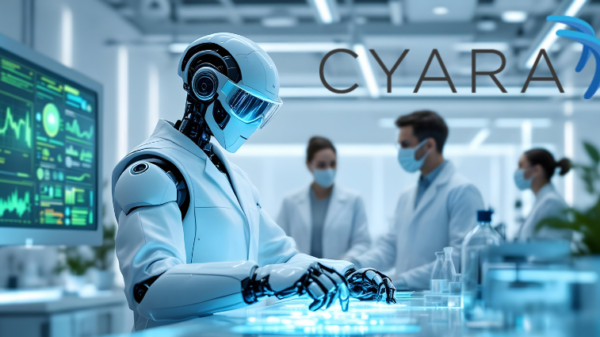






































Ginkgo Bioworks is advancing its innovative approach by integrating synthetic biology with artificial intelligence, aiming to significantly enhance laboratory efficiency. Recent data stemming from a collaboration with OpenAI indicates that autonomous systems can dramatically reduce costs associated with protein synthesis. Despite promising technological advancements, opinions among market analysts regarding the company’s fundamental valuation remain divided.
Ginkgo’s shares ended the trading week at 9.29 USD, reflecting a gain of 5.69%. This rally was fueled by data shared at the SLAS conference, which demonstrated an autonomous laboratory run entirely by OpenAI’s GPT-5 model. The AI system reportedly coordinated over 36,000 experiments focused on cell-free protein synthesis, with production costs decreasing by approximately 40% to 422 USD per gram. However, trading volume on Friday was about 816,000 shares, falling short of the daily average.
The sentiment among market analysts is mixed. While the prevailing consensus categorizes the stock as a reduction-grade name, some notable opinions stand out. TD Cowen maintains a “Buy” rating for the shares, setting a target price of 12.00 USD. Conversely, Weiss Ratings sees the stock as a potential “Sell” candidate.
With the life-science tools sector facing challenges—evident from 10x Genomics reporting a mere 1% revenue increase in the fourth quarter and offering a cautious forecast for the upcoming year—questions arise about whether Ginkgo Bioworks can counteract these trends through its AI-focused strategy.
As attention turns towards the upcoming financial results on March 4, 2026, expectations are high for Ginkgo’s fourth-quarter and full-year 2025 reports. A pivotal question will center on how effectively the company can mitigate its cash burn. Management has set a target to reach an adjusted EBITDA breakeven by the close of 2026. The forthcoming quarterly results will reveal whether savings from AI-driven automation are adequate to support this objective.
Investors are left to ponder whether to sell immediately or consider buying into Ginkgo Bioworks amid these developments. The interplay between innovation, cost-efficiency, and market perception will play a critical role in shaping the company’s trajectory in the rapidly evolving biotechnology landscape.
For more insights, you can explore the official pages of Ginkgo Bioworks and OpenAI.
See also Mistral AI and EcoDataCenter Invest €1.2 Billion in Swedish AI Data Center by 2027
 Taiwan Ups GDP Forecast to 7.71% as AI Exports Surge 70%, Nvidia Invests $1.3B
 AI-Driven Cyber Threats Surge as Global Inequities Leave Organizations Vulnerable
 Microsoft’s Mustafa Suleyman Announces Shift to AI Self-Sufficiency, Moving Beyond OpenAI
 Salesforce Restructures with 1,000 Job Cuts, Elevates AI Strategy Amidst Investment Risks