






















































As the world approaches 2026, uncertainty has become a defining feature of global affairs. Today’s unpredictability stems from a combination of technological disruption, shifting geopolitical alliances, and unexpected crises that redefine the global landscape. These developments—often termed “black swan” events—are highly improbable but carry disproportionate consequences, reshaping economies, political structures, and international norms in ways that are difficult to predict.
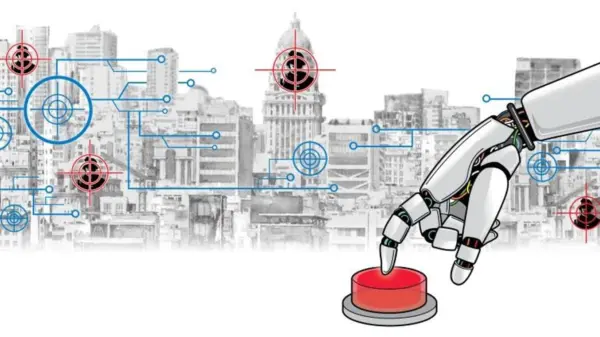
Two interrelated uncertainties will shape the next phase of global affairs. First, the geopolitical context remains volatile and may deteriorate further. The ongoing war in Ukraine continues to dominate international attention, but instability extends beyond Eastern Europe. The repercussions of the October 7, 2023, Israel-Hamas conflict continue to reverberate, fueling regional tensions and testing the capacity of world powers to maintain stability. In addition, nuclear-armed states with unpredictable leadership, such as North Korea, pose ongoing risks, while fragile states across Africa and Asia remain susceptible to domestic and cross-border conflicts.
The second critical uncertainty lies in the trajectory of global economic growth. Following the shock of the COVID-19 pandemic, the world economy has entered a fragile recovery largely driven by technological innovation, especially in artificial intelligence (AI). AI is rapidly transforming productivity, labor markets, and industrial structures. However, this reliance on a technology-driven growth model introduces vulnerabilities, including potential market bubbles, uneven wealth creation, and systemic shocks that could cascade through global financial systems. Whether this AI-led expansion can sustain itself amid geopolitical turbulence is one of the defining questions of the coming decade.
Considering these two uncertainties, four broad scenarios emerge for the post-2025 world. The first, a “resilient world,” combines continued economic growth with a challenging geopolitical environment. The second, “peace and prosperity,” imagines both robust growth and a decline in geopolitical tensions. A third scenario, “world stagnates,” pairs slowing economic activity with easing geopolitical pressures. Finally, the “time of troubles” scenario envisions a simultaneous economic slowdown and heightened geopolitical instability.
In reality, elements of all four scenarios may coexist, but analysts suggest that the resilient world and the time of troubles are the most plausible. The persistent instability of global geopolitics makes the more optimistic “peace and prosperity” scenario comparatively unlikely. Unlike the post-1918 pandemic era, which saw the “Roaring ‘20s” of economic and cultural expansion, the post-COVID era may be remembered as the “Warring ‘20s,” characterized by ongoing conflicts and strategic uncertainty.
The resilient world scenario reflects cautious optimism. While growth remains uneven, it is led by emerging economies such as India and select Asian markets, benefiting from technological investments and demographic advantages. International institutions emphasize the need for coordinated policy action to maintain stability. For example, IMF Managing Director Kristalina Georgieva has urged nations to strengthen domestic economic resilience, noting that a balanced and adaptable global economy remains achievable. Yet, even in this scenario, economic gains are fragile, and disparities between advanced and emerging markets could exacerbate social and political tensions.
AI plays a central role in this potential growth. Estimates suggest that up to 40 percent of US GDP growth in recent years is linked to AI-related investments and applications. This has boosted output during a period otherwise characterized by low growth since the 1960s. However, reliance on AI introduces the risk of a concentrated, technology-driven bubble, where a sudden loss of confidence or market correction could produce far-reaching economic shocks. Additionally, globalization has slowed, with a roughly 70 percent decline in Western investment in China since 2022, reflecting both geopolitical friction and strategic retrenchment.
Conversely, the time of troubles scenario serves as a stark warning. Drawing historical parallels to Russia’s “Time of Troubles” (1584–1613), this scenario could arise from worsening regional conflicts and fragile international institutions amid a downturn in the tech-driven economy. The United States, with its increasing dependence on AI investment, may face a particularly acute crisis, destabilizing not only domestic institutions but also its capacity to project global power.
Compounding these challenges is the unprecedented level of global indebtedness. The IMF projects that by the end of the decade, global debt could average nearly 100 percent of GDP. In such a landscape, governments may lack the fiscal flexibility to counteract a major economic slump, exacerbating vulnerabilities and heightening the likelihood of protectionist policies. Such conditions could accelerate deglobalization, reduce trade flows, and amplify economic competition between major powers, leading to heightened geopolitical confrontations.
Regional conflicts, particularly in Ukraine, the Middle East, and parts of Asia, could escalate in a deteriorating global environment. The incentives for great powers to contain these conflicts may diminish, potentially allowing local disputes to evolve into broader crises with significant repercussions for international security.
Despite these challenges, the interplay of economic growth and geopolitics also presents opportunities. AI and other technological advancements could provide new tools for conflict management and global governance solutions. Emerging economies, by leveraging innovation and demographic trends, may sustain global growth even amid geopolitical turbulence. The key will be the ability of nations and international institutions to balance innovation-driven economic expansion with effective conflict mitigation strategies.
Ultimately, the next decade will require strategic foresight and adaptability. Policymakers must prepare for multiple disruptions, from financial shocks to regional wars. Businesses and investors need to plan for uneven growth and the risks associated with technological transformations. Citizens and civil society actors will also need to navigate an environment where opportunities for prosperity exist alongside significant systemic risks.
The defining feature of 2026 and beyond will be uncertainty itself. While a resilient world offers a framework for cautious optimism, the possibility of a time of troubles serves as a sobering reminder that minor miscalculations could have cascading effects. Strategic flexibility, international cooperation, and prudent risk management will be crucial in navigating a period where geopolitical volatility and economic disruption are likely to coexist.
In conclusion, the post-pandemic era is not merely a continuation of pre-2020 trends but a transformative period defined by both technological promise and geopolitical fragility. How the world responds to these twin challenges will determine whether the decade evolves into one of resilient adaptation or becomes characterized by compounding crises. For governments, institutions, and citizens alike, the imperative is clear: anticipate the unexpected, build resilience, and engage with complexity rather than seek certainty. In an era dominated by black swan events, preparedness may be the most valuable currency of all.
International Monetary Fund | White House | World Bank | McKinsey | United Nations
See also Character.ai Reveals Squinch and Gumbel Softmax for Efficient Large-Scale Pretraining
 Nebius Group Surges 230% After Securing $19 Billion AI Deal with Microsoft
 Infrastructure Investors Reassess Risk Amid Geopolitical Tensions and AI Surge, Fueling 2026 Strategies
 OpenAI Warns Prompt Injection Attacks Are a Long-Term Threat to Agentic AI Security