



















































Weather forecasting plays a crucial role in various sectors such as flight operations, agriculture, retail, energy management, and public safety. However, traditional numerical weather prediction models, while rooted in the laws of physics, often struggle to deliver timely and flexible forecasts in the face of increasingly unpredictable climate patterns. These models require supercomputing power and extensive processing time, which can be a disadvantage in situations where quick decisions are needed.
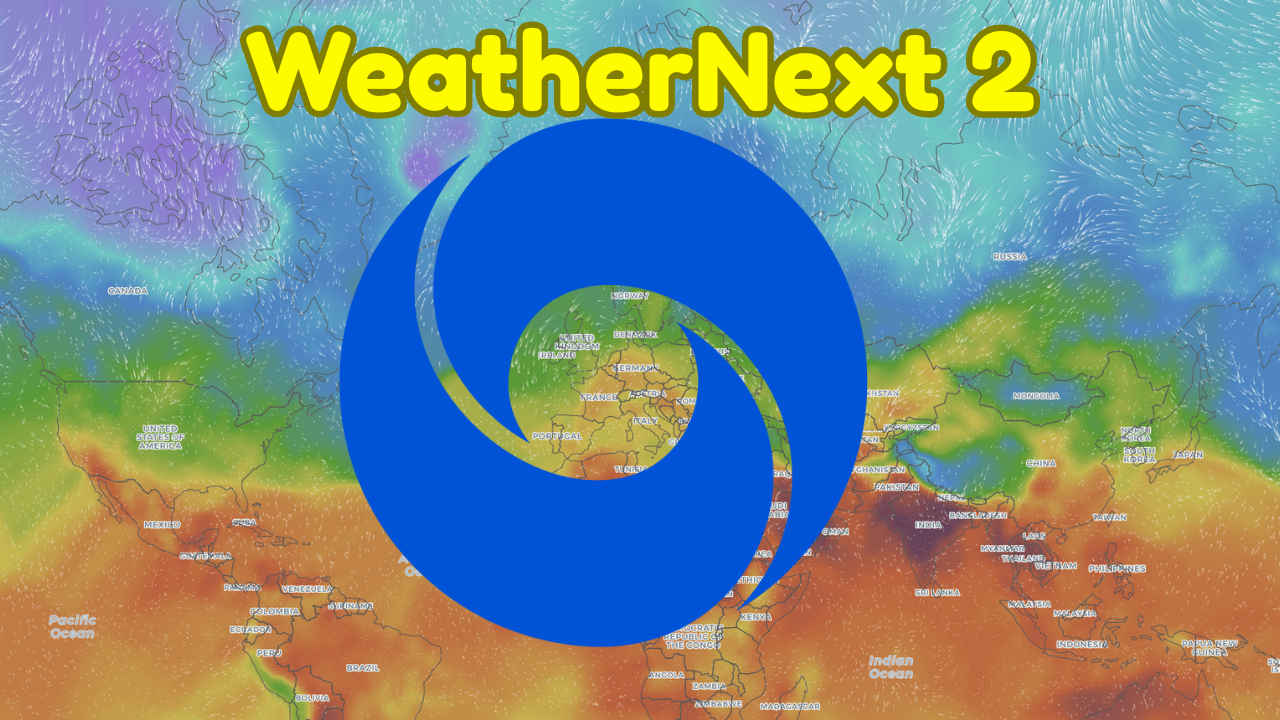
To address this challenge, Google DeepMind has introduced WeatherNext 2, a transformative AI-driven forecasting system designed to generate global weather forecasts in less than a minute. This innovative solution not only provides rapid updates but also enhances detail and scenario diversity compared to conventional forecasting systems. This article explores how WeatherNext 2 operates and why it marks a pivotal advancement in meteorology.
Challenges with Traditional Forecasting Models
Physics-based forecasting approaches have long been the standard due to their ability to accurately simulate atmospheric behavior. However, the computational intensity of these models leads to slow results, making it difficult to produce large ensembles—multiple versions of the same forecast that account for uncertainty. This ensemble forecasting is particularly vital for predicting extreme weather events, yet many regions lack the necessary computational resources for frequent updates.
In contrast, AI-based models like WeatherNext 2 take a different route. These models learn patterns from decades of global weather data rather than simulating the atmosphere from scratch. Once trained, they are capable of producing forecasts quickly while still capturing the complex interactions inherent in the climate system.
Key Improvements with WeatherNext 2
WeatherNext 2 represents a significant upgrade from earlier models developed by DeepMind, featuring three main enhancements:
- Speed: The system can generate global forecasts in under a minute, facilitating rapid updates and high-frequency insights.
- Accuracy: Reports indicate that WeatherNext 2 outperforms its predecessor across nearly all evaluated variables—such as temperature, wind, humidity, and rainfall—up to 15 days in advance.
- Scenario Diversity: WeatherNext 2 excels in producing hundreds of plausible outcomes from a single atmospheric snapshot, making it exceptionally valuable for disaster planning and risk assessment.
How WeatherNext 2 Operates
At its core, WeatherNext 2 utilizes a sophisticated neural network trained with historical weather patterns, satellite data, and outputs from traditional forecasting systems.
1. Utilizing Current Atmospheric Conditions
The model initiates its predictions based on the latest global data grids, which represent vital variables like pressure, wind, and moisture.
2. Employing a Generative Architecture
A standout feature of WeatherNext 2 is its Functional Generative Network. This architecture incorporates controlled randomness during predictions, enabling the model to output various physically coherent future states. This capacity allows forecasters to explore uncertainties that are intrinsic to weather predictions.
3. Learning Global Relationships
Drawing inspiration from the same architecture that powers large language models, WeatherNext 2 employs transformer components to comprehend long-range patterns and interactions on a global scale. This design helps capture complex systems, including monsoons, jet streams, and atmospheric waves.
4. Delivering Hourly Forecasts
The model is capable of providing hourly forecasts for up to 15 days, offering a detailed view of weather evolution.
Limitations of AI Forecasting
Despite its advancements, WeatherNext 2 is not without limitations. The accuracy of AI forecasts heavily depends on the quality of the data used for training. Any gaps, errors, or biases can adversely affect predictions. Furthermore, localized phenomena often require specialized regional models, indicating that AI should complement rather than replace physics-based systems.
In an era where extreme weather events are becoming more frequent, tools like WeatherNext 2 offer a glimpse into a future of more democratic, faster, and reliable forecasting. This innovation could significantly enhance community preparedness and response capabilities, representing a notable evolution in our understanding and anticipation of atmospheric changes.
 AI Fails 95% of the Time: Companies Must Prioritize Human-Centered Design to Succeed
 Butterfly Network Licenses Ultrasound-On-Chip Tech to Midjourney for $15M Deal
 Top 3 AI Stocks to Buy Now: TSMC, Oracle, and ASML Show Strong Growth Potential
 Google Launches Gemini 3, Boosting AI Capabilities with Enhanced Reasoning and Context Understanding
 Google Launches Gemini 3 AI Model, Enhancing Search with ‘Thinking’ Feature for Pro Users