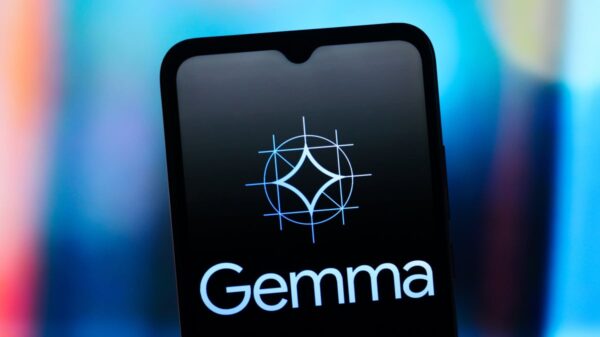

















































Google has unveiled its latest open AI model, Gemma 4, on Thursday, marking a significant step in the landscape of artificial intelligence. Unlike many contemporary models, Gemma 4 is fully open-source and licensed under Apache 2.0. This allows developers to run the model locally on a vast range of devices, including billions of Android smartphones and select laptop GPUs. In a blog post, Google highlighted that this licensing framework grants users “complete control over your data, infrastructure, and models,” enabling them to build and deploy secure applications across various environments.
While many are familiar with Google’s popular Gemini AI model, which powers chatbots integrated into numerous Google products, Gemma 4 marks a distinct offering in Google’s AI portfolio. Developed using the same technologies as Gemini 3, Gemma 4 is characterized as Google’s “most capable” open AI model to date.
The core difference between Gemma and Gemini lies in their accessibility and use. Gemini serves as Google’s proprietary subscription AI service, embedded in its core products such as Google Search, Gmail, and Google Cloud. In contrast, Gemma 4’s open AI model allows users to download and operate the software independently, even offline. This open approach fosters privacy and security, as user interactions, such as chats or uploaded files, remain solely in the user’s control.
Gemma 4 introduces several advanced capabilities, including enhanced reasoning abilities that support multi-step planning and deep logic evaluation. Google claims substantial improvements in mathematical functions and instruction-following tasks with this latest version. Furthermore, Gemma 4 has been designed to facilitate agentic workflows and provides localized AI coding assistance. It can also handle audio and video inputs, enabling speech recognition and visual interpretation, such as analyzing charts.
The model comes in four different sizes, utilizing varying numbers of weights: two billion, four billion, 26 billion, and 31 billion. According to Hugging Face, these open-weight models are available in pre-trained and instruction-tuned formats, offering even greater flexibility for developers. Trained in over 140 languages, Gemma 4 boasts a context window of up to 256,000 tokens, with the smaller E2B and E4B variants supporting a window of 128,000 tokens.
Importantly, the transition to open-source with Gemma 4 represents a significant shift for Google’s AI models. Prior versions were classified as open-weight, meaning while the training datasets were publicly accessible, they remained governed by Google’s terms. Users had limited flexibility regarding modifications and redistribution. With the release of Gemma 4 under the Apache 2.0 license, users can now freely download, modify, and utilize the model for both personal and commercial purposes, provided they attribute the original source and distribute the license alongside the model.
Gemma 4 is readily accessible in the Google AI Studio and can also be downloaded from third-party platforms such as Hugging Face, Kaggle, and Ollama. This release not only enhances developer capabilities but also aligns with the growing demand for open-source AI tools that offer greater autonomy and security. As the AI landscape evolves, the introduction of models like Gemma 4 signals a broader trend towards democratizing access to powerful AI technologies, potentially reshaping how developers and companies integrate AI into their operations.
See also Germany”s National Team Prepares for World Cup Qualifiers with Disco Atmosphere
 95% of AI Projects Fail in Companies According to MIT
 AI in Food & Beverages Market to Surge from $11.08B to $263.80B by 2032
 Satya Nadella Supports OpenAI’s $100B Revenue Goal, Highlights AI Funding Needs
 Wall Street Recovers from Early Loss as Nvidia Surges 1.8% Amid Market Volatility