







































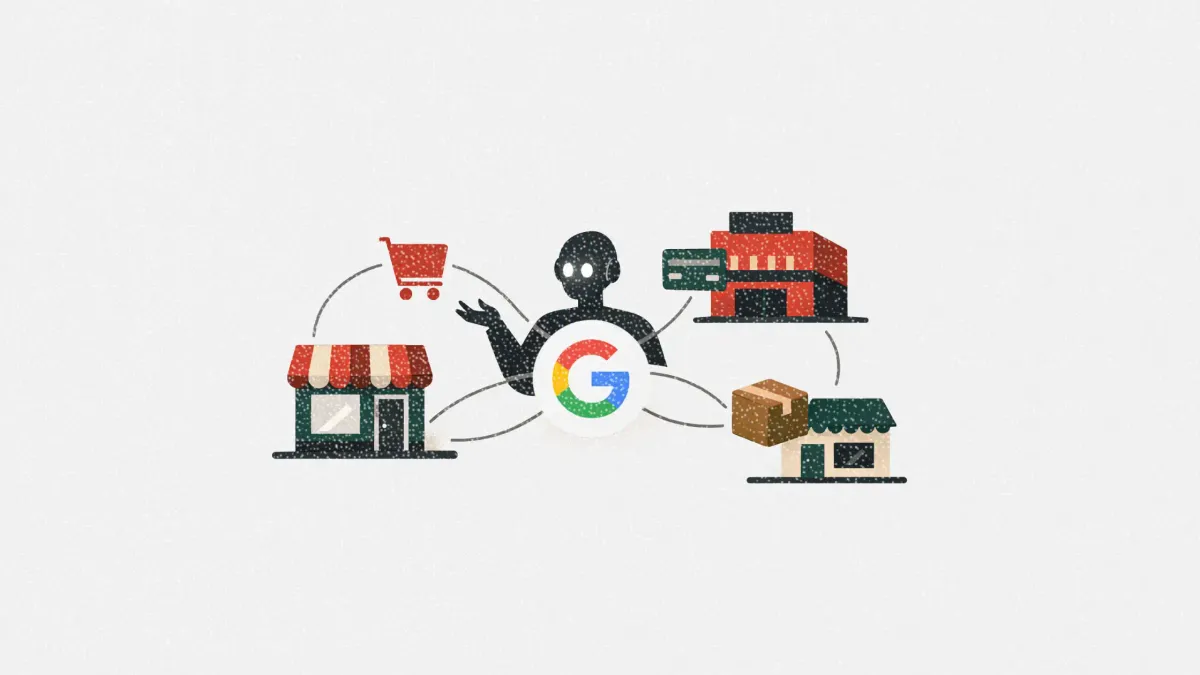
At this year’s National Retail Federation (NRF) conference, Google unveiled the Universal Commerce Protocol (UCP), marking a significant leap toward agent-powered commerce. This open standard is designed to allow AI agents to manage the entire shopping journey, an initiative supported by major retailers such as Shopify, Etsy, Wayfair, Target, and Walmart. The goal is to eliminate friction between brands and customers by enabling AI agents to operate seamlessly across the shopping experience—from product discovery to checkout and post-purchase interactions—without requiring custom integrations.
UCP introduces a shared language for AI agents to interact with retailers, platforms, and payment providers, thereby streamlining the digital shopping process. Instead of establishing individual connections for every agent, brands adopting UCP can achieve scalable cross-platform functionality. Developed in collaboration with key industry players, including Stripe and Visa, UCP is compatible with existing standards such as the Agent Payments Protocol (AP2), Agent2Agent (A2A), and Model Context Protocol (MCP).
Google plans to implement UCP in eligible product listings within AI Mode on Search and the Gemini app, allowing shoppers to complete transactions directly through these platforms using Google Pay or, soon, PayPal. Shipping information will automatically sync from Google Wallet, while retailers maintain their roles as sellers of record. Additionally, Google has introduced a new advertising pilot called Direct Offers, enabling brands to deliver exclusive discounts in real time when consumers display clear purchasing intent, such as specific product searches.
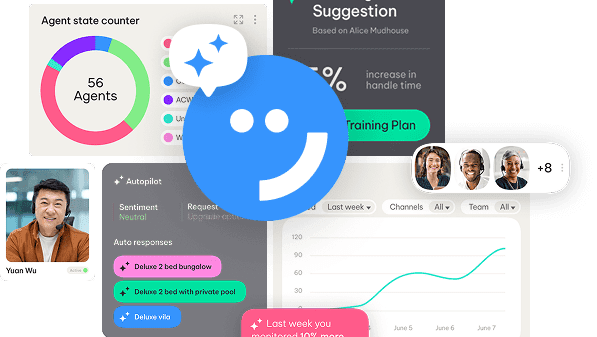
In tandem with UCP, Google launched Gemini Enterprise for Customer Experience (CX), a comprehensive AI solution designed to unify product discovery with customer service. This system features configurable agents built on Google’s latest Gemini models, capable of addressing product inquiries, assisting with cart creation, and resolving customer issues across various channels. Retailers like Kroger, Woolworths, and Papa John’s are early adopters of this CX suite, while Lowe’s and Reebok are testing a new Business Agent that functions as a virtual sales representative in Google Search.
As marketers navigate this evolving landscape of agent-driven commerce, they must adapt their strategies accordingly. Key considerations include optimizing merchant data to enhance discoverability through Google’s Merchant Center, where enriched data such as answers to common questions and product compatibility details will improve AI searches. Marketers should also anticipate a compression of the traditional sales funnel; UCP allows customers to move from product discovery to checkout in a single interaction, necessitating that every branded touchpoint drives conversion.
Furthermore, the introduction of Direct Offers presents an opportunity for brands to engage potential buyers at decisive moments, leveraging AI to identify high-intent scenarios for real-time promotions. Training AI agents to reflect brand identity and sales techniques will be crucial, as these digital assistants increasingly assume roles traditionally held by human sales associates.
By enabling scalable AI interoperability and introducing innovative tools like Gemini Enterprise, Google’s Universal Commerce Protocol represents a pivotal step in transforming the retail landscape. For marketers, the implications are profound; as AI agents become the primary interface for product discovery, brands that proactively prepare will be well-positioned to succeed in an increasingly automated commerce environment.
See also Investment Firms Must Embrace AI-Driven Strategies to Avoid Costly Technology Failures
 TSMC Reports $16B Q4 Earnings, Signals $56B AI Investment Surge and Market Confidence
 Radware’s ZombieAgent AI Vulnerability Sparks Valuation Concerns Amid High P/E Ratio